AI-driven building optimization has become extremely popular, especially in large commercial and institutional environments. And for good reason. When an energy manager has to look at dozens or even hundreds of buildings on their own, or with limited human resources, the risk of mistakes is huge.
BrainBox AI is one good platform in this space, and a decent choice for organizations that want to optimize energy consumption. With a strong focus on predictive HVAC control and real-time optimization, BrainBox AI comes with AI-driven building optimization that can offer energy managers a much-needed helping hand.
However, for some teams, that might not be enough. That’s because you may need things like broader portfolio intelligence or engineering-led optimization. Plus, many operate in environments where transparency, governance, and vendor flexibility matter more than autonomous control.
In those cases, you’ll likely seek BrainBox AI alternatives. Below, you’ll find 5 platforms that approach building energy optimization from different angles, so you can choose the best one for your organization, depending on operational needs, portfolio size, and internal capabilities.
Why you might need a BrainBox AI alternative
BrainBox AI has one main goal: automating HVAC optimization. It also offers predictive control and real-time adjustments based on machine learning models, features that many organizations find extremely helpful.
So, how does it work exactly? Firstly, it analyses data: historical building information, weather forecasts, and other operational patterns. Then, based on this analysis, it adjusts setpoints to help you reduce energy use while maintaining comfort.
The approach works well in environments with standardized HVAC systems. Why? Because here, teams can delegate part of the operational control to an AI-driven layer.
So, when do organizations look for alternatives? When they encounter challenges such as:
- Lacking portfolio-level visibility and relying mainly on equipment-level control.
- Limited transparency into how optimization decisions are made.
- Needing analytics and diagnostics rather than autonomous control alone.
- Operating in mixed-vendor environments where control standardization is difficult.
- Operational teams overwhelmed by signals but lacking clear prioritisation and decision support.
As your portfolio grows, it’s only logical to look for platforms that can help you understand, prioritize, and coordinate actions across as many buildings as possible, not just optimize HVAC in isolation.
Top 5 BrainBox AI alternatives
1. Enersee
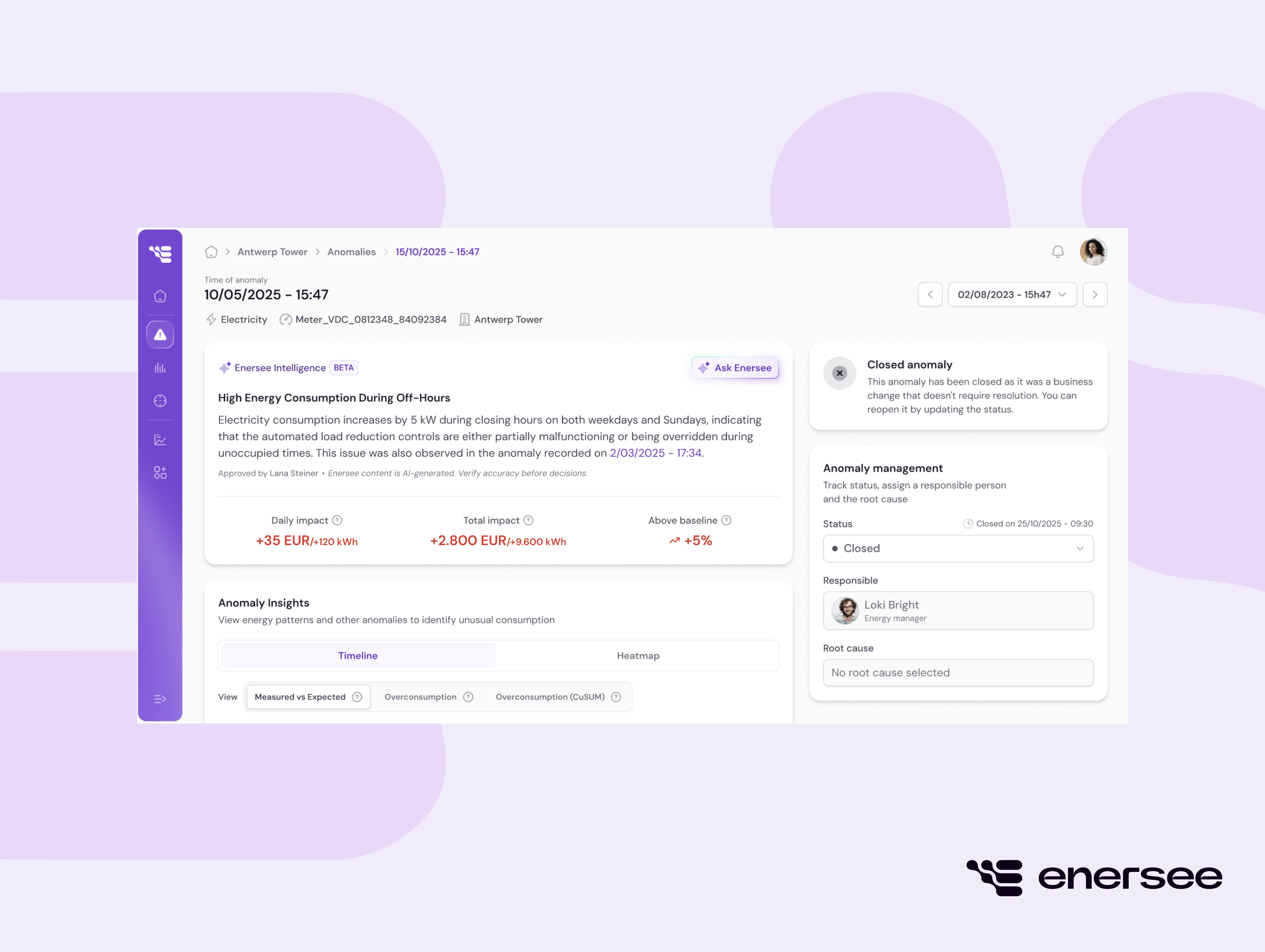
A BrainBox AI competitor that can act as an intelligence and coordination layer across entire portfolios, Enersee works as your 24/7 energy management assistant. The platform uses historical data, weather, occupancy, and operational context, and models how each building should behave.
Enersee helps teams answer some critical questions without overwhelming energy managers with noise. Rather than showing you more alerts, it emphasizes what matters, keeping less important things in the background. What other questions can Enersee answer?
- Where is energy being lost right now?
Instead of relying on static baselines, Enersee continuously learns how each building behaves and highlights deviations as soon as they appear.
- What is the real cost of current issues?
Enersee looks at each anomaly from a financial point of view, not just as a technical alert.
- What problems should the team address first?
It ranks issues based on urgency, cost, and operational risk across the portfolio.
- Which data sources matter for this decision?
Enersee combines utility data, BMS signals, weather, occupancy, and operational context.
- Where should the team focus its attention across the portfolio?
Enersee gives teams a portfolio-wide view of performance, showing where they need to act immediately, and where issues can safely wait. That way, teams can allocate resources across sites instead of reacting to isolated alerts.
- Does this affect compliance obligations?
It flags issues linked to frameworks such as BACS and EPC-NR.
This approach helps teams focus less on individual systems and more on coordinated action across many sites.
Interested in seeing some practical results? In a large retail portfolio, Enersee was used to monitor and analyze energy performance across hundreds of sites operating under strict comfort and refrigeration constraints.
The platform identified an average of 3.6 anomalies per store, many of which had gone undetected by the previous energy management system. To help fix these issues, Enersee prioritized them based on financial impact and urgency.
The result? The organization saw a reduction in the average resolution time from several weeks to just 8 days. In total, the retailer had the potential to achieve €3.5 million in annual savings per 1,000 stores, driven primarily by faster detection and correction of HVAC and operational inefficiencies.
The bottom line? Enersee is best suited for organizations that need continuous intelligence and decision support at scale, rather than automated control of individual systems.
2. Strata Cotopaxi
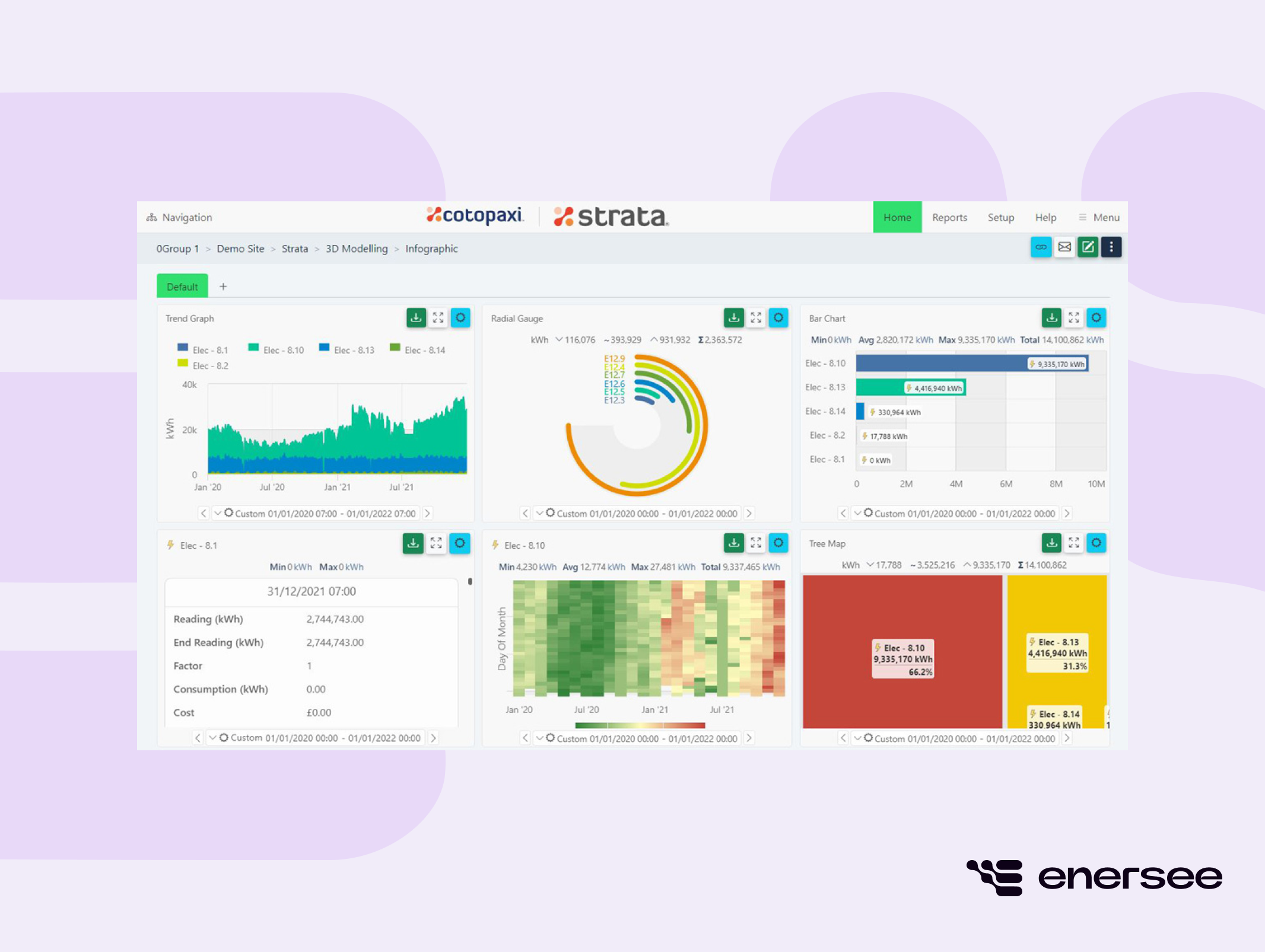
Another worthy BrainBox AI tool alternative is Strata Cotopaxi, which takes a fundamentally different approach to optimization. How? Instead of relying on autonomous AI control, it focuses on engineering-driven analysis and process optimization. Its primary application is in industrial and high-consumption commercial environments, but other niches might find it useful as well.
The platform combines continuous monitoring with engineering expertise. That means it can easily identify inefficiencies, equipment losses, and performance gaps. Many organizations also choose it as part of their ISO 50001 initiatives.
The trade-off is complexity. Implementation and maintenance can be heavier, and scaling across large, diverse portfolios often requires ongoing expert involvement.
Users on the G2 review platform have given Cotopaxi a score of 3. But if you value engineering rigor over automation speed and ease of use, this BrainBox AI competitor is worth a try.
3. SkyFoundry (SkySpark)
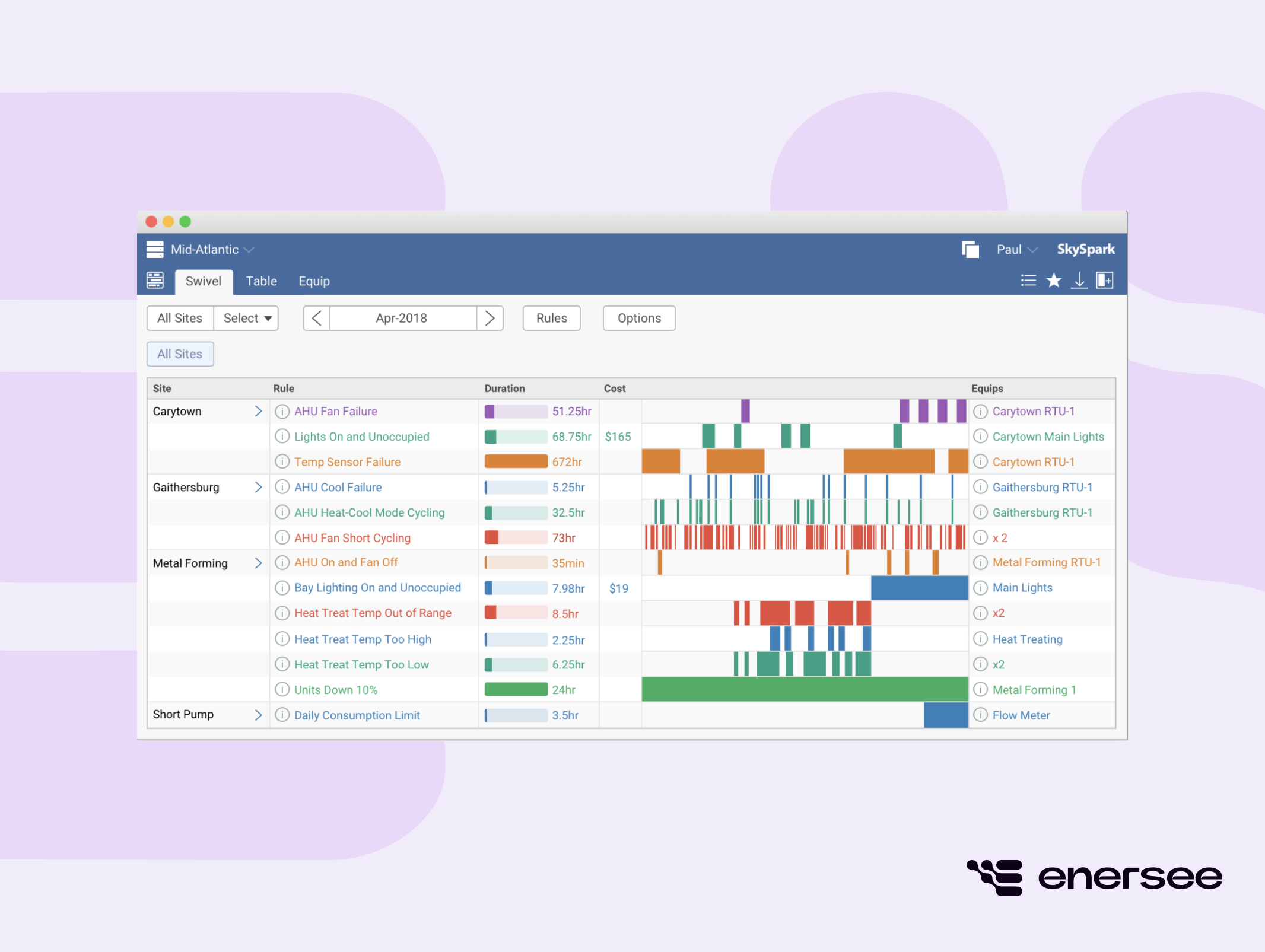
A BrainBox AI competitor used widely for fault detection and diagnostics in commercial buildings, SkySpark helps teams understand root causes by applying rule-based logic and analytical models to build data.
Its strength lies in identifying, explaining, and contextualizing performance issues across HVAC and other building systems. SkySpark focuses on detecting faults and inefficiencies and supporting engineers and operators with diagnostics insight.
With a 4.5 score on Capterra, users appreciate its flexibility, speed, and analytics capabilities. What is it they don’t like? Some find it hard to use, especially if you don’t have a large team.
Plus, you may still need manual workflows or integration with other systems in certain use cases. One user said, “With such robust software, there also comes the challenge of having enough staff with the technical expertise to really make use of the software.”
4. Kiona
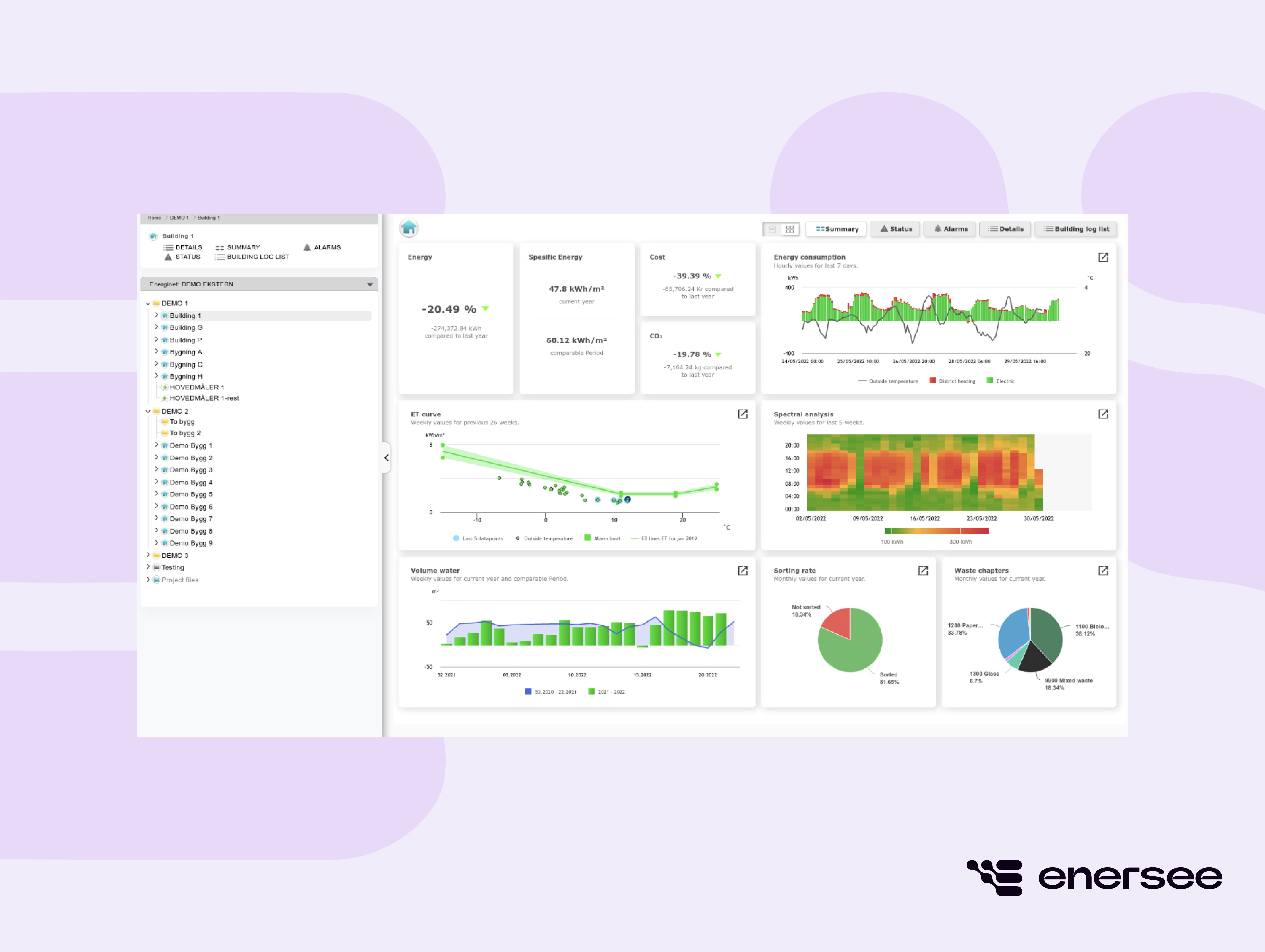
Focusing on monitoring, analytics, and reporting across portfolios, Kiona is another BrainBox AI software alternative to consider. It is a building energy management platform, and it can show you insights into consumption patterns. It supports benchmarking and helps teams track performance trends.
Kiona is a good option if you need energy monitoring across multiple sites. Plus, it comes with performance reporting, helps you identify anomalies and inefficiencies, and offers compliance support.
Compared to BrainBox AI, Kiona focuses less on real-time control and more on data-driven insights and reporting. And while it offers valuable analytics, going from findings to actions often requires manual interpretation, which may not be ideal long-term.
5. NovaVue
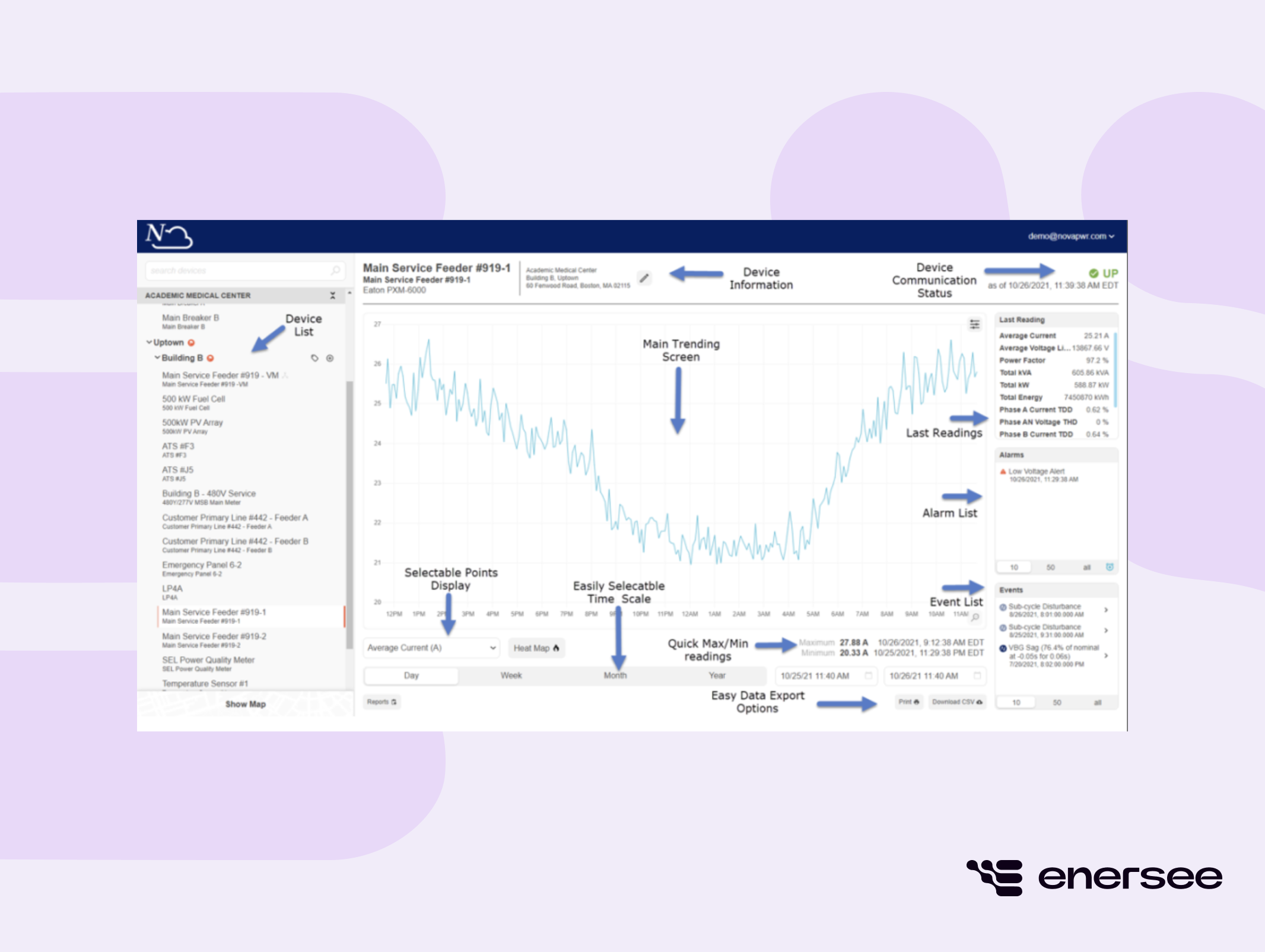
If you’re looking for a BrainBox AI competitor that focuses on electrical load visibility and operational diagnostics in commercial and multi-site buildings, NovaVue might be a good answer. Rather than simply automating HVAC control, it helps you understand how energy is consumed at the circuit and equipment level.
The platform connects to electrical panels and meters and provides near real-time insights into things like load profiles and abnormal consumption patterns. So, if you want to identify inefficiencies, reduce peak charges, and improve operational decision-making, NovaVue can help.
On the downside, some users complain that its report-generating capabilities don’t go beyond invoicing and billing, which can add some serious workload to your plate.
Another common limitation mentioned by users is that NovaVue depends heavily on meter capabilities, which can restrict how precisely electrical disturbances are quantified and alerted on.
How to choose the right BrainBox AI alternative
When you outgrow BrainBox, you’ll likely find yourself confused with all the alternatives on the market. So, how do you choose the best one? A lot depends on how much autonomy, intelligence, and scale your organization actually needs.
For instance, platforms like SkyPark or Cotopaxi can work well if you rely on engineering-led analytics and deep system diagnostics. Kiona, on the other hand, offers solid monitoring and sustainability tracking for those that focus mainly on transparency and reporting.
For teams that want detailed electrical visibility without automated control layers, NovaVue can be the answer.
However, when you manage large portfolios, the challenge often goes beyond individual systems. The real issue here becomes knowing where to act first, which issues come with the highest financial or compliance risk, and how to scale performance improvements with limited resources.
For those teams, Enersee comes with the perfect solution. Instead of focusing on a single system or layer, Enersee provides continuous, portfolio-wide intelligence. It automatically detects deviations, estimates impact, and prioritizes actions across buildings.
Enersee supports organizations that need speed, clarity, and scalability rather than manual analysis or system-by-system tuning.
FAQs
1. Why would an organization replace BrainBox AI?
Some teams need portfolio-level intelligence, transparency, or decision support rather than autonomous HVAC control.
2. Is BrainBox AI suitable for large portfolios?
It can be, but organizations with diverse assets often need additional tools for coordination and prioritization.
3. Which BrainBox AI alternative offers the most portfolio visibility?
Enersee provides portfolio-scale intelligence with automated prioritization.
4. Do these tools integrate with existing BMS platforms?
Most support standard integrations, though depth varies by vendor.
5. Can these platforms support compliance requirements?
Some provide partial support. Enersee supports the detection of required measures for frameworks such as BACS and EPC-NR.
Written by
Anastasiia Andriiuk
and