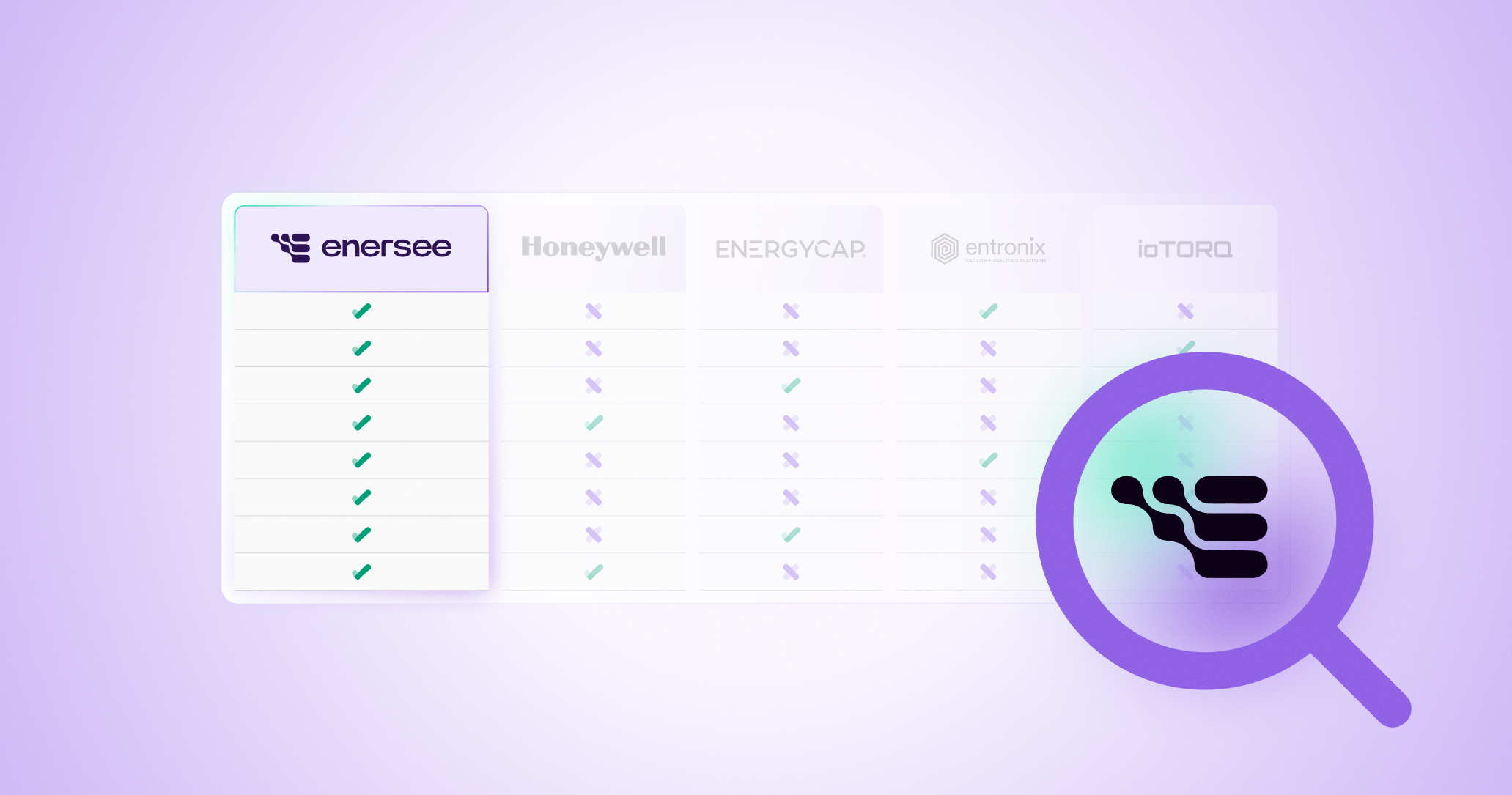
You need thorough electrical visibility. Maybe you manage hundreds or thousands of buildings. But you still need to understand what and when consumes energy to control costs and avoid failures.
Nanogrid is often a starting point for many organizations. Why? It offers breaker-level monitoring, real-time electrical measurements, and a hardware-first approach that can instantly show teams what's happening inside their electrical panels.
But as your operational needs mature, you’ll need more than circuit-level data. Things like portfolio-level insights, automated interpretation, and tools that help you understand why an issue is happening become essential. When that happens, teams start looking for Nanogrid alternatives. Below are 5 platforms worth evaluating.
Why you might need a Nanogrid alternative
Before we talk about the cons, what exactly can Nanogrid do? It offers detailed electrical visibility through various sensors and controllers. If you need things like break-level load data, solar PV performance tracking, local equipment monitoring, then Nanogrid can be the answer.
It's also easy to install and has minimal infrastructure, which is a bonus for those teams that don't want to spend too much time getting used to a new tool.
However, once your portfolio and energy strategies grow, limitations appear. Organizations typically look for a Nanogrid alternative when they need one or more of the following:
- Broader building or multi-site visibility. Nanogrid focuses on electrical panels. But when you manage multiple sites or mixed assets, you need aggregated dashboards, portfolio comparison, and performance trends.
- Automated interpretation, not just measurements. With Nanogrid, you can easily see real-time consumption. But you won’t get an explanation of the root causes behind the consumption, the model's expected behavior, or learn how to prioritize issues by financial impact.
- Support for compliance frameworks. Regulations like BACS and EPC-NR require precise monitoring, measure detection, and continuous commissioning. Unfortunately, Nanogrid doesn’t provide any of these.
- Integration beyond electrical systems. For a full operational picture, organizations often need HVAC, lighting, occupancy, environmental, and utility data.
- Reduced manual effort. The larger a portfolio, the more unsustainable it is to manually review electrical patterns.
If any of these apply to your situation, the following Nanogrid alternatives may offer better long-term value.
Top 5 Nanogrid alternatives
1. Enersee

Where Nanogrid focuses on surface-level electrical insights, Enersee goes further. It explains why issues occur, what they cost, and which actions you need to prioritize next.
It models each building’s expected behaviour using AI. Enersee doesn’t display raw electrical data. Instead, it evaluates performance in real time and automatically surfaces critical deviations, all while estimating their financial impact.
How else can Enersee help?
- It builds mathematical models for every building.
- Detects abnormal behaviour early, not after a fault appears.
- Prioritizes issues by cost, urgency, and compliance requirements.
- Reveals hidden inefficiencies that raw electrical data can’t show.
- Works across utilities, HVAC, sensors, BMS systems, occupancy, and weather.
- Reduces manual audit workloads by enabling continuous commissioning.
A good example comes from Delhaize, a large Belgian retailer managing dozens of franchise-operated stores. The company used Enersee’s Management Module to validate energy savings from remodeling projects and to bring consistency to performance reporting.
Enersee’s native IPMVP® tools removed guesswork from savings calculations and gave the retailer transparent, standardized insights into which retrofits actually worked.
Store managers and franchise owners also became more involved. They could compare their site’s performance to anonymized peers, spot anomalies early, and learn which operational changes delivered the highest return.
The retailer also reduced its manual reporting effort. Because Enersee generates audit-ready data streams automatically, sustainability and financial teams no longer needed to reconcile spreadsheets, and compliance requests became easier to answer.
"We selected Enersee to roll it out across 700 Delhaize supermarkets and affiliates because it’s an innovative energy platform that offers immediate gains. Enersee also lets them benchmark with comparable stores to optimize cooling (cold storage and refrigeration cabinets) and heating (store areas) efficiency during both colder and warmer seasons."
Ruben De Vos, Energy & Engineering Manager at Delhaize Belgium
2. Emaze ePortal
If you’re looking for broader building-level visibility rather than electrical panel insights, check out Emaze ePortal. This Nanogrid competitor centralizes HVAC data, equipment trends, alarms, and utility information.
It’s helpful for organizations that manage several buildings, offering trends analysis, consumption history, and alarm dashboards. It integrates with a range of sensors and building systems. Plus, it helps teams monitor comfort, equipment, and energy use at the same time.
What can’t it do? Its analytics features, while present, require manual interpretation. Automation is rather limited when you compare it to AI-driven platforms, and it’s not ideal for advanced anomaly modelling or root-cause detection.
In short, ePortal is a solid Nanogrid alternative when the latter feels too narrow and you need a more holistic view of building operations.
3. Landis+Gyr
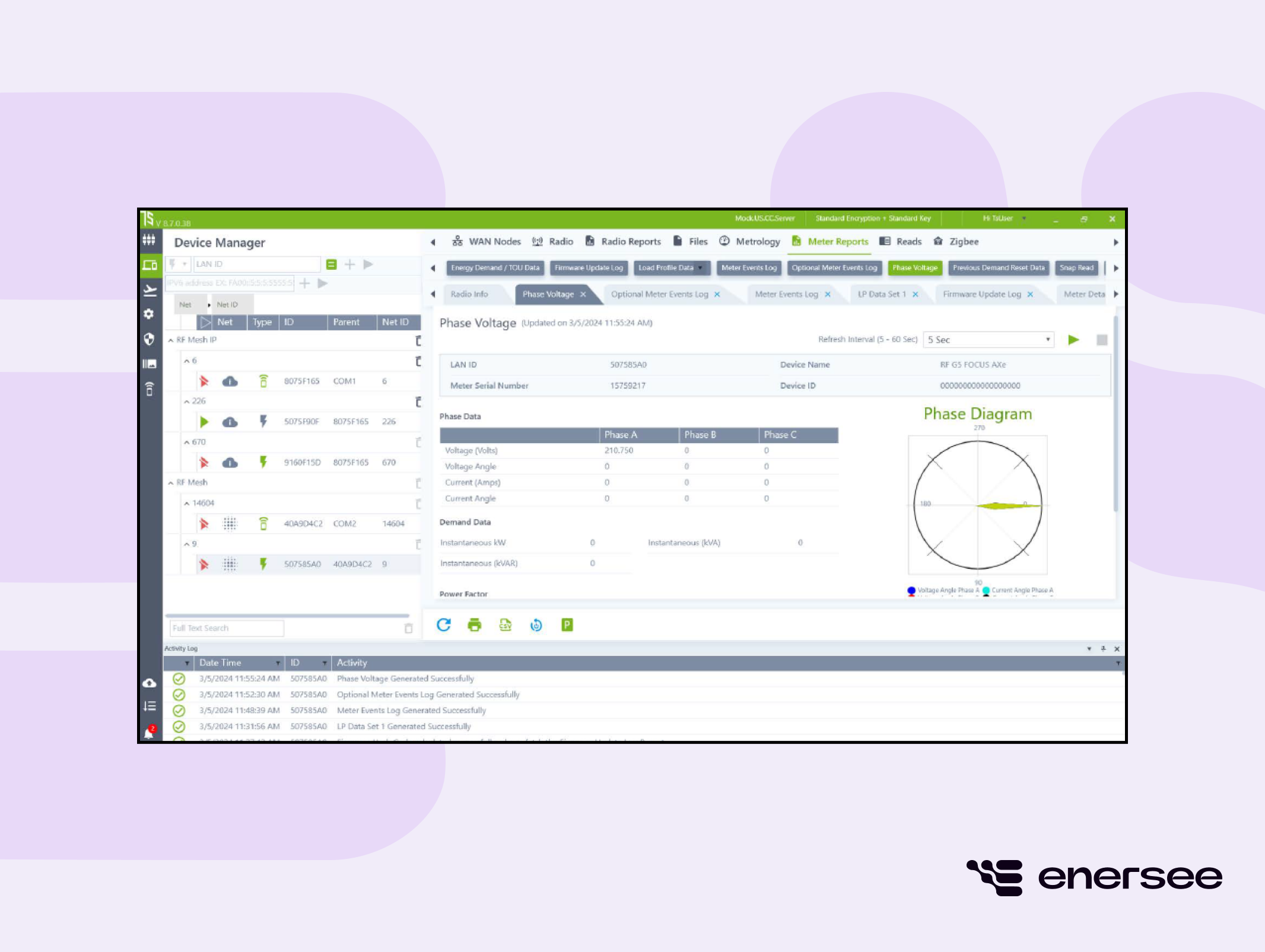
Another Nanogrid competitor that stands out is Landis+Gyr. It provides smart meters, grid-edge data, and infrastructure-level visibility. It’s a good alternative when you need a tool that can give you more robust utility data or when you need smart metering across a larger portfolio.
Landis+Gyr also supports demand response, load management, and advanced metering infrastructure. Its grid-edge insights will be useful for large-scale deployments, which is why many public-sector operators appreciate it.
When talking about the platform, a user explains, “We have successfully deployed the system since 2009. It is robust, accurate, scalable, and integrates well with our other systems.”
The one thing you should keep in mind though, is that Landis+Gyr isn’t a full EMS. It offers limited anomaly interpretation and, when dealing with raw data, you’ll still need expert review.
4. Vitality
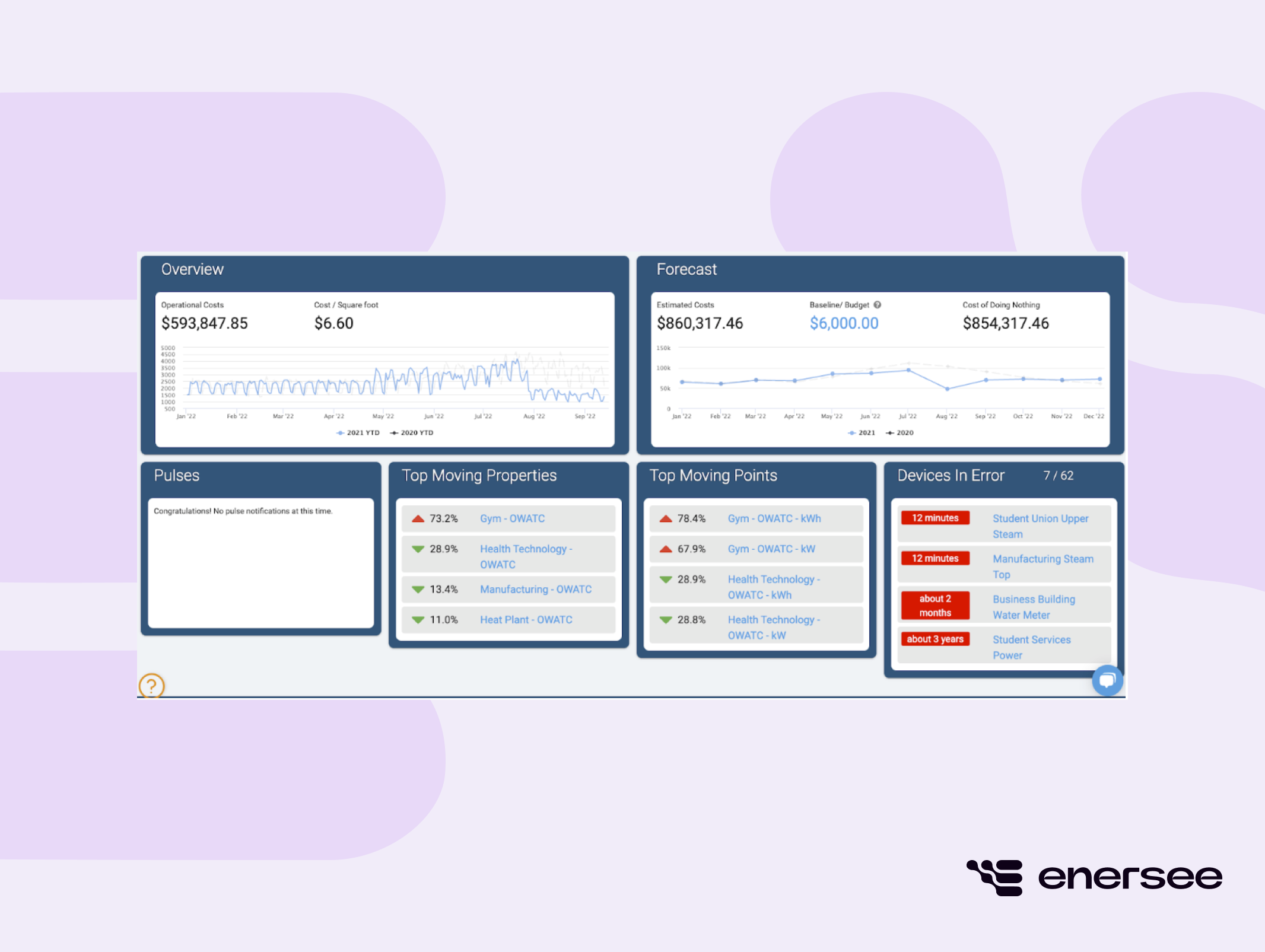
If you’re looking for a Nanogrid alternative focused on cost monitoring, performance tracking, and basic analytics, you may want to check out Vitality. This EMS provides more building-level context than Nanogrid, but remains relatively easy to deploy.
What can it do? It tracks utility bills, tariffs, and usage trends. It can also provide carbon, cost, and budget dashboards, and can generate dashboards and charts with a few easy clicks. Plus, it includes benchmarking and load analytics and supports integrations with common hardware systems.
Does it have limitations? A few. For instance, its anomaly detection capabilities are rather basic, and it offers limited predictive analytics. And while you can use it across different portfolio sizes, organizations with highly complex or distributed portfolios may find it harder to scale effectively.
Reviewing the software on the popular platform Capterra, a user says, “Some functionality is not intuitive, very robust website, but not always easy to figure out how to do certain things.”
5. Johnson Controls (EasyIO/JCI)
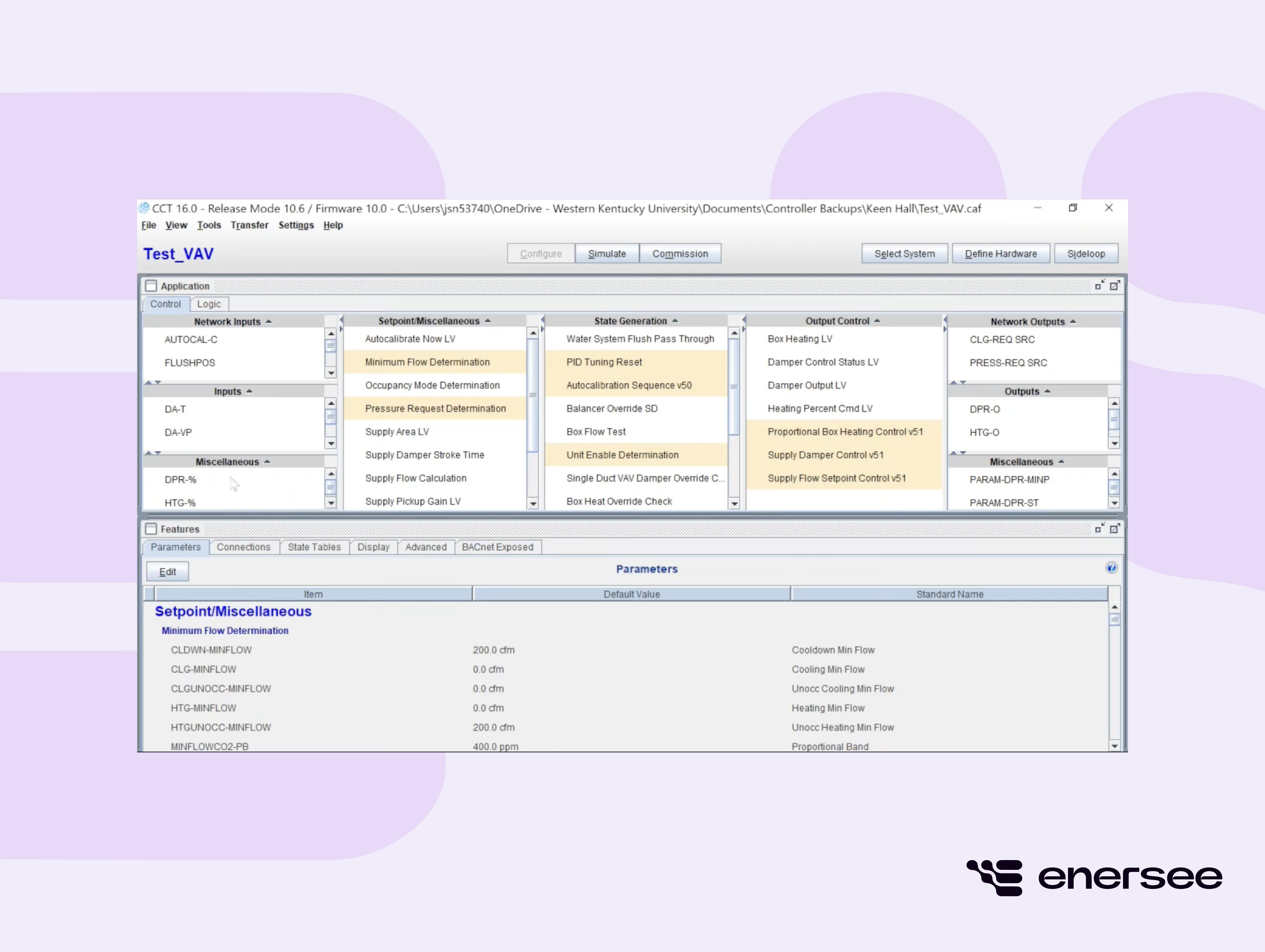
A Nanogrid software alternative that provides automation controllers and BMS-lite capabilities, Johnson Controls can be used in HVAC, lighting, and other building systems. It’s great for teams that need both the monitoring that Nanogrid offers as well as system control.
If you’re implementing automation sequences, Johnson Controls is a good solution. It offers programmable controllers for HVAC optimization, and it’s useful for reducing manual adjustments in building systems. Plus, you can easily integrate within Johnson Controls’ ecosystem, so if you’re already using related hardware or software, you’ll quickly get used to this tool.
On the downside, it requires technical expertise for setup and tuning and focuses more on control, not high-level analytics or portfolio insights. There’s also no financial impact modelling or anomaly prioritization. Some users also complain that JCI controllers are good for smaller sites, but they struggle with larger ones.
How to choose the best Nanogrid alternative
With so many Nanogrid tool alternatives out there, how do you choose the best one? Beyond each product’s features, the answer depends most on what you need next.
For instance, if you want facility dashboards and building-wide insights, Emaze ePortal offers a simple, yet powerful solution. Landis+Gyr can help those looking for utility-scale hardware and smart metering, while those who are seeking better controllers could find Johnson Controls useful.
If you’re looking for automated intelligence across your entire portfolio, check out Enersee. It will give you insights into what is happening and why, and it can act as your 24/7 Virtual Energy Manager, so you won’t need to worry about limited human resources.
FAQs
1. Why would an organization switch from Nanogrid?
Teams usually switch when they need analytics beyond electrical-panel data, or when managing multiple buildings becomes too complex for hardware-only monitoring.
2. Is Nanogrid suitable for enterprise portfolios?
It works well for single sites or small portfolios. Large organizations often need dashboards, modeling, and automation that Nanogrid does not provide.
3. Which Nanogrid alternative offers the most automation?
Enersee delivers the highest automation by modeling building behavior and ranking issues by financial impact.
4. Do these alternatives require hardware installations?
Some do (Landis+Gyr, EasyIO), while others operate on existing utility and BMS data (Enersee, Vitality, ePortal).
5. Do these tools support regulatory frameworks like BACS or EPC-NR?
Most provide partial support. Enersee offers automated detection of required measures and continuous monitoring aligned with these frameworks.
Written by
Anastasiia Andriiuk
and