As an energy manager, you’re constantly under pressure, managing hundreds or thousands of buildings. Not to mention the mounting pressure from investors, regulators, and other stakeholders to meet savings targets and regulatory obligations. A good software can be a real life-saver, helping you validate performance, prove savings, and support investment decisions.
For many organizations, Ento.ai plays that role well. It’s a measurement and verification platform that aligns with IPMVP standards and provides transparent, defensible energy savings calculations.
But not every team needs the same approach. Sometimes, you’ll simply outgrow project-based verification. Other organizations might need continuous visibility, faster issue detection, or portfolio-scale prioritization. In those cases, looking at Ento.ai alternatives becomes a logical next step.
Choosing one might prove trickier than you’d imagined, though. With dozens of options on the market, how to tell which is the best for your organization? Below is a breakdown of 5 Ento.ai alternatives, each suited to different operational needs.
Why you might need an Ento alternative
Before getting into why some organizations look beyond Ento.ai, it helps to answer another question: what exactly is it meant to do? Ento.ai is built around standardized energy savings verification and is typically used to confirm whether efficiency projects achieved the results they were designed for.
The platform follows a structured M&V approach, often aligned with IPMVP principles. This makes it suitable for validating retrofit outcomes, energy conservation measures, and performance-based contracts. Instead of continuous operational monitoring, Ento.ai usually relies on baseline definitions and post-implementation comparisons to generate results.
So, why do some organizations look for an Ento.ai alternative? There are a few reasons.
- A need for continuous monitoring, not only post-project validation.
- Limited automation around issue detection and prioritization.
- Manual interpretation required to translate results into actions.
- Less focus on operational losses between projects.
- Growing portfolios that require faster, site-level decision-making.
If your organization manages dozens or hundreds of buildings, validating savings alone is often not enough. Preventing losses before they accumulate becomes just as important. And so does finding an Ento.ai alternative.
Top 5 Ento.ai alternatives
1. Enersee
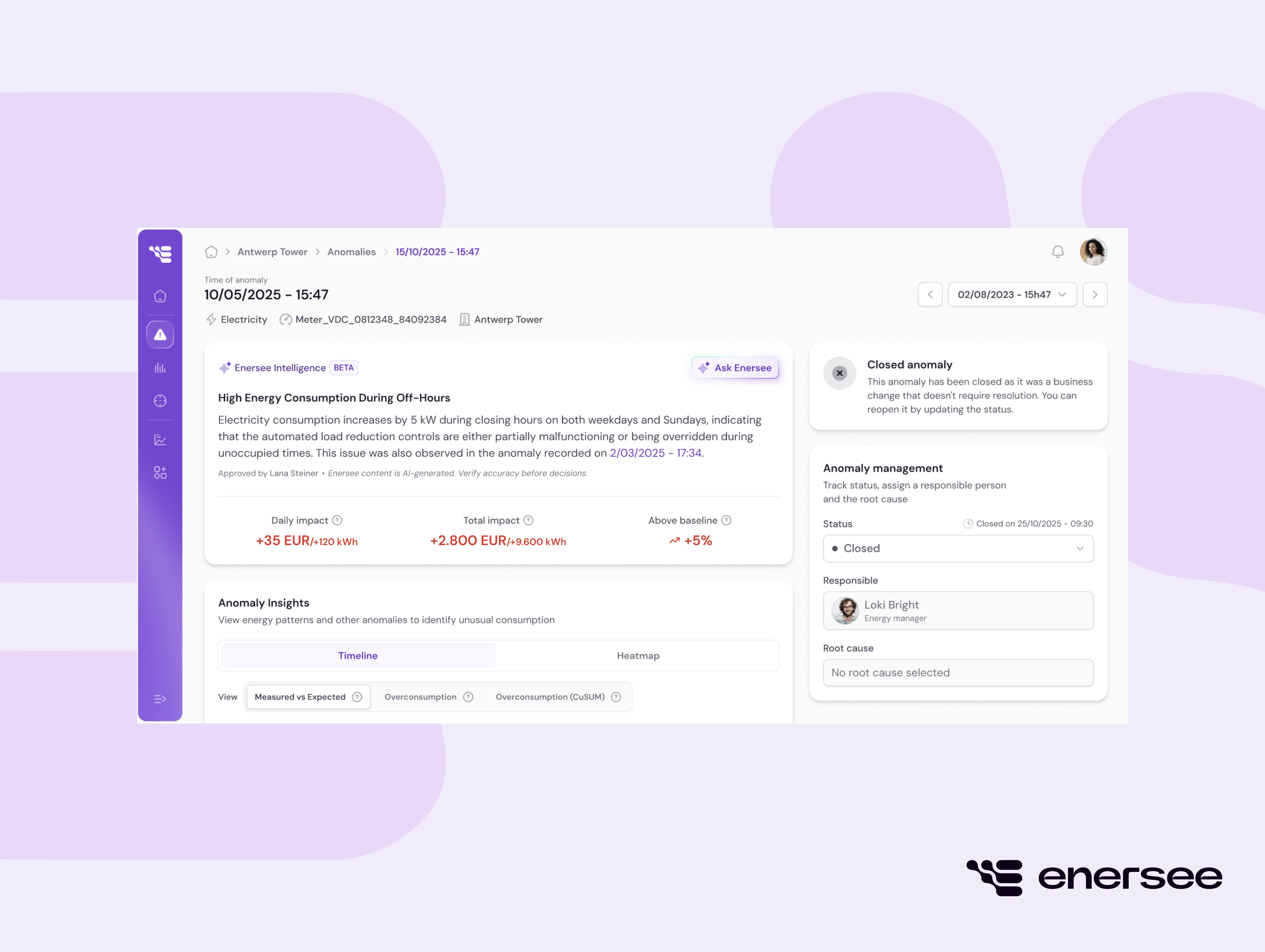
Built to become your Virtual Energy Manager, Enersee approaches energy performance from a different angle than Ento.ai. Instead of focusing primarily on verifying savings after interventions, Enersee focuses on detecting and preventing losses across the entire portfolio 24/7.
How does that happen? The platform builds a behavioral model for each building using utility data, BMS signals, weather, occupancy, and operational context. If there’s a deviation from expected performances, Enersee can immediately detect it. There’s no need for manual baselines or project definitions, which saves time and allows teams to focus on critical areas.
In practice, this means Enersee doesn’t just surface anomalies. It translates them into financial impact, highlights which issues pose the highest operational or compliance risk, and helps teams decide where to focus first.
Because this happens continuously and across the entire portfolio, organizations can maintain oversight without relying on periodic manual audits, even when they need to consider regulatory requirements like BACS or EPC-NR.
Let’s look at a practical example. Take a real estate portfolio with 150 buildings, 600,000 m2, and a team of just 2-3 people. Impossible to manage without automation. Enersee helped them turn over 5 million data points into actionable insights.
This enabled them to manage significantly more assets with the same headcount. They also saw a 74% CO2 emission reduction compared to 9 years prior and a 51% overall Capex reduction to reach targets.
The bottom line? Enersee is perfect for organizations that want real-time operational intelligence, not just confirmation of savings after the fact.
2. ioTORQ EMIS
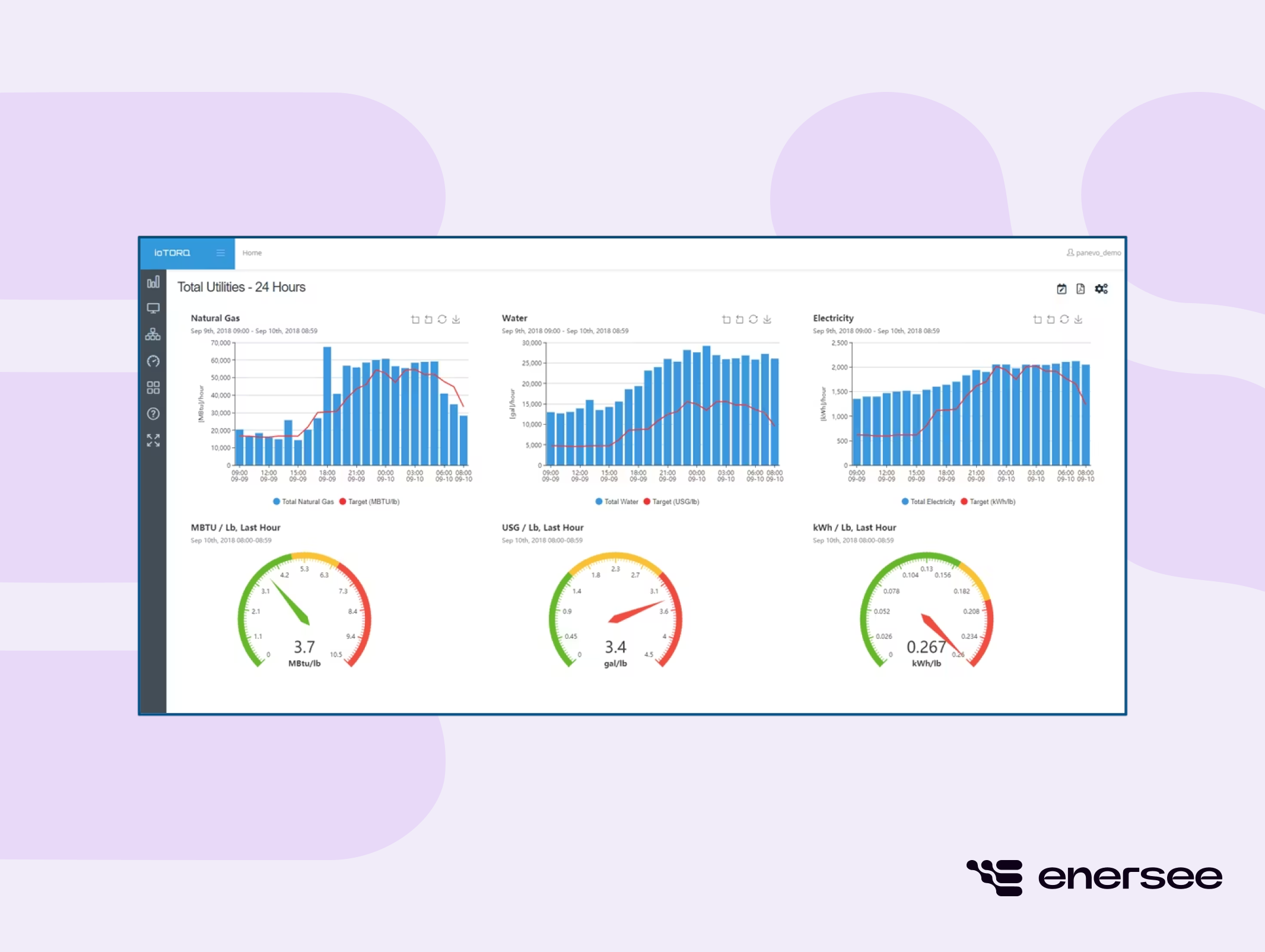
If you’re looking for a more traditional energy management information system as an Ento.ai tool alternative, check out ioTORQ EMIS. Developed by Panevo, this tool is all about structured data, reporting, and compliance workflows.
It comes with energy baselining and KPI tracking, meter utility and data integrations, and historical performance analysis. Plus, it offers standardized reporting for management and audits.
Compared to Ento.ai, ioTORQ EMIS offers broader EMIS functionality, but doesn’t focus as much on automated insights. In many cases, you’ll still need experienced users to interpret results, which makes it more suitable for organizations with dedicated energy teams.
One user explains, “Integration into business can be a little challenging, but the customer service is there to resolve potential issues, so the benefits more than outweigh the challenges.”
3. EntroNix
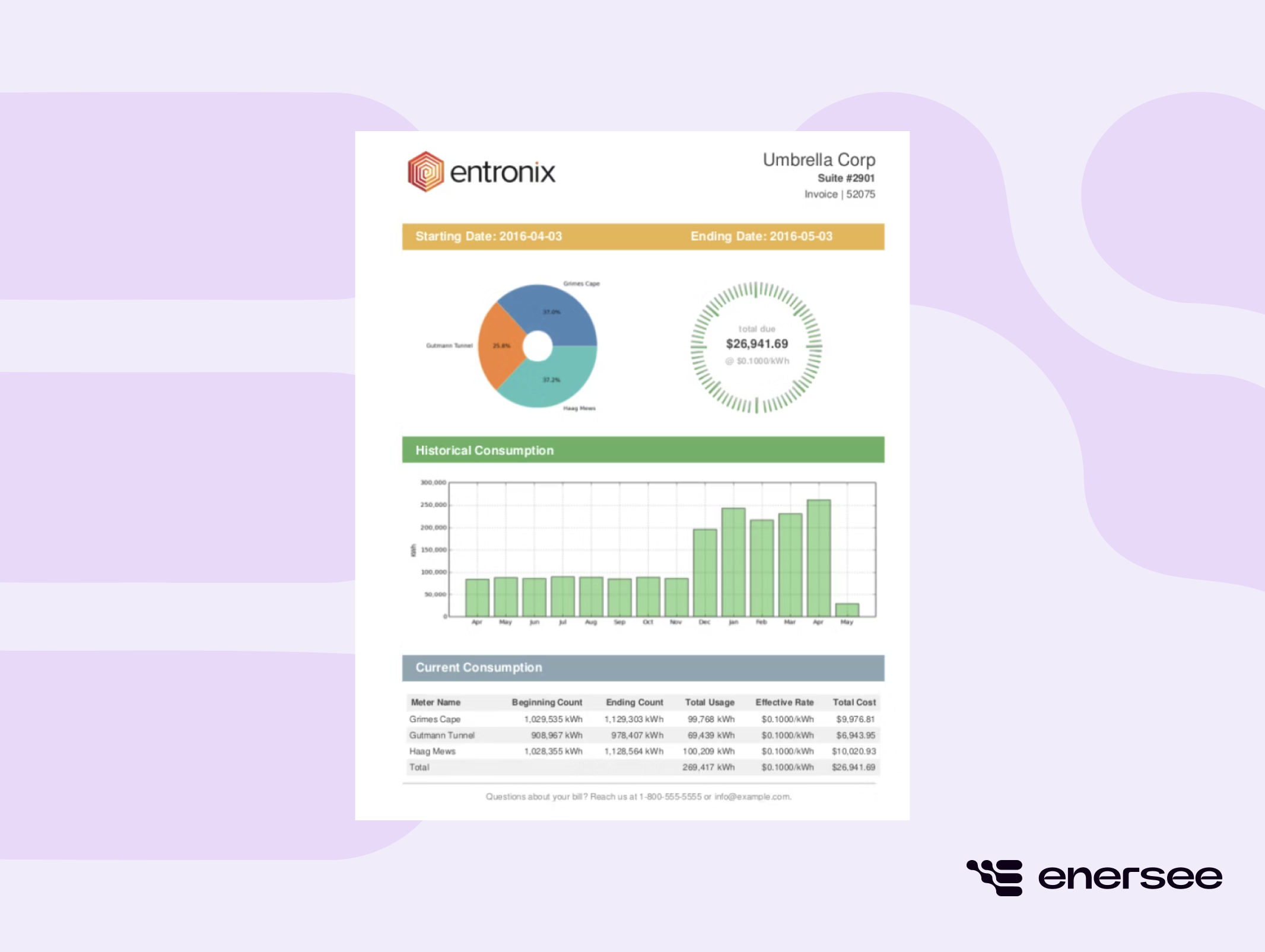
Another Ento.ai software alternative to keep in mind is EntroNix. Specializing in fault detection and diagnostics, particularly for HVAC and mechanical systems, EntroNix comes with customizable dashboards and reports.
Its strength lies in identifying equipment-level inefficiencies rather than validating portfolio-wide savings. EntroNix also offers maintenance and performance insights and cross-site comparisons for similar equipment.
Users appreciate it for its ease of use, reliable customer support, and flexibility, giving it a 4.9 score on Capterra. So, is there anything people don’t like about EntroNix? Yes, it has a few cons. The learning curve is not small, and while it does provide valuable technical insights, its scope is somewhat narrower than that of tools like Enersee.
Its alert system is also not quite perfect. A user says, “Would like to have an alert if the node goes offline and does not report to the cloud.”
4. EnergyCAP
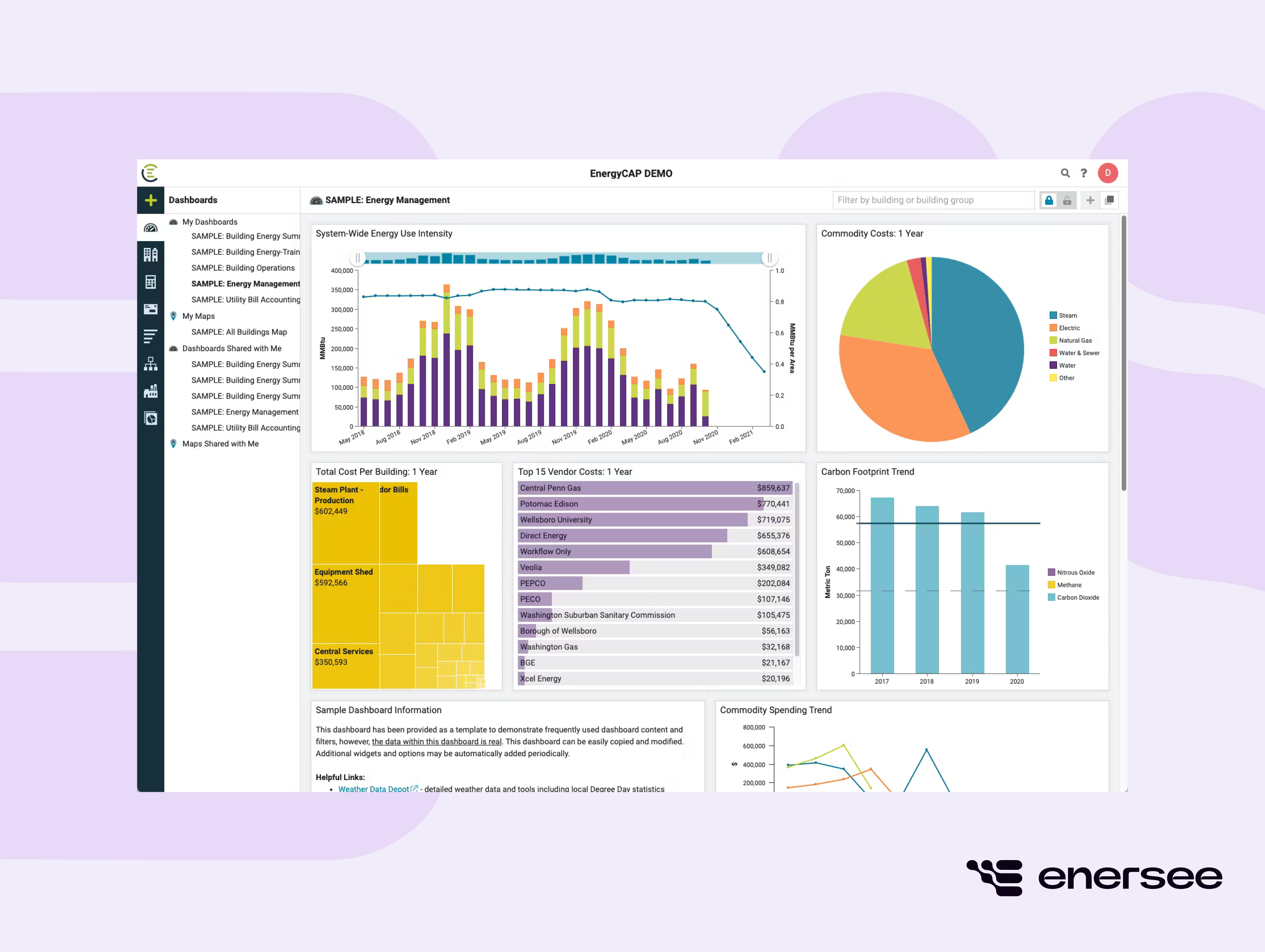
An Ento.ai alternative often preferred by organizations that focus on cost accuracy, billing validation, and reporting, EnergyCAP is another good tool to consider.
It comes with budgeting and forecasting capabilities, audit-ready reporting, and can help benchmark across large portfolios. EnergyCAP ensures data consistency and financial accountability, especially for those organizations with complex billing structures and multiple utilities.
On the downside, it is mainly a governance and reporting platform, not so much a real-time operational tool. As a result, it has limited automation and advanced analytics, and most insights will require manual review and interpretation. That’s not ideal if you need to move fast or are working with limited human resources.
Plus, some users find that despite its focus on reporting, the functionality is a bit challenging, explaining they encountered “some difficulties in getting data to show in the format needed”.
5. Honeywell

An Ento.ai competitor that offers multi-site dashboards and analytics, Honeywell’s energy management solutions are a good option for those looking for energy optimization and who are already part of its ecosystem.
Organizations will usually choose this tool as part of a broader building automation or controls strategy and not as a standalone energy intelligence system. Honeywell’s strength is its deep integration with physical building systems, which can simplify deployment in standardized environments.
Does it have cons? Yes, some. For instance, its flexibility is often limited. Someone on G2, explains it simply, “It lacks flexibility of setting presets for various seasons for heating devices.”
The platform tends to rely on proprietary technologies, which makes it harder to adapt in mixed-vendor portfolios. Customization and innovation can also feel slower compared to software-first platforms. Plus, if you want advanced analytics, you’ll typically need additional modules or services.
Choosing the right Ento.ai alternative
There’s no shortage of Ento.ai competitors on the market and choosing between them depends a lot on what problem your organization is trying to solve next and how mature its energy operations already are.
If your main goal is to validate savings after projects are completed, Ento.ai remains a solid option. Its structured M&V approach is good for confirming outcomes and supporting performance-based contracts.
In contrast, organizations that spend more time dealing with utility bills, internal chargebacks, and financial reporting often lean toward tools like EnergyCAP. It tends to work better in environments where cost accuracy, governance, and consistent reporting matter more than real-time operational insights.
Teams focused primarily on HVAC performance and mechanical fault detection may find EntroNix valuable. And those that need formal EMIS reporting and documentation can check out ioTORQ EMIS.
However, as your portfolio grows and operational complexities increase, there comes a point where validation alone is no longer enough. Energy losses often happen between projects, across multiple sites, and at a pace that’s hard if not impossible to keep up with manually.
For organizations that need continuous intelligence, automated prioritization, and portfolio-scale visibility, Enersee can be the perfect option. It takes the focus from post-project verification to ongoing performance management.
In doing that, it helps teams detect issues earlier, prioritize actions more effectively, and manage energy performance proactively, not reactively.
FAQs
1. Why would organizations replace Ento.ai?
Many teams need real-time insights and automation, not only post-project savings validation.
2. Is Ento.ai suitable for large portfolios?
It can be, but scaling often requires significant manual interpretation and effort.
3. Which Ento.ai alternative offers the most automation?
Enersee provides automated anomaly detection and prioritization across portfolios.
4. Do these tools support utility and meter integrations?
Most support standard integrations, though automation depth varies significantly.
5. Can these platforms support compliance frameworks?
Some provide partial support. Enersee automates detection of required measures for frameworks such as BACS and EPC-NR.
Written by
Anastasiia Andriiuk
and