Precise, real-time visibility into energy use has become essential for organizations managing complex portfolios and growing compliance requirements. Energy monitoring systems offer exactly this information and more. They provide visibility into the building’s energy consumption patterns, so you can see exactly where energy is wasted.
They centralize data, detect anomalies, and allow facility, sustainability, and energy teams to act before costs escalate. Grocery retailers have far less room for delayed action. Refrigeration and HVAC systems operate continuously, so inefficiencies accumulate every hour they go unnoticed.
To help you compare available options we reviewed seven energy monitoring systems that support better oversight, smarter decisions, and measurable efficiency gains.
Types of energy monitoring systems
Without reliable monitoring, many teams miss early warning signs. Studies note that buildings can lose 20–30% of their energy through undetected operational issues.
Energy monitoring systems can help you avoid this, but you have to know what to look for in such a tool. The market has a wide offer range, with a few categories standing out.
- Basic plug-in monitors. The simplest type, ideal for monitoring individual appliances.
- Submetering platforms. Track granular equipment-level or circuit-level consumption.
- Network energy monitoring systems. Integrate multiple meters and sensors and offer comprehensive analytics and reporting.
- IoT-based systems. Use sensors to track environmental and energy conditions.
Which energy monitoring capabilities make the biggest difference in retail
Sometimes energy consumption is just about the bill. Not in grocery retail, though. Refrigeration, freezers, HVAC systems, and lighting run almost continuously, as they should, to keep food fresh.
But that means energy is one of the largest costs across a store network. A refrigeration compressor that's drawing 5% more power than expected rarely triggers alarms. Multiply that across 200 stores for several weeks, however, and what looks like a minor maintenance issue becomes a significant operational cost.
By the time the monthly utility bill arrives, the opportunity to intervene has already passed. The solution comes in the form of continuous energy monitoring, which gives you real-time visibility into what's happening in every location.
7 Best energy monitoring systems
Without a good energy monitoring tool, you’ll struggle to keep your buildings efficient. And that’s not even considering legal requirements such as the EPBD and its BACS provision.
The tool you choose can make or break your success. For instance, if you work with a tool that’s built for small and medium-size portfolios, while you’re managing a large one, you'll struggle to scale it.
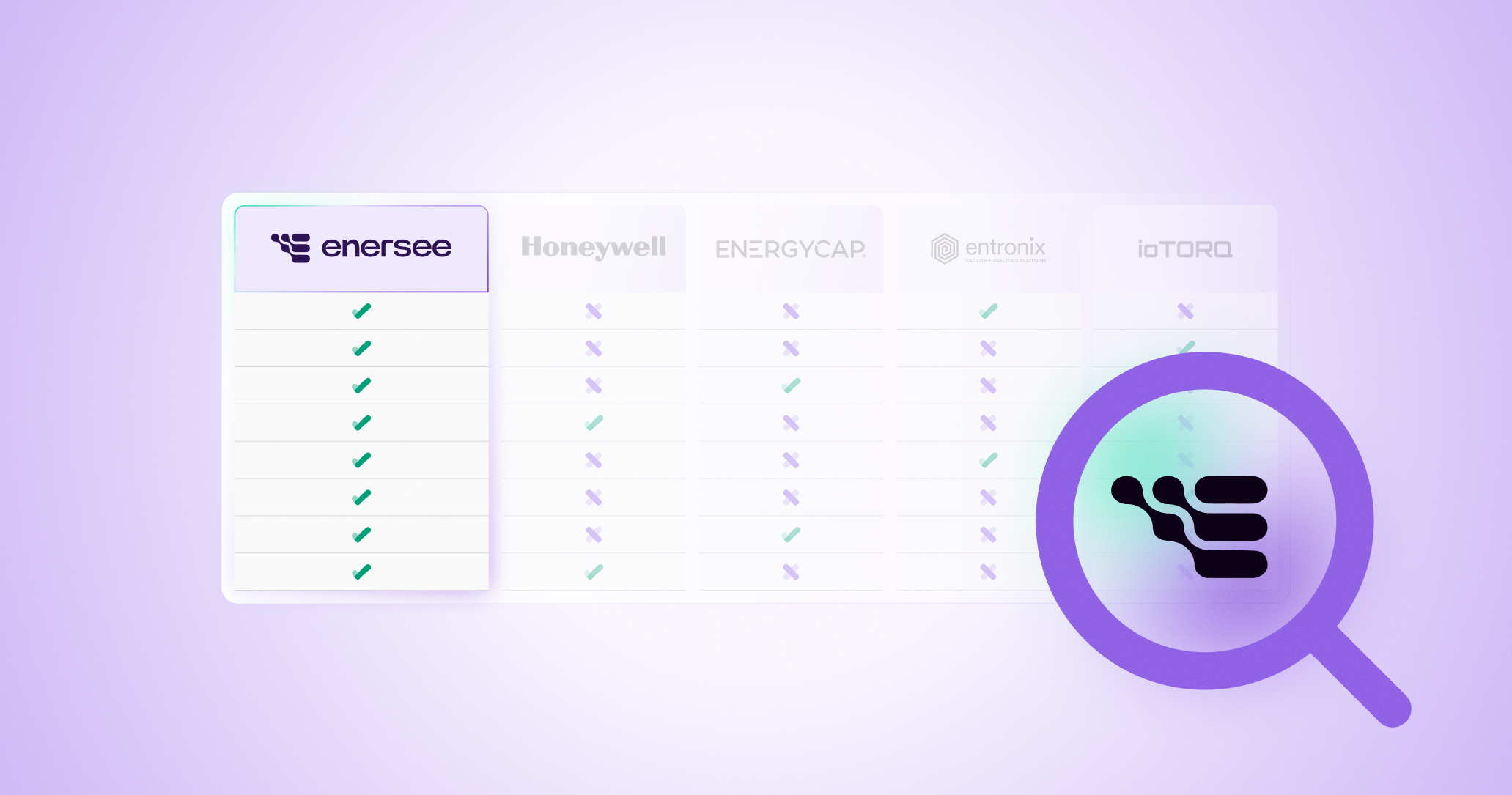
Because capabilities vary significantly across vendors, we analysed 7 of the best options on the market to highlight their strengths and limitations.
1. Enersee
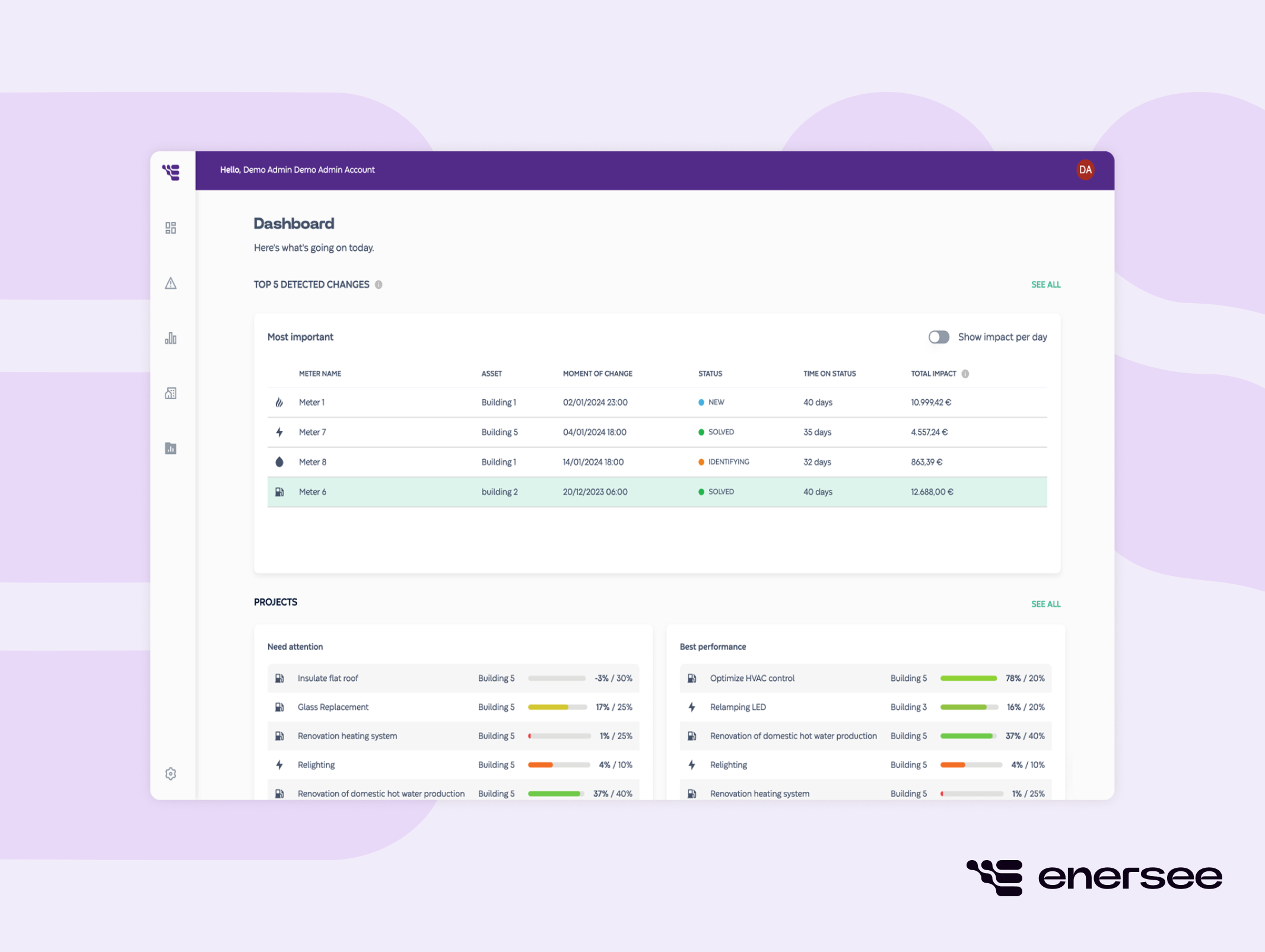
Often, traditional monitoring systems miss significant issues or generate alerts without context. Enersee approaches monitoring differently. It uses self-learning AI models to analyse metering, BMS data, IoT, occupancy, and weather data. Thanks to this, it can detect inefficiencies, estimate their financial impact, and rank actions by urgency.
Some of its core capabilities include:
- Models the building's energy behaviour to reveal patterns traditional systems overlook.
- Works as a 24/7 virtual energy manager, so you don’t have to worry about limited human resources.
- Detects anomalies in real time and quantifies the associated financial risk.
- Tracks operational issues, project outcomes, and long-term progress.
- Supports BACS and EPC-NR compliance through automated detection of required measures.
This approach has already delivered measurable results in grocery retail. Working with a large German retailer, Enersee detected 3.6 significant anomalies per store, while identifying 92.5% of the issues that traditional monitoring systems missed.
It also reduced the average resolution time from 38 days to just 8 days, allowing the retailer to respond before small inefficiencies developed into costly problems. The result was potential annual savings of €3.5 million across 1,000 stores. (If rolled out across the retailer's full portfolio, projected annual savings exceeded €40 million.)
Instead of asking teams to sift through hundreds of alerts, Enersee highlights the issues that deserve immediate attention, helping retailers spend less time monitoring dashboards and more time improving operational performance.
Who is Enersee best for? Any organization that needs continuous intelligence, fast detection, and reliable prioritization rather than dashboards alone.
2. Schneider Electric — Best energy monitoring system for whole-building electrical visibility
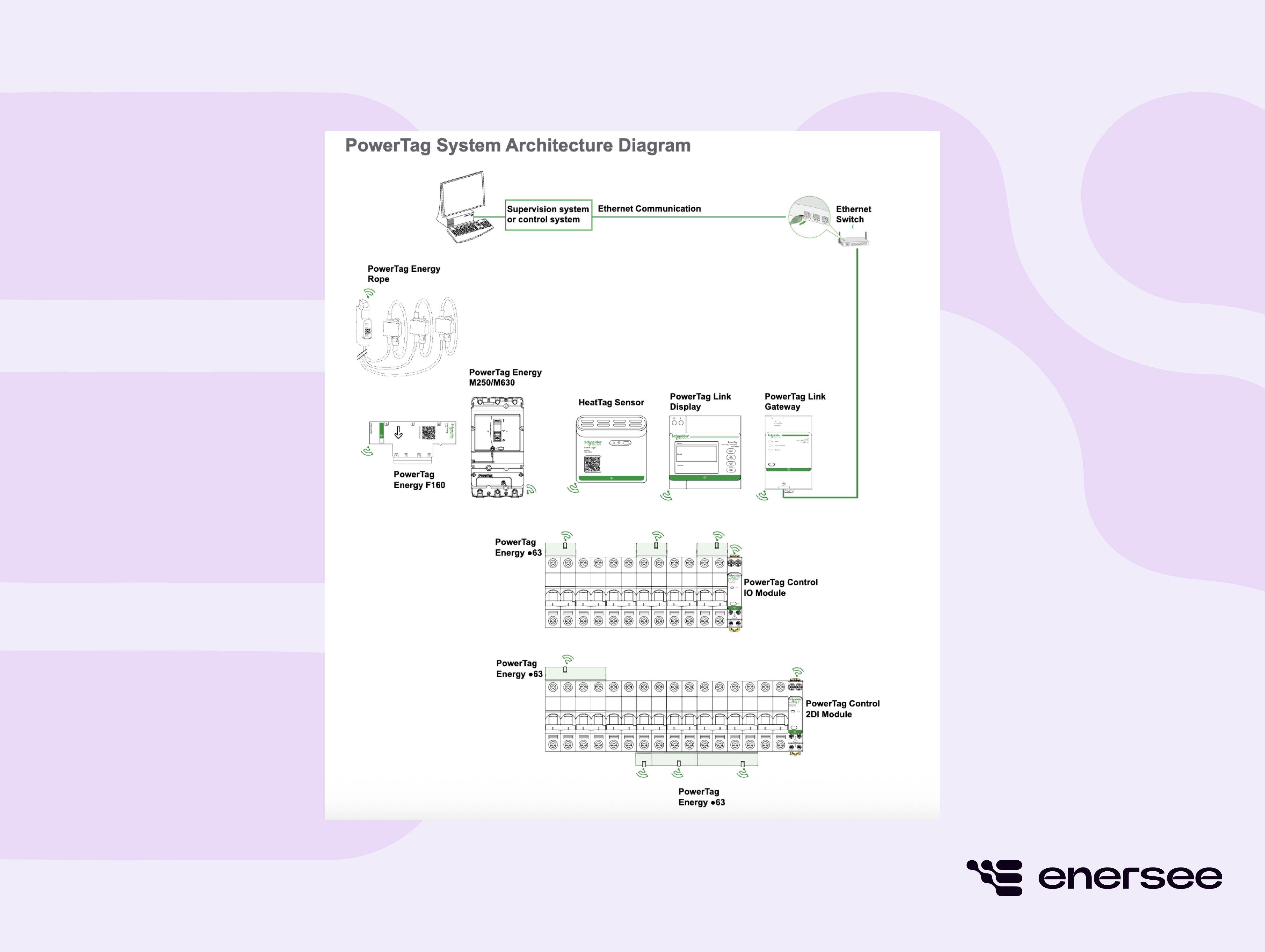
Previously known as the Wiser energy monitor, the Schneider Electric solutions are widely used in commercial and industrial settings for panel-level visibility across circuits and equipment.
They support detailed electrical diagnostics, analyse load behaviour and identify anomalies. Plus, they can detect load changes and unusual consumption patterns and help identify equipment behaviour and potential faults.
Does it have cons? It certainly has challenges. For instance, many stumble upon limited analytics capabilities unless they install additional software.
3. Spacewell Energy — Best energy monitoring system for sub-metering and equipment-level data
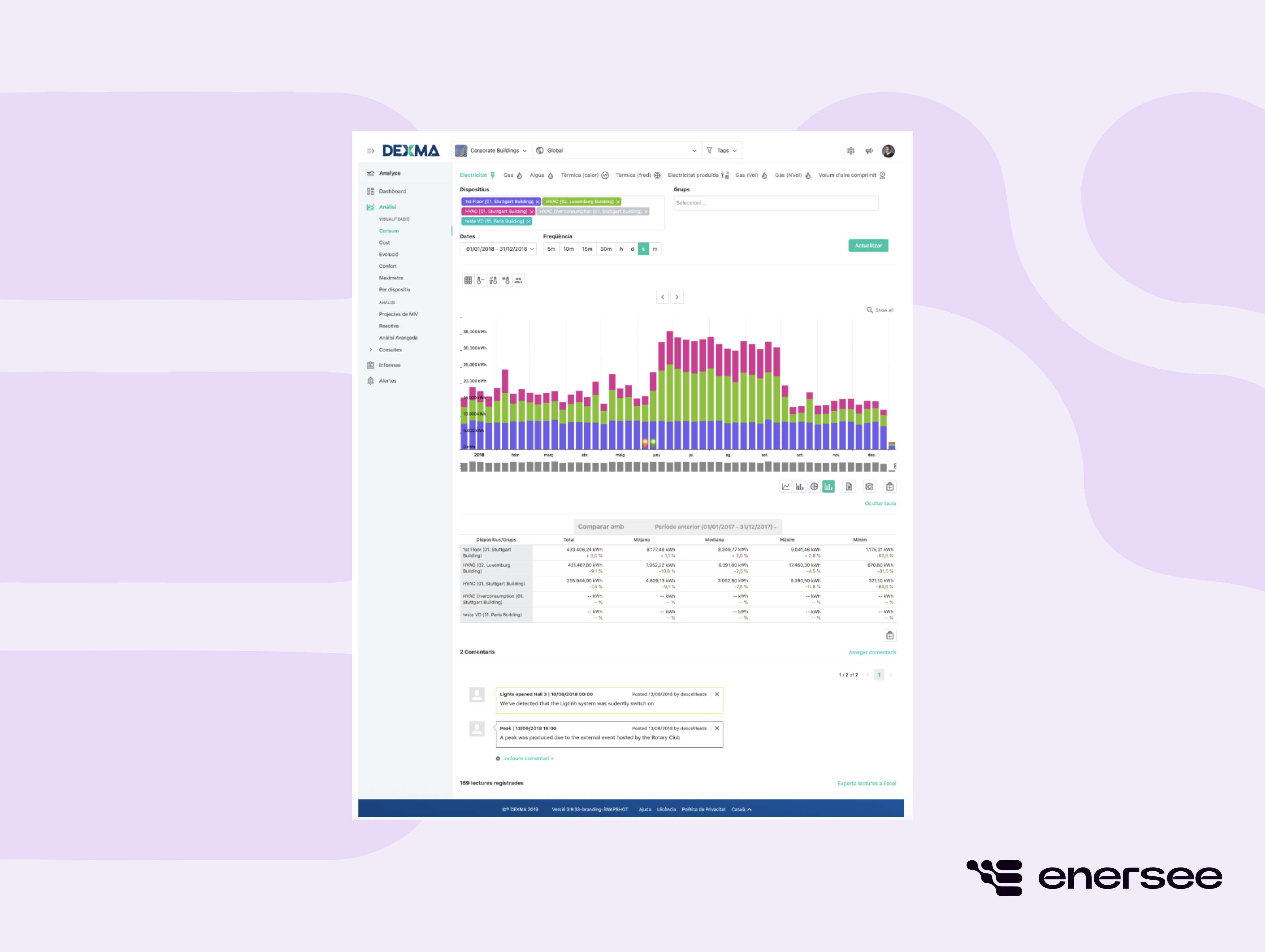
A solution that focuses on granular monitoring, Spacewell Energy collects data from things like IoT devices and BMS infrastructure. Afterward, it shows you detailed consumption patterns, so you can see exactly where you’re wasting energy.
It can also send alerts for abnormal loads and peak events, and it integrates with lighting, HVAC, and industrial controls.
Does it always perform well? Users have mixed reviews. Some users complain of a fairly significant learning curve. Others dislike the slow response of the customer service department.
Plus, it seems there’s a risk of the occasional incomplete alert, as one person explains, “the system sometimes displays generic error messages without clearly indicating which required fields are missing or incorrectly completed, making it difficult to resolve the issue efficiently.”
4. Sense Energy Monitor — Best energy monitoring system for electrical load detection
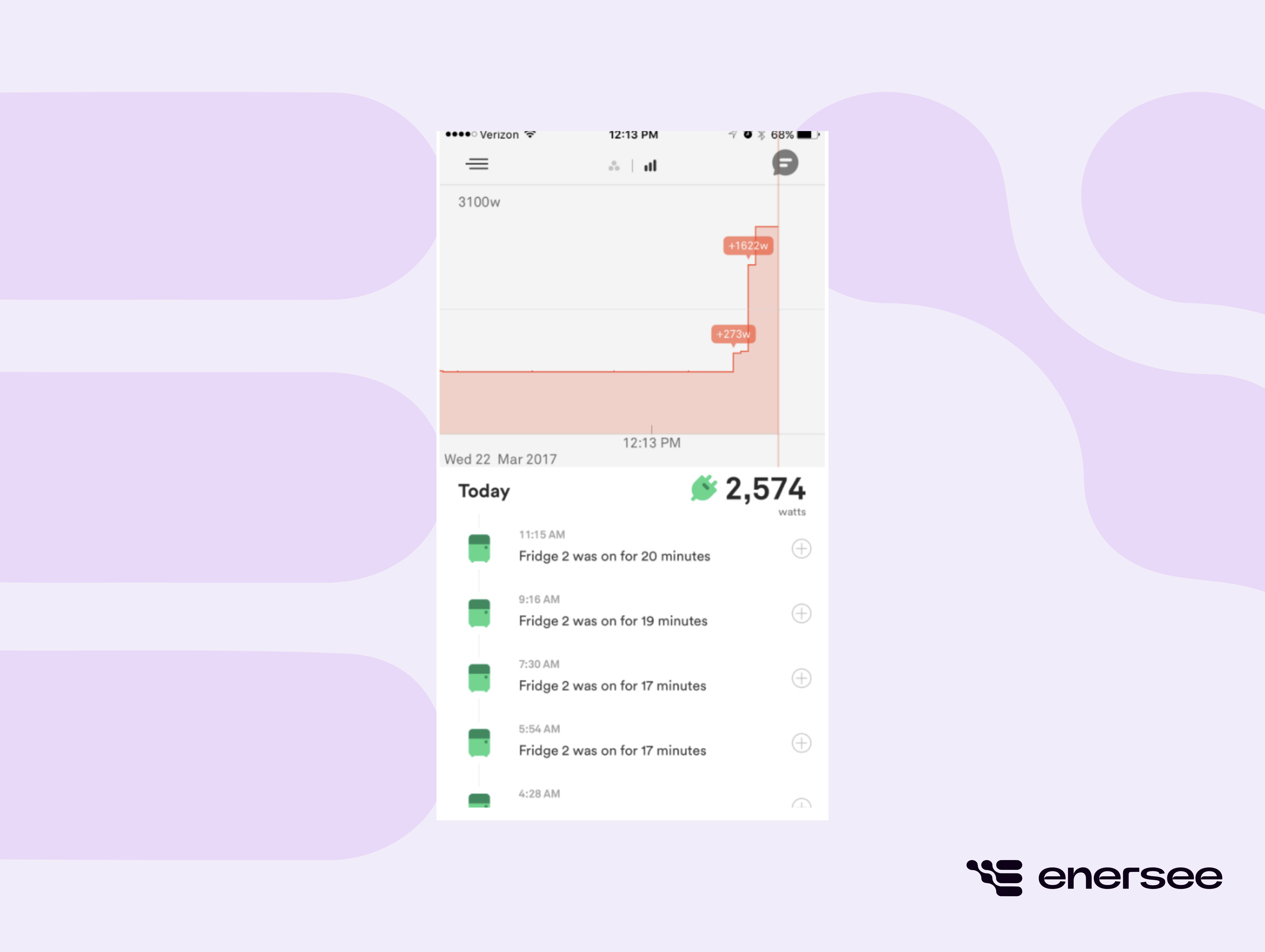
If you’re looking for an energy monitoring tool that offers real-time visibility into electrical consumption, check out Sense. It uses something called waveform analysis. With it, it can identify load patterns and show you when specific appliances cycle on or off.
Sense can detect load changes and helps you identify unusual usage patterns or unexpected equipment behaviour. If it detects abnormal load spikes or high consumption, it alerts the user, so you can correct the problem before it pops up on your bill.
On the downside, device detection often varies by site and equipment type. In other words, if you manage multiple sites, you’ll need to understand how it works in each building, with its particular devices.
Plus, Sense is more focused on monitoring and not analysis, so if you want something that does both at a professional level, this might not be the right choice for you.
5. MRI Energy — Best energy monitoring system for comprehensive utility targeting
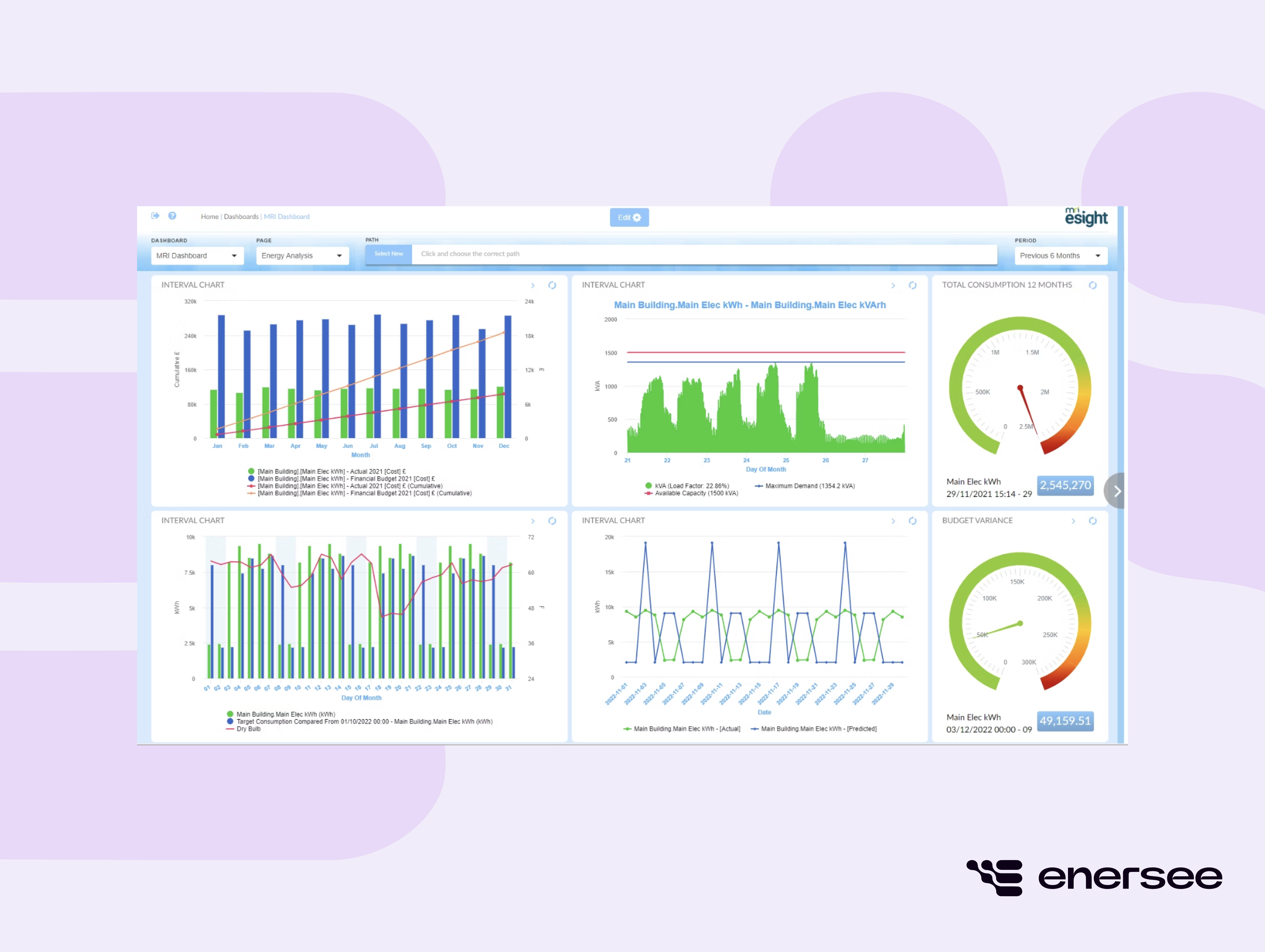
A tool that provides multi-utility monitoring, MRI Energy (previously known as eSight Energy) targets tools for electricity, gas, steam, and water consumption. What does it offer? Dashboards, alarms, and interval-data analysis for organizations that need structured oversight across multiple sites.
It also imports data from meters, BMS systems, and spreadsheets, so you have everything you need in one place.
However, if you have a large portfolio, you might find the custom dashboards can take a while to configure. Its automation and analytics capabilities are also not the best, but if you need simple, consistent monitoring, MRI Energy does the job.
A user explains, “Very complicated. Lots of quirky things you need to know to operate the software. For an end user, support is mandatory unless you have skills to learn and understand how it works. I have that ability, but If I was out, no one in my company could use the software.”
6. Wattwatchers Digital Energy — Best energy monitoring system for granular device-level tracking
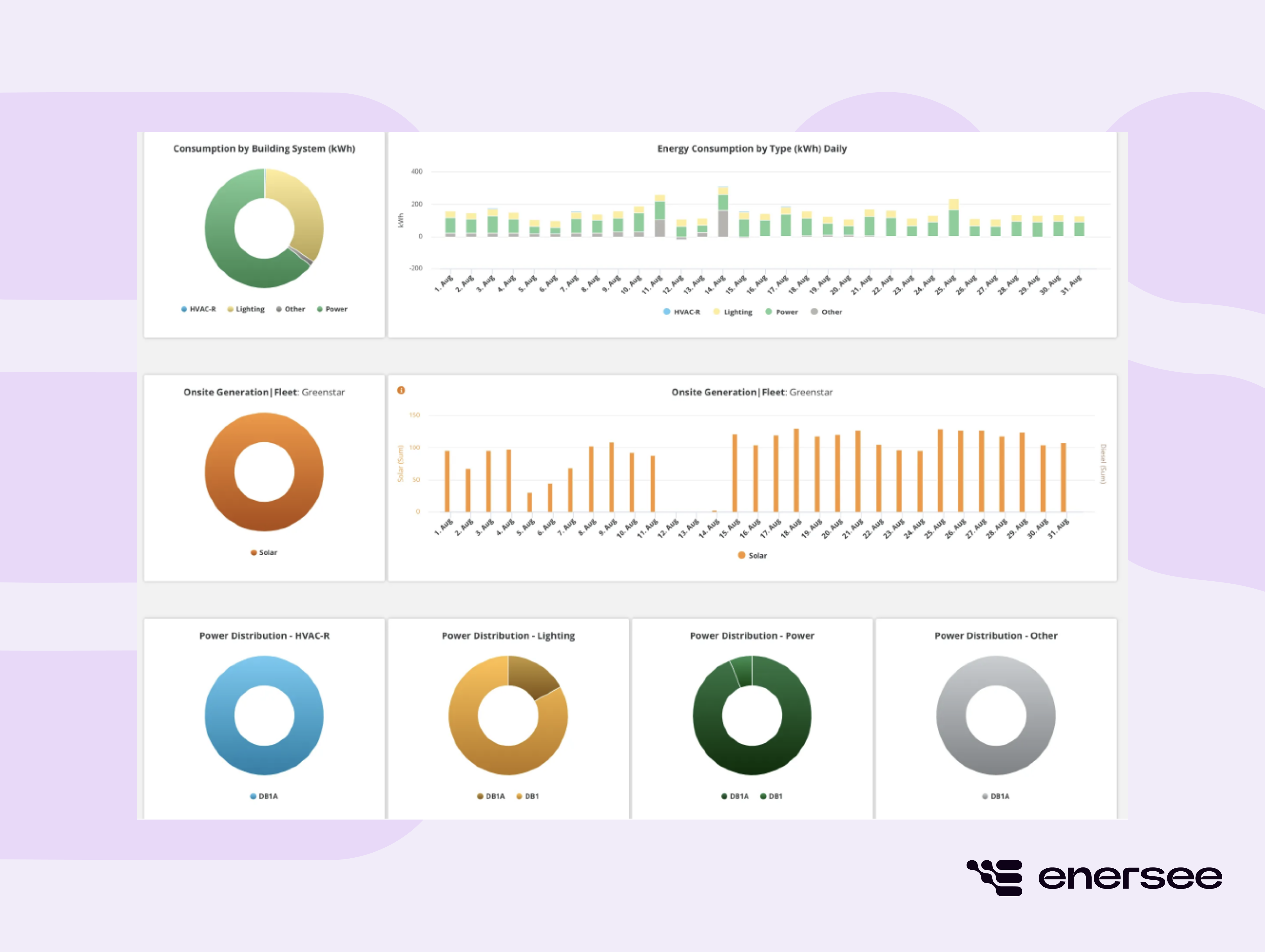
Wattwatchers measures consumption at the device or circuit level, identifies equipment inefficiencies, and streams data in real-time through cloud dashboards. All this gives you a detailed look into your energy consumption patterns, whether you manage one site or multiple ones.
The less ideal part is that you’ll need to install hardware on each point you want to monitor. Plus, it is built with small to medium-sized portfolios in mind, and while it’s technically scalable, large portfolios may find it challenging to use.
7. Emaze ePortal — Best energy monitoring system for centralized building dashboards
The last on our list is a building-focused energy monitoring tool that consolidates electricity, gas, heating, and water into a single interface. Emaze ePortal comes with real-time visibility across sites and meters, so your team can understand consumption patterns and spot basic abnormalities.
It supports multi-reporting across buildings, issues simple alerts for abnormal usage, and collects data in real-time.
On the downside, automation isn’t the best, and neither are its AI features. Large portfolios, while supported, might struggle with customizing their reports. And if you need a tool to offer deep insights and analytics, Emaze ePortal might not be ideal, as it is more focused on simple monitoring and visualisation.
What to look for in an energy monitoring system for grocery retailers
Different platforms come with different levels of insights. For instance, basic platforms collect energy data. But a truly effective solution will help you understand what that information means and where you need to act first.
When comparing different systems, look for capabilities such as:
- Real-time monitoring. Continuous visibility allows teams to identify unusual consumption patterns as they occur instead of waiting for monthly reports.
- Refrigeration and HVAC monitoring. Since these systems account for a significant share of energy consumption in grocery stores, monitor them closely to detect inefficiencies before they affect operations.
- Intelligent alerts. The platform should prioritize meaningful issues rather than overwhelming users with hundreds of notifications that require manual investigation.
- Historical trends that explain why consumption changed. Comparing current performance with historical data helps identify gradual equipment degradation and verify whether efficiency initiatives are delivering results.
- Easy integrations. The monitoring system should connect with existing meters, refrigeration equipment, HVAC systems, building management systems, and utility data without requiring extensive infrastructure changes.
- Scalability. When you open new locations or expand into new markets, the platform should continue providing centralized monitoring without increasing manual workloads.
How to choose the right energy monitoring system?
There’s no universal answer here. Every building behaves differently, and so does every team. Some tools give you basic visibility. Others go deeper, giving you automation and analytics.
Grocery retailers need faster decisions, not more dashboards to look at. The right monitoring system should reduce the time between an issue appearing and someone acting on it.
Enersee is an all-in-one solution that’s easy to install and will provide you with all the insights you need to run an energy-effective building. But, depending on your portfolio, a lighter-weight option could also help you become aware of what’s happening on your sites. The important part is getting visibility before inefficiencies turn into costs.
FAQs
1. What is an energy monitoring system?
An energy monitoring system collects and analyzes real-time consumption data from meters, sensors, and building systems to improve performance and reduce waste.
2. When does an energy monitoring system become necessary?
Monitoring becomes essential when manual tracking can no longer capture performance accurately, usually after adding more sites, equipment, or reporting requirements.
3. Do energy monitoring systems integrate with building management systems?
Most modern energy monitoring systems support integration with BMS, IoT networks, and utility feeds.
4. Can monitoring alone reduce energy costs?
Monitoring alone may not generate savings, but it can provide data that will help you identify which interventions will have the biggest impact. AI-based systems such as Enersee speed up this process. They detect issues automatically, quantify their financial consequences, and prioritise what to fix first.
5. Are energy monitoring systems suitable for small sites?
Tools like Wattwatchers support smaller buildings or individual equipment monitoring. Enersee can also include smaller sites within a larger portfolio, but its full value is achieved in multi-building or enterprise environments.
Written by
Anastasiia Andriiuk
and