Buildings in Europe are about to get a lot smarter. No, this isn’t about AI. There’s a last-minute but significant change in building regulations, which will impact how we measure and manage energy performance.
It’s called BACS, short for Building Automation and Control System, and it’s quickly becoming one of the most important words in the building sector. Here’s everything you need to know about it.
What is BACS?
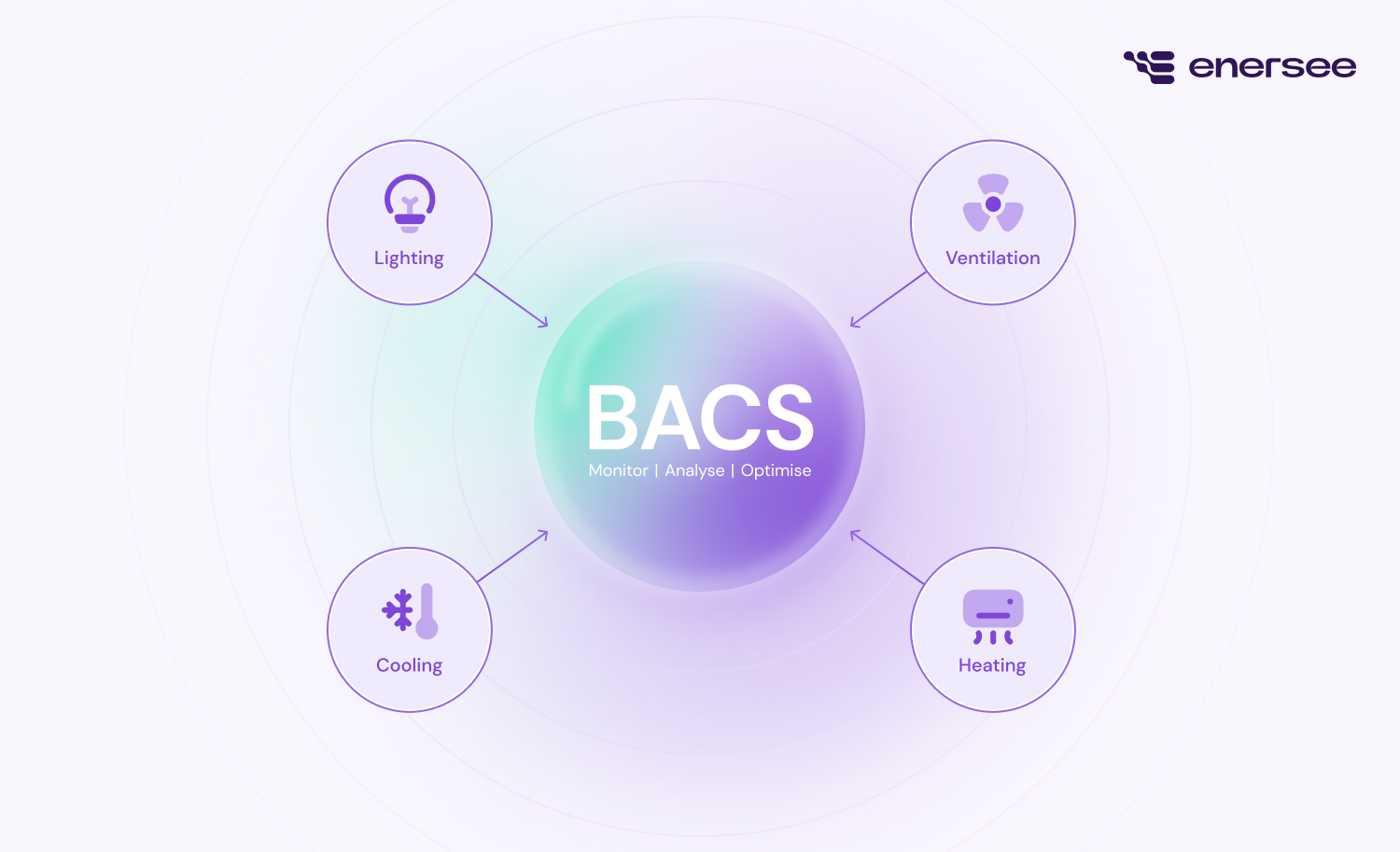
A building automation and control system, or BACS, refers to all the products that monitor and automatically adjust the energy in a building. Its goal is to create a comfortable environment while optimising energy use.
In simpler terms, you can view BACS as your building’s operating system. It is similar to a building management system (BMS) but has stricter regulatory and energy-performance functions defined under the EU’s Energy Performance of Buildings Directive (EPBD). It connects your heating, cooling, ventilation, and lighting, helping them “talk” to each other and share data.
Imagine a room where the heating and air conditioning are on at the same time. That would be an incredible waste of energy. This is where BACS comes in, stopping one (or both) depending on what room temperature you’re aiming to get.
From a regulatory perspective, BACS aims to make energy performance measurable and enforceable. It’s a mandatory requirement under the EPBD that ensures buildings meet energy targets and prove that through data and automation.
Until now, most efficiency regulations focused on what you install: better insulation, new HVAC units, solar panels. BACS changes the focus to how everything works together in real time.
How does it fit into the EU's bigger climate plan?
BACS is one of the EU’s main policy tools to decarbonise the building sector and turn climate goals into day-to-day accountability.
Why did the EU need such a policy in the first place? Around 85% of buildings here were built before the year 2000, and only about 10% of them have good energy performance. Buildings in general make up around 50% of Europe’s total energy use. That’s why the EU needed a much stronger framework, one that promotes and requires efficiency.
EPBD’s latest revision takes a big step forward. Beyond better insulation or renewable energy, it also requires connected systems that manage energy performance continuously.
What changes under the new directive?
- Large non-residential buildings with heating or cooling systems above 290 kW must have a building automation and control system.
- By 2030, that threshold will probably drop to 70 kW as technology becomes more affordable.
BACS enforces buildings to have stricter energy monitoring and analysis requirements to follow up on energy efficiency losses and potential improvements.
Right now, many buildings can still follow an “install and forget” approach. The goal is to move towards “monitor and improve”. And that’s exactly what building automation and control systems can do.
When does BACS become mandatory? Compliance timelines
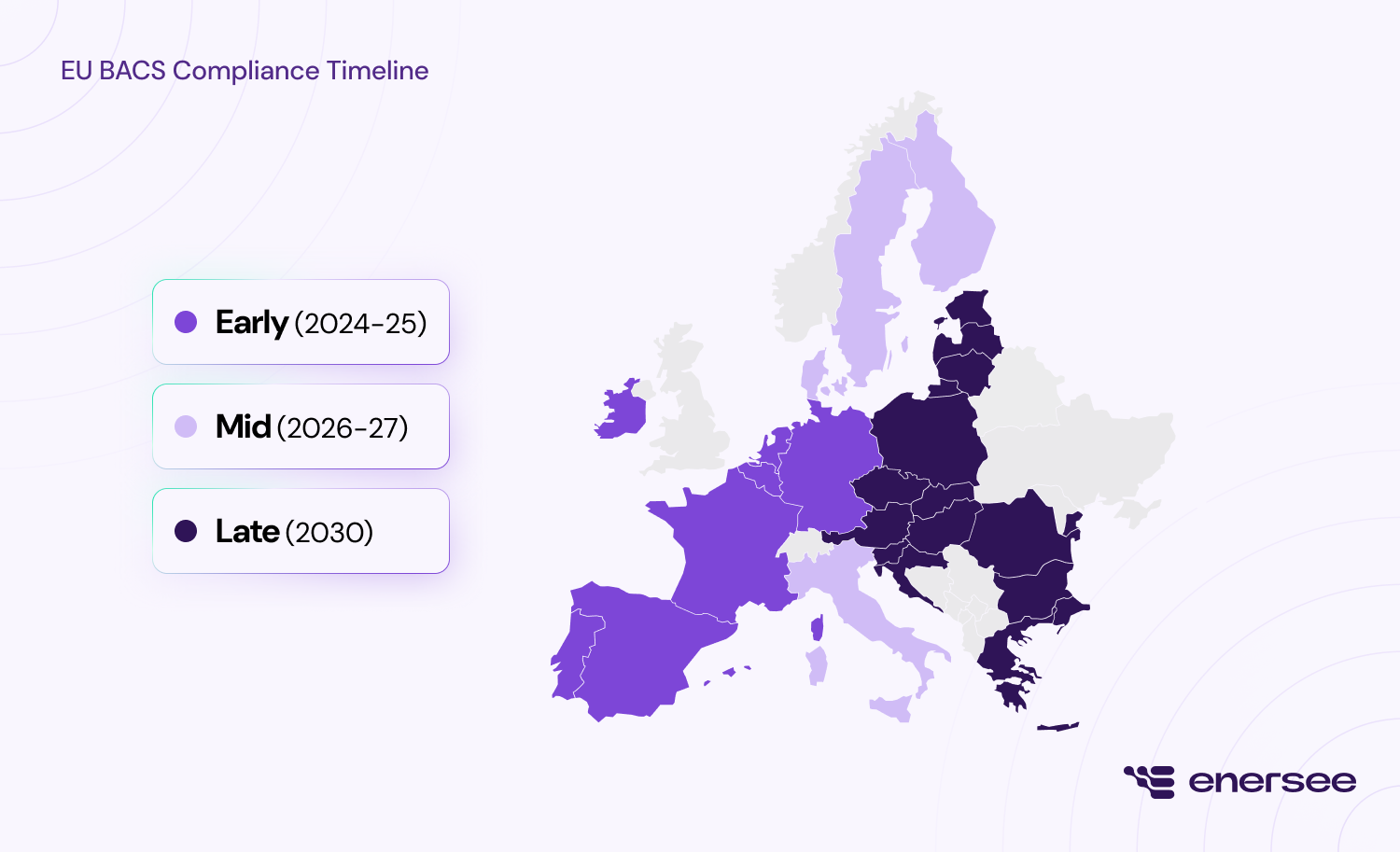
Each country is rolling out its own version of the rule, but the deadlines are coming fast. Here’s what the map looks like so far.

One important mention: the regulation applies to non-residential buildings such as offices, hospitals, schools, logistics sites, and mainly targets systems with a high energy footprint.
Flanders’ approach to BACS compliance
Flanders is one of the first regions in Europe to fully write the BACS requirement into law. Looking at the table above, you may feel confused, since its compliance deadline is only January 1st, 2026.
Yes, Flanders doesn’t have the earliest deadline, but it’s one of the first regions in Europe to actually spell out how BACS compliance works in practice.
From January 2026, any large non-residential building in this region with a combined heating or cooling capacity of more than 290 kW must have a compliant automation and control system.
This isn’t just a soft guideline or a “nice-to-have”. It’s part of the Energy Decree, backed by fines that range from €500 to €200,000 for non-compliance. These fines apply per building, depending on the severity and scope of non-compliance.
What exactly does it mean to be compliant?
- Monitor and store energy data from all major systems (heating, cooling, ventilation, domestic hot water).
- Communicate via open protocols or APIs with different equipment types.
- Analyse and visualise energy use, compare it with historical data, detect anomalies and issue alerts.
- Adjust or enable optimiation using those insights.
- Track indoor air quality such as temperature, humidity and CO₂ to protect occupant comfort.
During our Enersee webinar, Tjeu Binnebeek, Expert Energy Performance & Indoor Climate at Agoria, summed it up:
“BACS isn’t about buying new gadgets. It’s about giving buildings a nervous system. Once you can see how energy behaves, you can stop wasting it.”
And that is exactly the point of BACS. Visibility and action. Flanders may be the first to make an official move, but every other EU country will follow the same path under the EPBD.
What BACS compliance really means
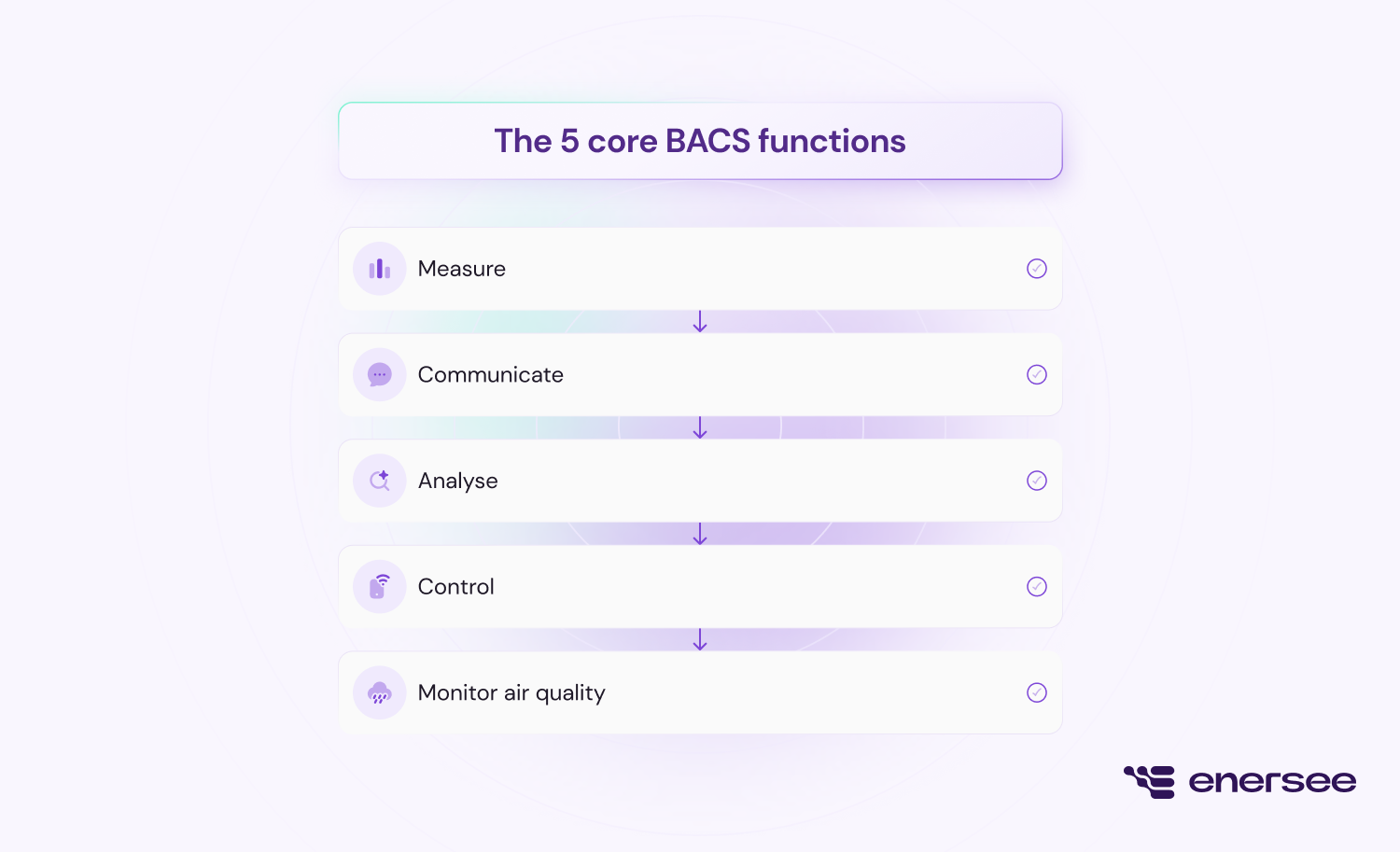
Install a system and move on with your day? No, that’s not going to be enough with BACS. Compliance in this case doesn’t refer solely to hardware, but more to functionality. So, how do you create a compliant building automation and control system? Five key steps come into play.
1. Measure
Every major system, be it heating, cooling, ventilation, lighting, and even hot water, offers important data. Measure everything accurately from the start. For instance, to record electricity data, you’d typically read it every 15 minutes.
How does that help? Instead of relying on estimates, you’re looking at live performance indicators. These can show you exactly when and where consumption spikes, and from there, you can take measures to save energy.
2. Communicate
A BACS can’t work alone. It needs to speak the same “language” as the equipment it controls, which it can do through open communication protocols and APIs. This way, systems from different manufacturers can share data and work together to create one cohesive building ecosystem.
3. Analyse
Collecting data is only one step. From here, BACS must interpret it. That means benchmarking against historical performances, spotting trends, and identifying when something isn’t working as it should.
You can say goodbye to guesswork. Analytics can quickly tell you if energy use is higher on weekends, or that you have an inefficient chiller, long before you notice it on the utility bill. Many systems can also include automated alerts that flag these issues in real time.
4. Control
Many tools meant to help you save energy act as pure observers. BACS is different. It can automatically adjust setpoints, schedules, and equipment behaviour to prevent waste. As an example, it can pre-cool or pre-heat a building before occupancy and then scale back during low-use hours to save energy.
It keeps systems balanced and in tune with occupancy, weather, or tariff changes, so that you use energy only when and where you need it.
5. Monitor air quality
Did you ever wonder what common indoor environmental parameters look like in your building? Modern building automation and control systems can answer that. They measure things like temperature, humidity, and CO₂ concentration to give you a complete overview of the building’s air quality.
These readings say a lot about comfort, health, and productivity. In some regions, the regulations require visible indicators or dashboards so that occupants can see air quality in real time.
If you’re a building owner or auditor and want to look at the official verification criteria, the European Building Automation and Controls Association (eu.bac) has published a detailed compliance checklist that mirrors these five pillars discussed previously, expanding them into specific technical and documentation requirements.
A roadmap to compliance
Now that you know what a compliant BACS should look like, how do you actually get there? The process is less complicated than it may seem at first sight.
1. Assess your portfolio
What non-residential buildings do you manage? List them all, along with their heating and/or cooling capacity, existing BMS or metering systems. Pay special attention to the ones that exceed the 290 kW threshold (or will get there soon).
2. Conduct a gap analysis
Compare your current setup against the BACS technical requirements:
- Are you monitoring energy at the system level?
- Can your systems communicate via open protocols?
- Do you have alarms and a process for acting on them?
If you answer “no” to any of the above questions, you know where you need to focus your efforts next.
3. Find the right approach
There are usually three routes to compliance:
- Full BMS upgrade: expensive but future-proof. It’s best for large, complex sites, where replacing legacy systems allows full integration of automation, monitoring, and control from day one.
- Existing BMS + EMS overlay: cost-efficient. It adds intelligence and compliance features by connecting to your current systems and filling the gaps in alerts, analytics, and reporting.
- Smart controls + EMS: ideal for smaller sites that lack central management. Compact smart thermostats or controllers paired with an EMS can deliver the same compliance functions without requiring a full BMS installation.
4. Implement and verify
You know your buildings, you determined what’s not working, and you decided on an approach to BACS compliance. The next step will be installing and/or connecting all the required systems. From there, train staff, document procedures, and make sure everything is running smoothly.
Keep in mind if and when an inspection comes along, you’ll need to demonstrate compliance, so always keep your documentation and proof up-to-date.
5. Maintain and optimise
As much as we’d like to say BACS compliance is a one-and-done deal, that’s not so. The best results come when you continuously improve your systems. Keep up to date with the latest trends, look for inefficiencies, track savings, and guide investments as needed.
Why BACS matters beyond regulatory compliance
Nobody wants to pay fines, but BACS has a real advantage that goes far beyond avoiding penalties.
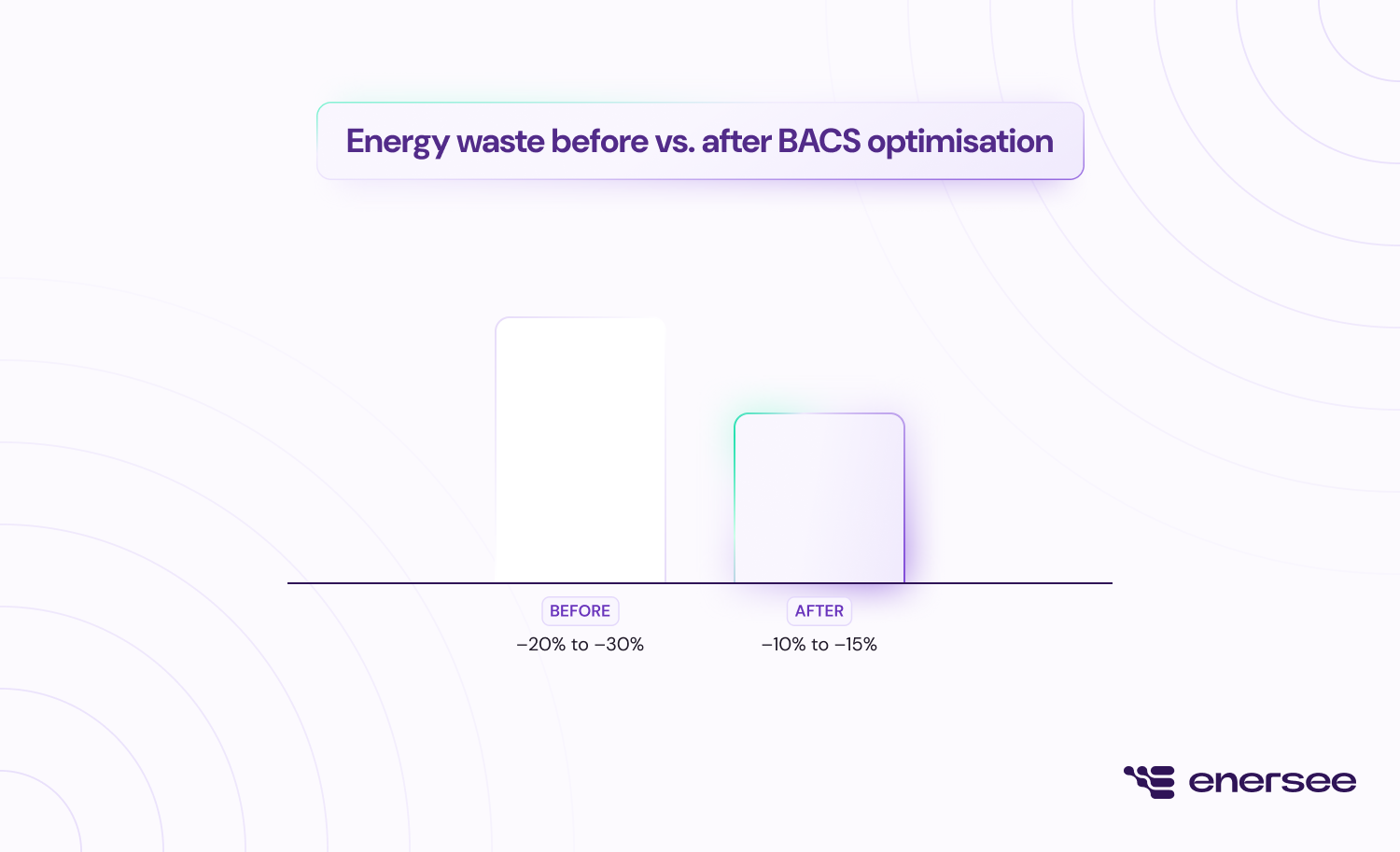
Let’s look at a simple fact. Buildings waste 20-30% of their energy because of undetected inefficiencies. That can translate into hundreds of thousands of euros. It doesn’t have to be a huge issue. A small failed detector or mis-set schedule and you’re throwing resources out of the window.
With BACS, energy management becomes part of your daily operations. You see trends before they become problems, and you can prove that your changes have a positive impact. In Enersee’s work with customers, we’ve seen this first-hand:
- A €5 relay fault once caused €27,000 in energy loss before detection.
- Two incorrect HVAC settings ended up wasting €140,000.
BACS can catch both.
.png)
How Enersee can help you comply (and go further)
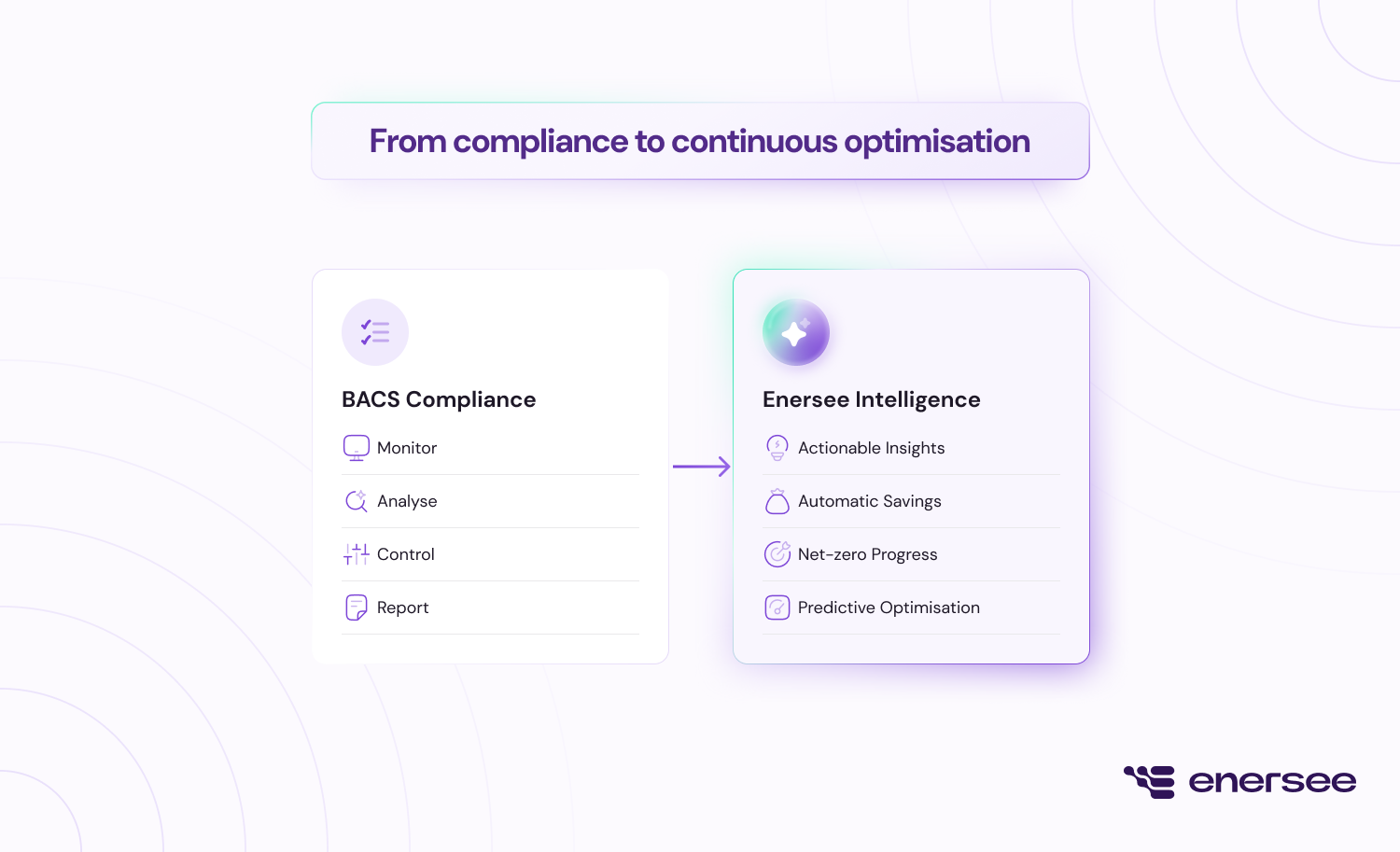
At Enersee, we don’t see BACS as a bureaucratic hurdle. We treat it like a stepping stone to smarter, leaner, more sustainable operations. Our platform combines compliance automation with everyday efficiency gains.
1. A smart EMS overlay for existing systems
Most buildings already use some type of BMS. But for compliance, that’s not enough. You need to add monitoring, visualization, anomaly detection, alerts, and proof of performance. Enersee can do just that.
It connects to your existing systems or directly to your meters and IoT devices. You won’t have to worry about integration or replacing existing hardware and software.
2. Always-on energy audits
Enersee acts as your 24/7 virtual energy manager. That means you can forget about limited human resources and focus instead on real issues.
What exactly can it do? Enersee analyses consumption patterns, spots irregularities, ranks them by financial impact, and helps your team act quickly. Instead of running audits at certain intervals, like once a year, they will happen automatically and continuously.
3. Portfolio-wide visibility
Dozens of portfolios, data scattered across even more silos, and a lot of time wasted juggling between all of them. It’s a scenario many building managers face and one that can seriously hinder how well you comply with the EU’s BACS requirement.
Enersee offers visibility across your entire portfolio from a single dashboard. It bridges silos between store managers, maintenance partners, and corporate energy teams. With it, you can check out which sites hit energy and emission targets and where there’s room for improvement.
4. Ready for the future
Right now, BACS is about monitoring and control. Tomorrow? It will also include predictive maintenance, self-optimising HVAC, and live ESG reporting.
Enersee is ready for all that. It goes beyond dashboards to deliver prescriptive, ROI-based recommendations. Plus, it can prioritise issues by carbon or financial impact, giving you space to focus on the most pressing matters.
The benefits of BACS
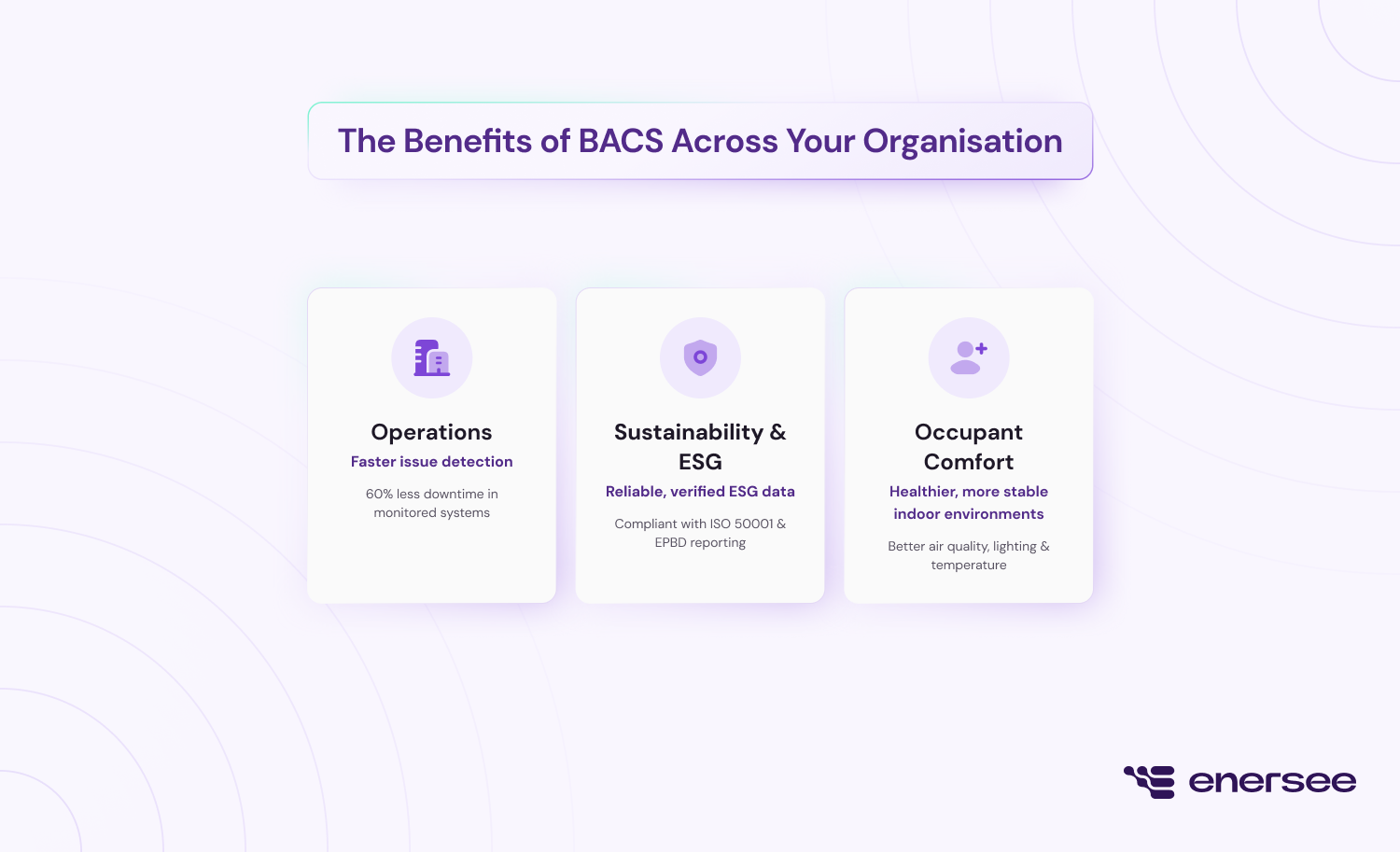
BACS is a regulatory requirement. But it’s also highly beneficial. Once your building can monitor, analyse, and optimise its own performance, the benefits show up across every level of your organisation.
For facility teams, daily operations become clearer and faster. No more guessing which unit failed or why consumption spiked. You see it immediately, act sooner, and spend less time troubleshooting.
Sustainability managers also see their work simplified. BACS gives you verified, high-quality data for ESG and carbon reporting. It also feeds directly into frameworks like ISO 50001 or internal decarbonisation plans, helping you prove progress.
And it’s not all about managers and owners. All the changes BACS brings mean better comfort. Stable temperatures, improved air quality, and reliable lighting create healthier, more productive indoor environments.
Why you need to act now
Waiting until the final months before the deadline often leads to rushed decisions, higher project costs, and missed opportunities for integration.
Starting now gives you time to plan properly. Test various integrations, train staff, make sure everything is working correctly, and align BACS with broader digital-energy initiatives.
And if you still need convincing, remember that these systems pay back quickly. EU studies suggest smart automation can reduce building energy use by up to 20%, often at a fraction of the cost of structural retrofits.
The bigger picture — key takeaways
BACS may have started as a regulatory requirement, but it’s quickly becoming the foundation of smarter, more sustainable operations across Europe.
By doing that, BACS shifts buildings from static assets to adaptive systems, capable of learning, optimising, and improving their performance in real time.
Flanders may be one of the first regions to define the framework, but every EU state will soon follow. The real question isn’t “Do I need BACS?”, but “How ready will you be when you need it?”
Written by
Anastasiia Andriiuk
and