Energy is a major operational cost driver for commercial and industrial organizations, often accounting for a double-digit share of the EBITDA across large portfolios. A reliable energy monitoring and control platform can be a game changer. A lot of teams choose the Schneider Electric’s EcoStruxure suite for energy management, automation, or power monitoring.
It is a powerful system, widely used, and trusted in both industrial and commercial environments. However, it might not be the best choice for everyone. Some users cite integration complexity, high implementation costs, or challenges with customization. Others look for Schneider Electric alternatives that offer AI integration, great flexibility, or simplicity.
If that’s you, there are several options to look at. And we’ve analysed the top 7 choices.
Why you might need a Schneider Electric alternative
Schneider Electric’s solutions have some great features. For instance, they offer extensive monitoring and automation for industrial, commercial, and mission-critical facilities.
Why do people look for Schneider Electric alternatives then?
Despite their many features, their solutions can also be heavy, complex, and sometimes too expensive.
Other common reasons include:
- High implementation and integration costs, especially across large portfolios.
- Longer deployment timelines due to hardware dependencies.
- Customization complexity, particularly for dashboards or workflows.
- Limited flexibility when blending multiple data sources or legacy systems.
- Vendor-lock concerns for facilities aiming to maintain hardware neutrality.
- Challenges scaling across many buildings without dedicated engineering teams.
A user on G2 explains, “You need a project or 2 to get all the hidden functions and binding methodology. You also need to learn syntax of script function because it is a bit special.”
On a different platform, someone says, “It is really costly and also complex so employees need to be trained,” while another user complains about EcoStruxure’s interface explaining, “If there is one thing I would like to see improved would be the web interface updated. The power meters are not always accurate as well.”
If you find yourself agreeing with these reviews, you’re probably looking at Schneider Electric’s competitors, wondering which one to choose. We reviewed 7 of the best options, so you can make an informed decision.
7 Schneider Electric alternatives
1. Enersee
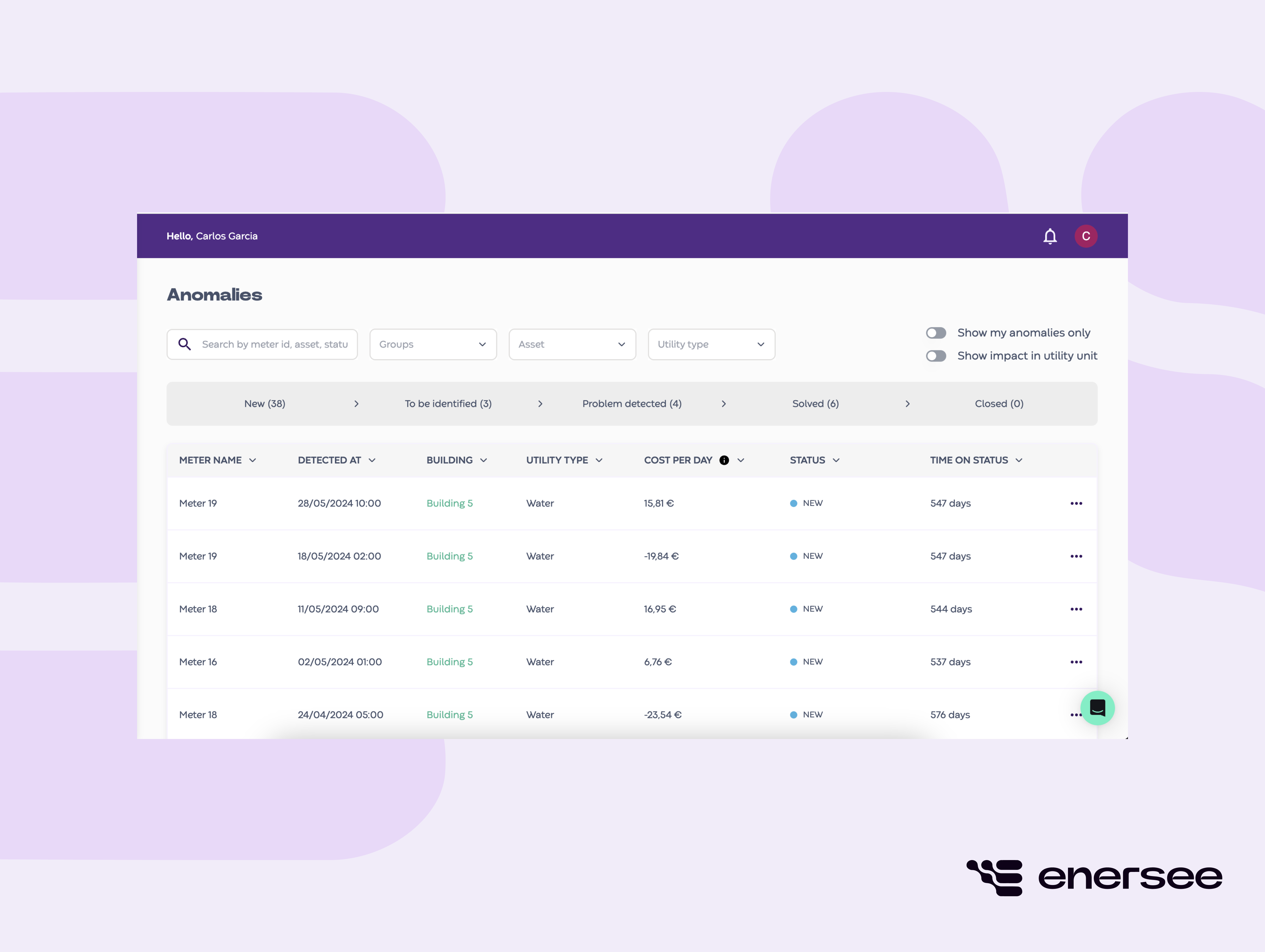
An AI-native energy intelligence platform, Enersee is perfect for organizations managing complex or distributed building portfolios.
Unlike other tools that are usually hardware-centric, Enersee connects directly to meters, BMS systems, occupancy data, and external sources. That allows it to provide you with continuous operational intelligence that will help you save energy and comply with regulations like the EPBD.
Enersee can model each building’s behaviour, detect hidden deviations, and quantify financial impact instantly. Its strength comes from automation, reducing the need for complex engineering configurations and simplifying both setup and daily use.
Core strengths include:
- Self-learning AI that identifies anomalies traditional EMS setups overlook.
- Real-time issue detection with cost, urgency, and compliance impact.
- Automated prioritization for operational teams.
- BACS and EPC-NR measure detection built into the workflow.
- Modules for operations, project tracking, and long-term strategy.
Not convinced yet? Let’s look at some results. A large retailer reported detecting 92.5% more anomalies than with its previous EMS. They reduced issue resolution time from 38 days to only 8 days, which led to annual savings of up to €3.5 million across 1,000 stores.
Another Enersee client, this time a logistics real estate operator, can manage 10x more buildings with the same team, thanks to Enersee’s continuous monitoring and automated anomaly intelligence.
A senior facility manager described Enersee saying, “a clear overview that helps us spot and correct data errors quickly… like having an extra pair of eyes.”
Of all the Schneider Electric tool alternatives, Enersee works best for organizations that want real-time intelligence, large-scale automation, and continuous performance improvement rather than manual engineering workflows.
2. ClearVUE.Zero
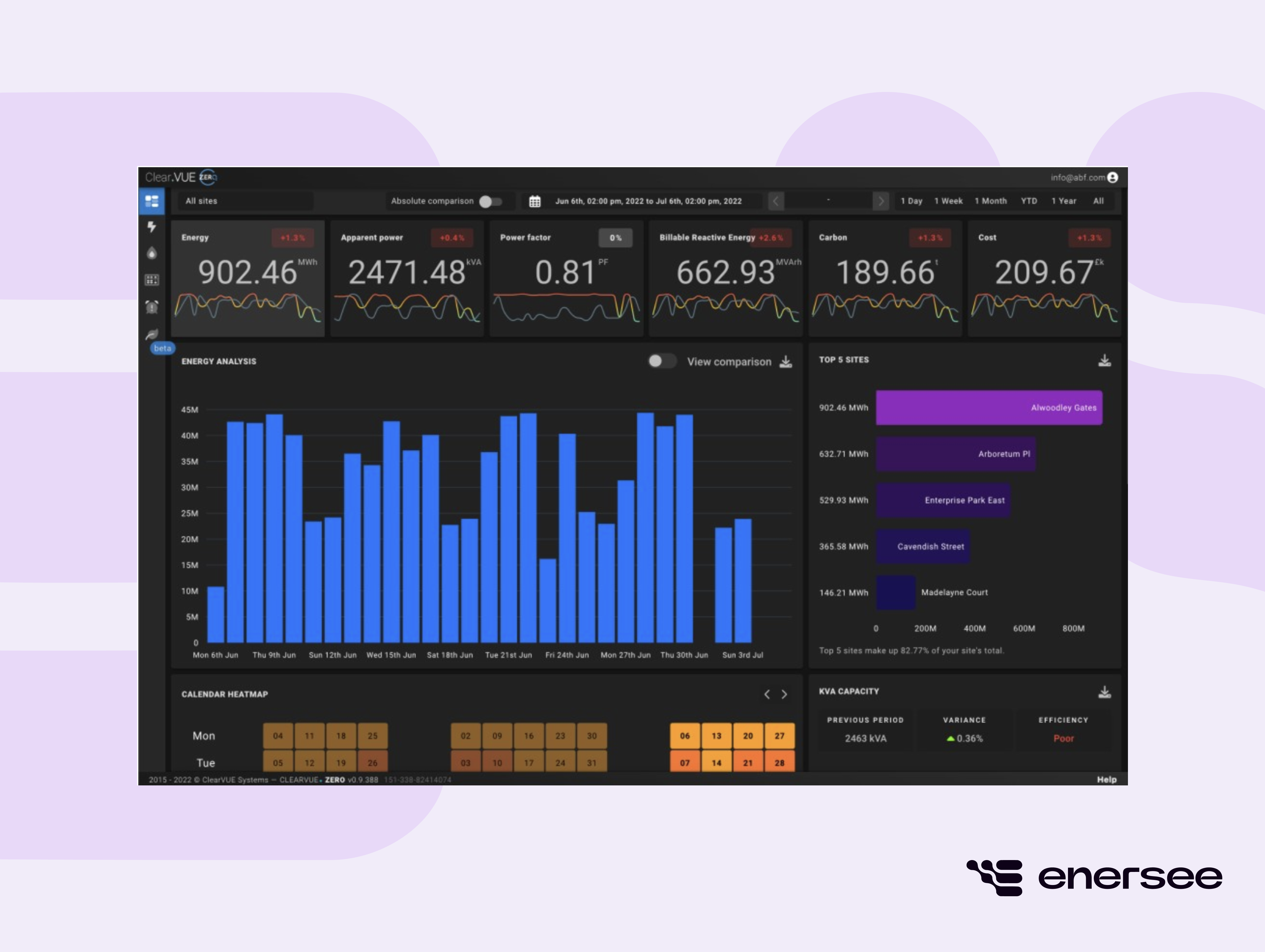
If you’re looking for a Schneider Electric competitor that offers a cloud-first monitoring platform, you may want to check out ClearVUE.Zero. This platform allows you to consolidate energy, utility, and carbon data. Its focus? Sustainability reporting, cost visibility, and energy performance tracking.
Plus, it offers multi-site energy monitoring, dashboards to help you track carbon and emissions, and alerts for unusual consumption patterns.
What doesn’t it offer? The depth of the analytics feature seems to be limited compared to more advanced AI platforms. It also doesn’t excel at predictive anomaly detection or compliance automation.
According to some users, usability may also be somewhat limited. Someone on Capterra points out that “I do not like the fact I can't use it on my phone, tablet or surface; it does not scale well missing off parts.”
In short, it’s best for visibility and reporting, not so much for deep operations.
3. Siemens Desigo CC (Energy Suite)

Another interesting Schneider Electric alternative tool is Siemens Desigo CC. It’s a full building management tool that offers automation, system integration, and monitoring for HVAC, lighting, and energy systems.
It also offers centralized control for BMS functions, and robust automation libraries. That being said, Desigo CC does have some downsides. For instance, customizing and tuning it can prove to be quite resource-heavy. It’s also rather expensive, especially if you have a smaller or mid-sized portfolio, and it requires many integrators.
Someone on Reddit noted, “Reports may be its greatest weakness. You can consume hours of time just setting up one report - and that's assuming you can figure out the filters to get it to display what you want at all.”
4. Johnson Controls (JCI / EasyIO)
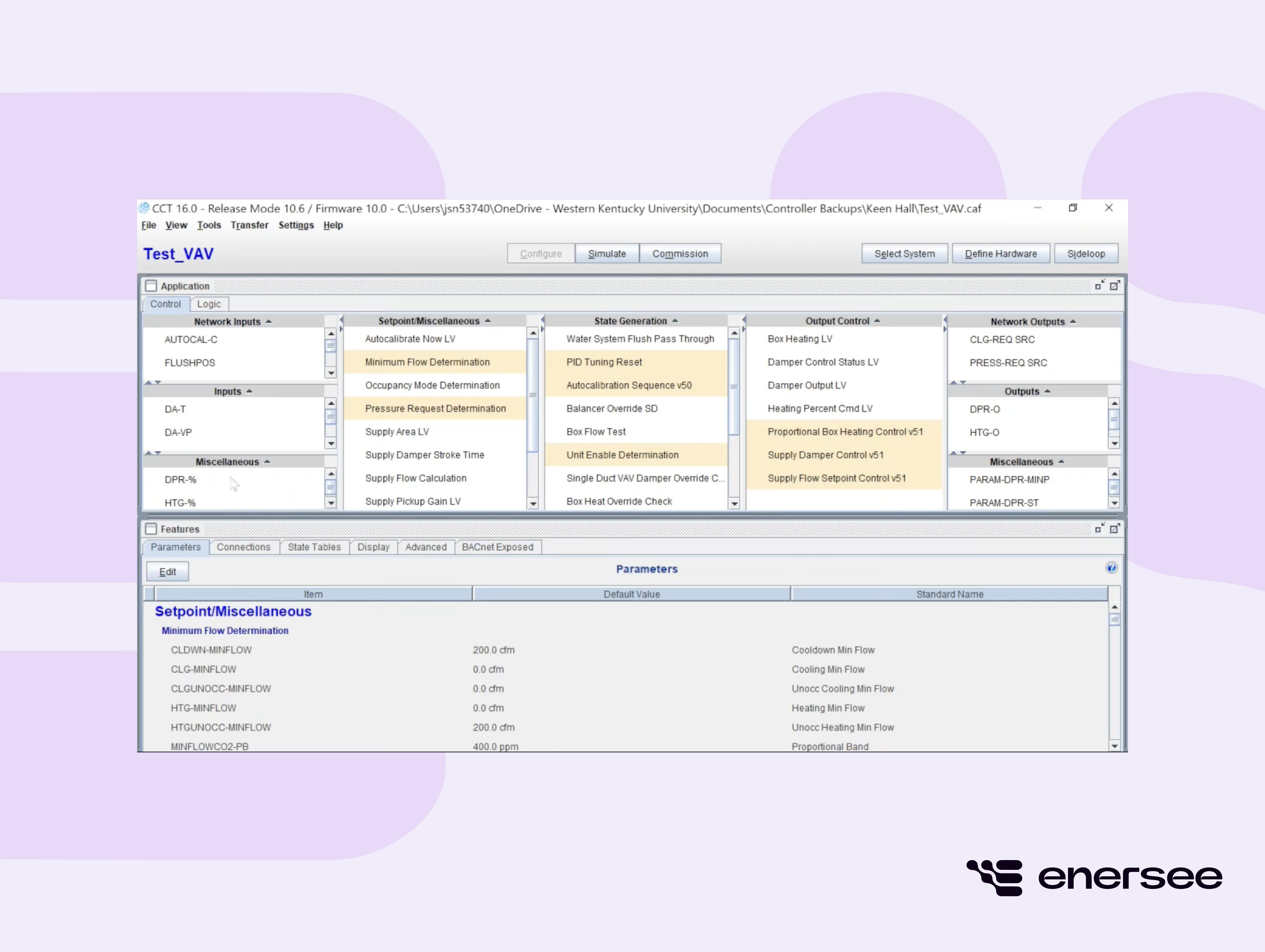
A tool that comes with comprehensive building automation systems and HVAC control, Johnson Controls (JCI) may be another Schneider Electric competitor to consider.
It offers energy monitoring within a full BMS environment, multi-building control and automation, and a strong hardware ecosystem.
On the downside, it does have some heavy engineering requirements and is less flexible for cloud-first portfolios. Some users also complain that if you have a large portfolio, JCI/EasyIO can be challenging: “controllers are good enough for small sites, but multi-building campuses or large buildings will be a stretch.”
The bottom line? JCI is good for organizations looking for end-to-end building automation, not so much for those looking for fast, AI-driven insights.
5. GridPoint
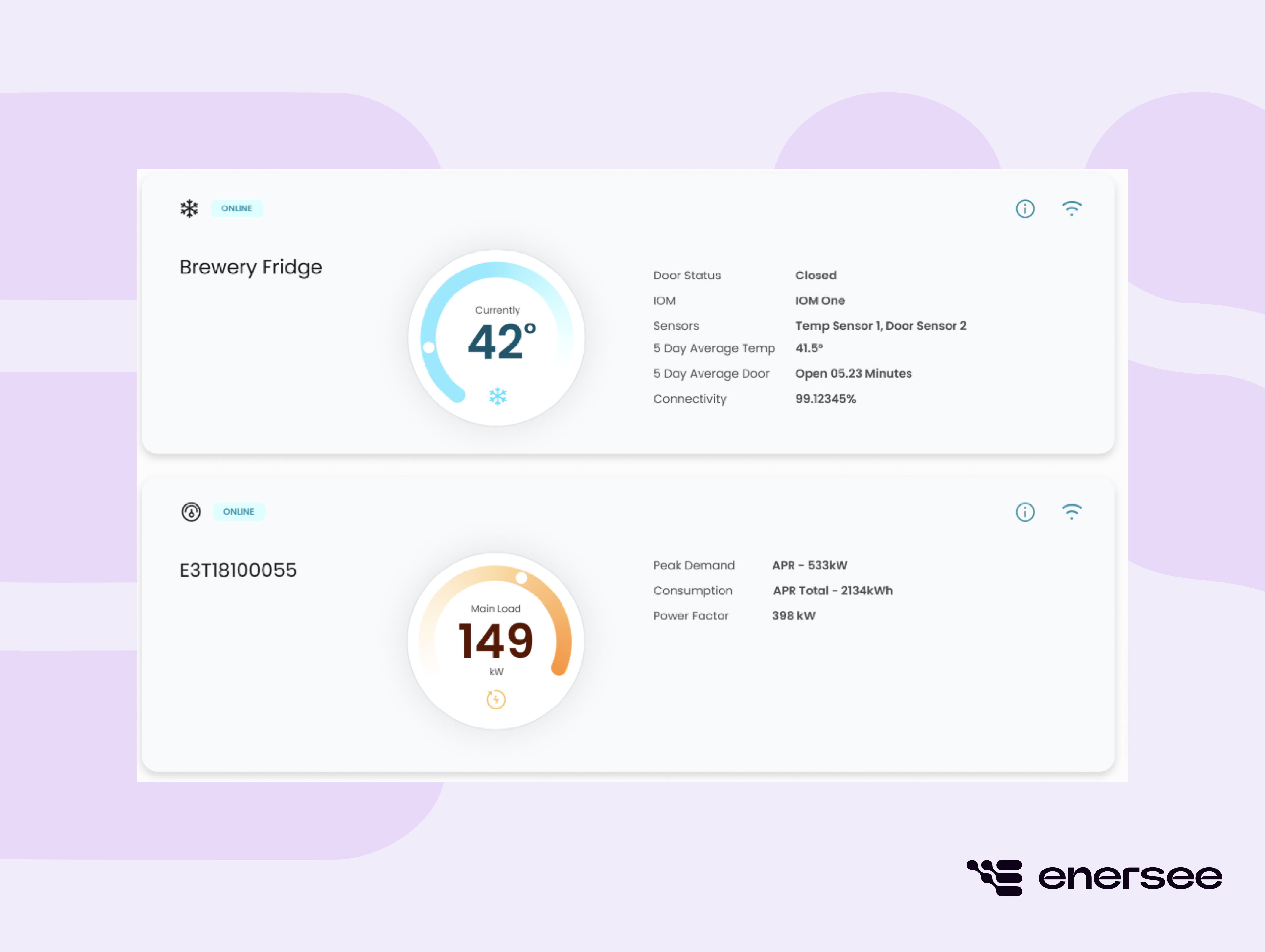
Next on our list of Schneider Electric competitor software is GridPoint, a hardware-enabled monitoring and load management platform.
What does it offer?
- Real-time monitoring of HVAC, lighting, and refrigeration.
- Automated demand management (HVAC, lighting, refrigeration).
- Utility optimization.
- Multi-site reporting dashboards.
Unfortunately, its analytics focus more on equipment loads rather than full-site intelligence. Plus, GridPoint has limited depth for large enterprise portfolios. It’s a good option for those needing cost control and load management without the complexity you’ll often find in industrial BMS platforms.
6. Noda
If you’re looking for something that combines IoT sensors with cloud dashboards, check out Noda, previously known as Infogrid. It can monitor occupancy, indoor air quality, and energy use, and focuses on light analytics and building health.
It offers rapid sensor deployment and simple alerts and dashboards. What doesn’t it offer? Noda focuses on IoT-driven monitoring, so predictive analytics may be slightly limited compared to other AI-focused platforms. The platform will be better for someone looking for visibility rather than for multi-system automation.
7. Kiona
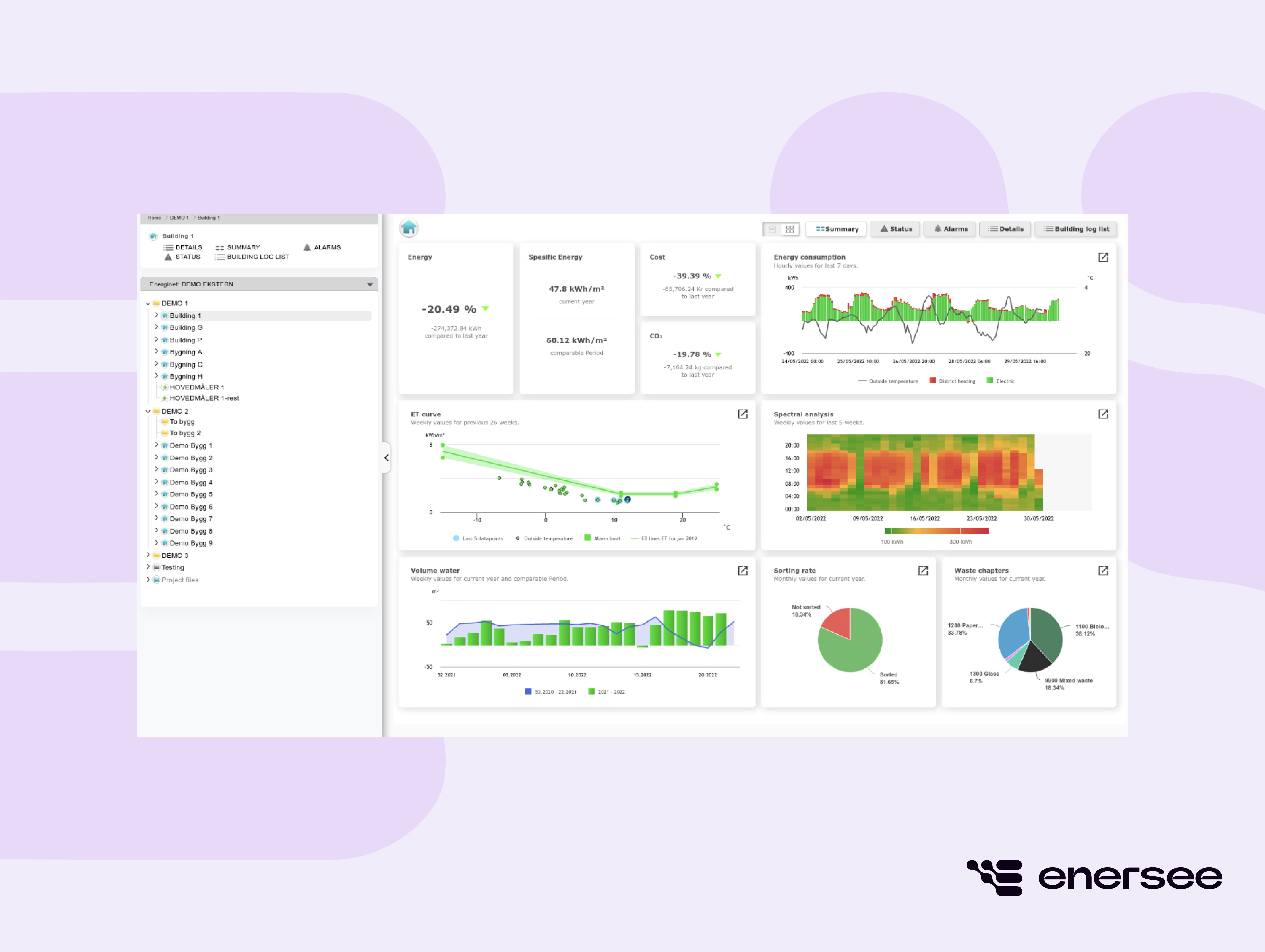
Last on our list of Schneider Electric alternatives is Kiona, a platform that offers monitoring, simple forecasting, and portfolio insights.
It supports indoor climate tracking, light HVAC oversight, and simple portfolio-level insights, making it useful for teams looking to consolidate building health information in a straightforward interface.
The platform provides rapid sensor deployment and easy-to-read dashboards, which can help organizations track occupancy-related patterns and general performance. Kiona also includes simple forecasting capabilities and multi-utility data imports.
On the downside, Kiona is not ideal for those who monitor deep industrial processes, and its automation capabilities are slightly limited.
How to choose the best Schneider Electric alternative
With so many Schneider Electric competitors around, the question needs to be asked. How do you choose the best one? To find the answer, the first area you need to look at is your operational environment.
For instance, if you need modern sustainability reporting, ClearVUE.Zero can cover the basics. If your focus is more on full BMS control, tools like Siemens Desigo CC or JCI may fit.
For those who need portfolio intelligence and automated detection, Enersee offers the most advanced capabilities regardless of how many buildings you manage. You’ll also get compliance support and continuous improvement with minimal effort, making this one of the strongest Schneider Electric alternatives on the market.
FAQs
1. Why consider a Schneider Electric alternative?
Teams often switch when they need faster deployment, lower engineering overhead, or more flexible cloud analytics.
2. Is Schneider Electric suitable for large portfolios?
Yes, but deployment and customization can be complex for organizations without dedicated engineering support.
3. Which Schneider alternative offers the most automation?
Enersee provides the strongest automation through AI-driven anomaly detection and prioritization.
4. Do Schneider Electric alternatives integrate with existing meters or BMS systems?
Most alternatives support standard integrations, but capabilities vary by vendor.
5. Do these alternatives support BACS or EPC-NR requirements?
Some provide partial support, but Enersee automates detection of required measures for both frameworks.
Written by
Anastasiia Andriiuk
and