In Europe, there’s a new major energy milestone coming up. Compliance with the Building Automation and Control System (BACS) requirement introduced under the EU Energy Performance of Buildings Directive (EPBD).
BACS is not a standalone rule. It’s one of the technical measures mandated by the EPBD to ensure buildings monitor, analyse, and optimise their energy use. In other words, BACS is the mechanism through which many of the EPBD’s efficiency and transparency obligations are actually enforced.
If you’re in the Netherlands, you may have heard of GACS, “gebouwautomatiserings- en controlesysteem”, instead of BACS. It’s the exact same thing; the only difference is the language.
Regardless of the acronym we use, the goal is the same. The regulation aims to make buildings smarter, more efficient, and fully transparent about their energy use.
Deadlines for compliance are just around the corner. And that makes choosing a software a critical decision. The right platform will help you meet EPBD obligations, and it will also make things more efficient down the road with automation and reports.
How to choose the best BACS/GACS software?
BACS is more than a dashboard or a building management add-on. It helps connect, analyse, and control your building’s technical systems and can provide a solid audit trail.
But how to make sure your software meets EPBD and national requirements? There are several core capabilities to look for.
1. Data integration
Your platform should connect to existing BMS, IoT devices, and other metering systems. For that, it can use open protocols, such as BACnet, Modbus, or secure APIs. Without this, achieving data completeness for audits or real-time optimisation will be nearly impossible.
2. Continuous monitoring and anomaly detection
One of the EPBD requirements is monitoring and analysing energy. Your software should do just that and flag anomalies when needed. For extra efficiency, choose a tool that can also rank anomalies by urgency or financial impact, so you can focus on the most pressing matters.
3. Alarm management and traceability
Alerts and a predefined process for follow-ups are other ideal features in a BACS software. Your tool should log who received the alert, the actions that took place, and their outcome to create a full accountability trail for auditors.
4. Reporting and documentation
Compliance means both evidence and performance. The right tool should keep at least 5 years of granular data. It will also allow you to view historical data and compare it with current trends. Plus, it should create standardized reports for energy authorities, ISO 50001 audits, and EPC-NR certificates.
5. Scalability
If you manage multiple sites, you know how challenging it can be to view performance across all of them at the same time. Scalable BACS software can aggregate data at the portfolio level, and it allows consistent monitoring across different assets.
6. Security and governance
Finally, you need to consider the security of energy and building data. Choose software that supports role-based access control (RBAC), encrypted data transfer, and clear governance over who owns and can export information.
Top 5 BACS/GACS tools for 2026 and beyond
BACS/GACS is a relatively new requirement, but there are plenty of tools to help you with compliance. We’ve analysed some of the best on the market to help you make the right decision.
1. Enersee
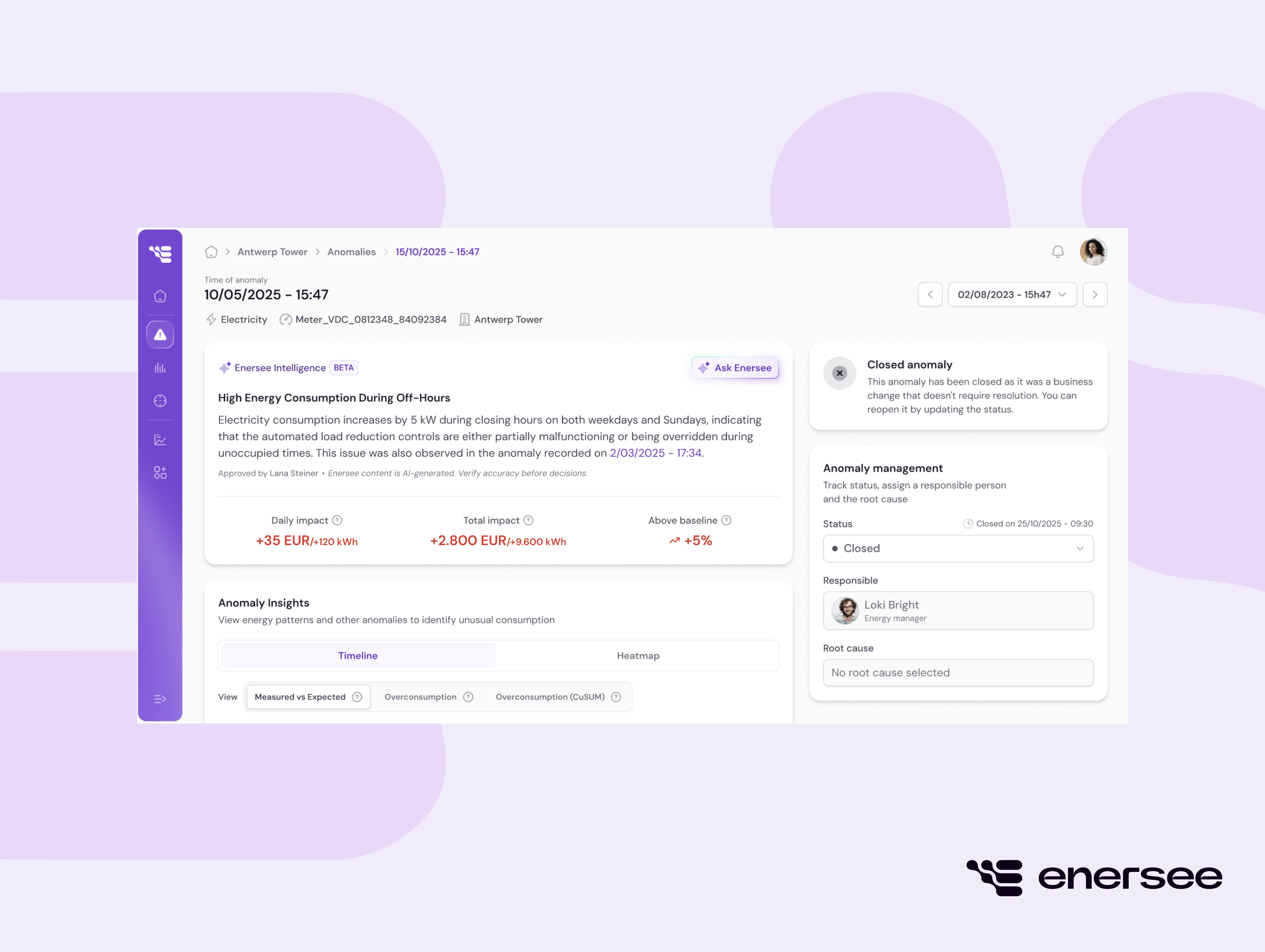
An AI-driven energy management and automation platform, Enersee makes BACS compliance extremely easy. It can act as your 24/7 virtual energy manager, connecting to existing meters, IoT devices, and BMS systems. This way, it centralises data and automates processes like monitoring, analysis, and reporting, all now required by the EPDB.
Originally developed to help organisations go beyond basic BACS obligations, Enersee combines compliance features with continuous performance optimisation.
Its key strengths include:
- Automated anomaly detection and prioritisation based on financial or carbon impact, which means Enersee easily meets the continuous monitoring and optimisation criteria under BACS.
- Integrated alarm management, audit trail, and data storage aligned with five-year EPBD documentation requirements.
- Scalable portfolio dashboards that link daily operational data with long-term sustainability and compliance goals.
- Automated reporting that simplifies EPC-NR, ISO 50001, and other audit frameworks.
On average, buildings waste 20-30% of their energy through undetected inefficiencies. And that’s exactly the type of loss Enersee’s continuous monitoring and automated analysis eliminates.
In large retail portfolios, Enersee detected 92% more hidden anomalies than legacy systems and cut resolution time from 38 to 8 days - that meant annual savings of up to €42 million.
In healthcare networks, such as the Clariane Group, Enersee’s automated audits and compliance-style reporting reduced manual data work by 50%. That meant facility teams had more time to focus on core operations while comfort and air quality were already guaranteed.
Discussing Enersee, Alexander Daenen, Head of Environment & Energy at VDAB, said, “Enersee is my silver bullet. I don’t have the time or resources to monitor 140 buildings the way they do.”
2. Schneider Electric EcoStruxure Building Operation
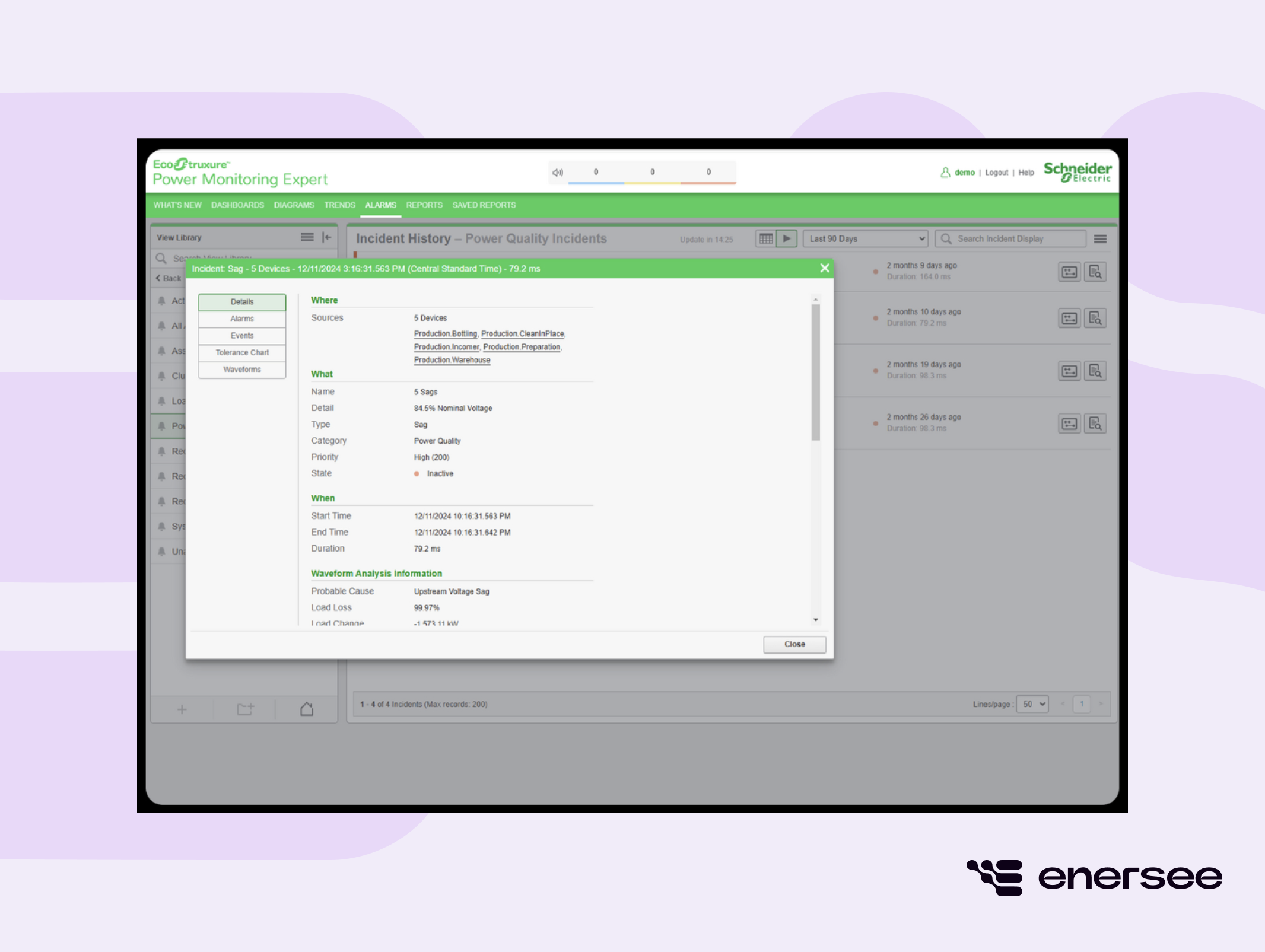
A comprehensive building management platform, EcoStruxure integrates automation, energy monitoring, and HVAC control.
How can it help with BACS compliance? It offers strong interoperability from open standards like BACnet, Modbus, and LonWorks. Its embedded analytics are great for fault detection and performance benchmarking. And you can integrate it with Schneider’s power-monitoring tools for energy and emission tracking.
What do users say? “BMS system, its comprehensive technical architecture and excellent user representation, and product hardware is very stable.”
On the downside, EcoStruxure can be quite complex to implement if you have a smaller site. Plus, to take advantage of all its functionalities, you’ll often need Schneider-specific hardware and service contracts.
Related: 7 top-tier Schneider Electric alternatives for smarter energy monitoring
3. Siemens Desigo CC

Are you looking for a centralised platform for building automation, energy analytics, and fire or security integration? Siemens Desigo CC can be a good solution.
For BACS specifically, there are a few features that help with compliance. It meets EPBD requirements for data collection through unified monitoring. Desigo CC also supports large portfolios for multi-building dashboards and offers flexible reporting. Plus, it’s compatible with Siemens and third-party devices.
Despite advanced features and capabilities, Desigo CC has received rather mixed reviews. Many users mention technical issues and a non-intuitive interface that can make the software hard to use.
One person explains, “Reports may be its greatest weakness. You can consume hours of time just setting up one report - and that's assuming you can figure out the filters to get it to display what you want at all.”
4. Honeywell Forge for Buildings

A BACS tool that combines building analytics, operational intelligence, and sustainability, Honeywell has several features that help with compliance.
For instance, it provides continuous equipment performance monitoring and automated fault detection. It can integrate with your BMS and energy meters, offering improved real-time efficiency tracking.
Honeywell also offers ESG and compliance reporting modules that follow EPBD requirements and ISO frameworks.
Does it have limitations? Some, yes. For full customisation and deployment, you’ll often need Honeywell professional devices.
And while it has advanced analytics, they’re not available by default. Instead, they’re part of licensed add-ons that you’ll need to opt into if you need those features. One user on the G2 platform also dislikes that “It lacks flexibility of setting presets for various seasons for heating devices.”
5. Ewattch
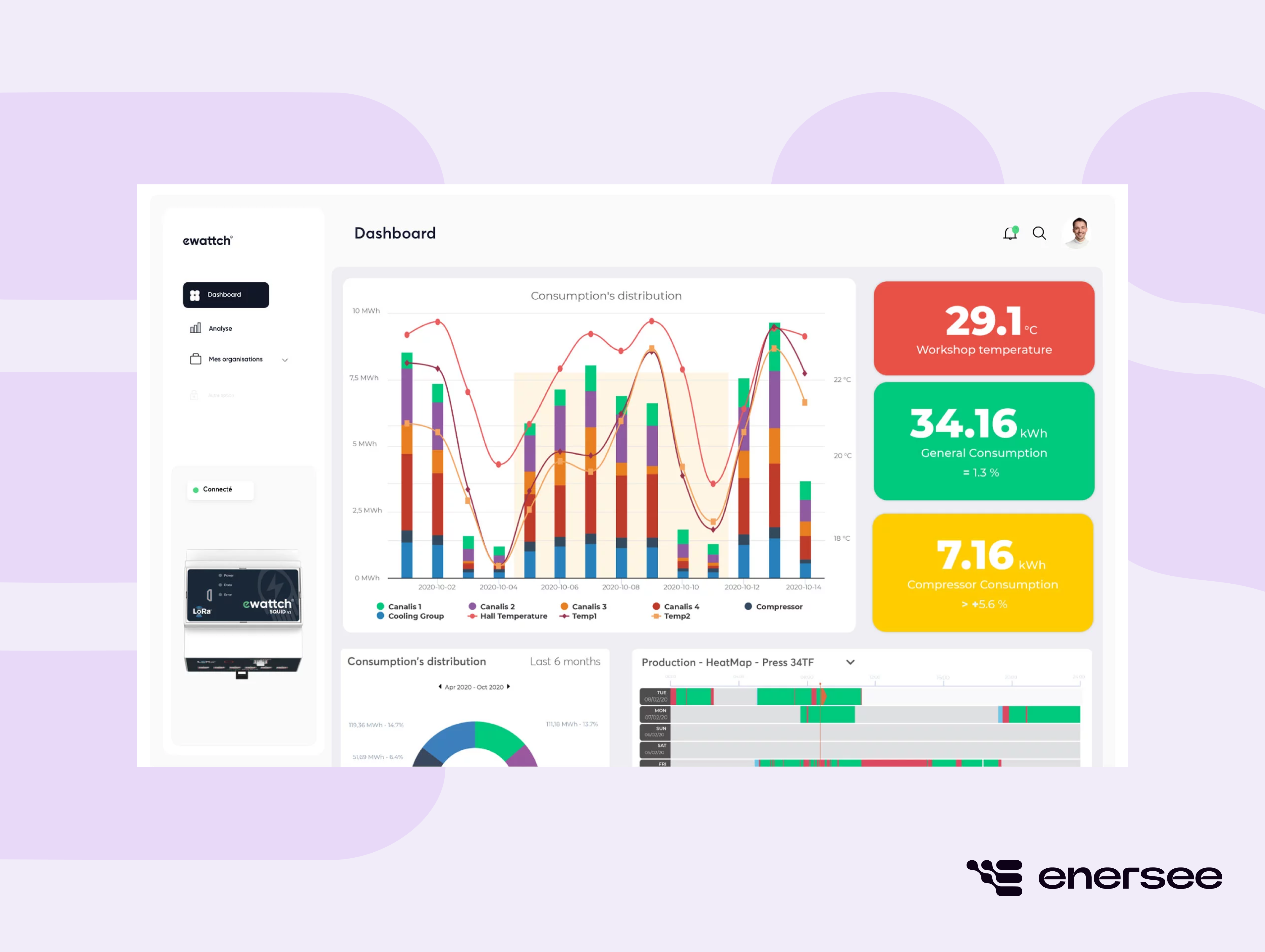
If you’re looking for modular software and IoT sensors designed to meet BACS/GACS requirements, look into Ewattch.
It offers real-time monitoring of HVAC, lighting, and energy systems. It also has built-in anomaly detection and can automatically benchmark against targets.
Its interoperable architecture is compatible with standard protocols, which makes it easy to integrate into your existing BMS.
Despite its advantages, you need to keep in mind that Ewattch is mainly built for small to medium-sized portfolios. If you manage large or complex sites, you’ll probably need deeper custom integration.
Why choosing the right BACS software is a must
If you’ve been waiting for the BACS/GACS compliance dates to be closer to start thinking of a tool, the time has come. By 2026, automation and verified data will be mandatory for most large non-residential facilities in Europe.
The best software helps you meet the rules. But it shouldn’t stop there. BACS compliance can be an opportunity to save energy and finances, and the right software will help you do exactly that.
A dedicated AI-native solution like Enersee, for instance, will help you achieve transparency, efficiency, and data-driven building performance. In the end, BACS is about running buildings that work smarter for everyone.
FAQs
1. What’s the difference between BACS and GACS?
They refer to the same thing: a Building Automation and Control System. “GACS” is the Dutch term used mainly in the Netherlands.
2. Is BACS a legal requirement?
Yes, but it’s not a separate law. The requirement to have a BACS is part of the EPBD, which every EU member state must transpose into its national legislation.
3. What features should BACS or GACS software include?
At a minimum, the software should:
- Collect and record energy data in near real time.
- Detect and alert on anomalies or inefficiencies.
- Provide visualisation and reporting tools for audits.
- Support interoperability with existing meters and building systems.
4. How are BACS tools different from a BMS?
A BMS (building management system) controls mechanical and electrical systems such as HVAC and lighting. BACS software adds a compliance and performance layer. It analyses energy data, detecting inefficiencies, and generating documentation for audits.
5. What makes Enersee different from traditional energy-management systems?
Traditional systems collect data but rarely turn it into clear, prioritised actions. Enersee goes further. It uses AI to detect anomalies, rank them by cost or carbon impact, and automate reporting for EPBD, EPC-NR, or ISO 50001 compliance.
Written by
Anastasiia Andriiuk
and