A good energy management and monitoring tool is a must-have. Maybe you need to comply with regulations like the Energy Performance of Buildings Directive (EPBD). Or maybe you simply want to make sure you don’t waste energy and money on issues that could be easily prevented.
Energis is a lightweight energy monitoring and analytics platform that many organizations use to gain basic visibility into consumption, costs, and anomalies. It can integrate with meters, IoT devices, and other building systems. Plus, it offers dashboards that make it easy to track high-level performance.
But many users complain about its downsides. For instance, it has great visualization capabilities, but not-so-great automation. It also requires some manual interpretation and isn’t exactly ideal for very large portfolios. As a result, many find themselves looking for Energis alternatives.
Why you might need an Energis alternative
Energis is a robust energy management platform, appreciated by dozens of users. So, why move away from it? There are a few common issues you might stumble upon, especially as your operational needs become more complex.
- Limited AI or predictive analytics compared to next-generation platforms.
- Manual interpretation needed for many insights and alerts.
- Scaling challenges for organizations managing large portfolios.
- Reporting workloads that remain partly manual.
- Constraints around automation, compliance tracking, and anomaly prioritization.
Some also say it’s challenging to use Energis when you need to scale across multiple sites, and the custom analysis can feel slightly time-consuming. As the organization grows or faces new compliance requirements, such as having a building automation and control system (BACS), these issues become more pressing.
What do users say?
“Visualization could be better, type of graphs, forecast, etc. It's not always easy to create additional metrics if you don't do it regularly.”
“The development cost for new sensors is somewhat high. The use of the platform is sometimes a little complex.”
So, if your team needs real-time intelligence, automated anomaly detection, or support across dozens of buildings, we’ve got a few Energis alternatives that might help.
Top 5 Energis alternatives
1. Enersee
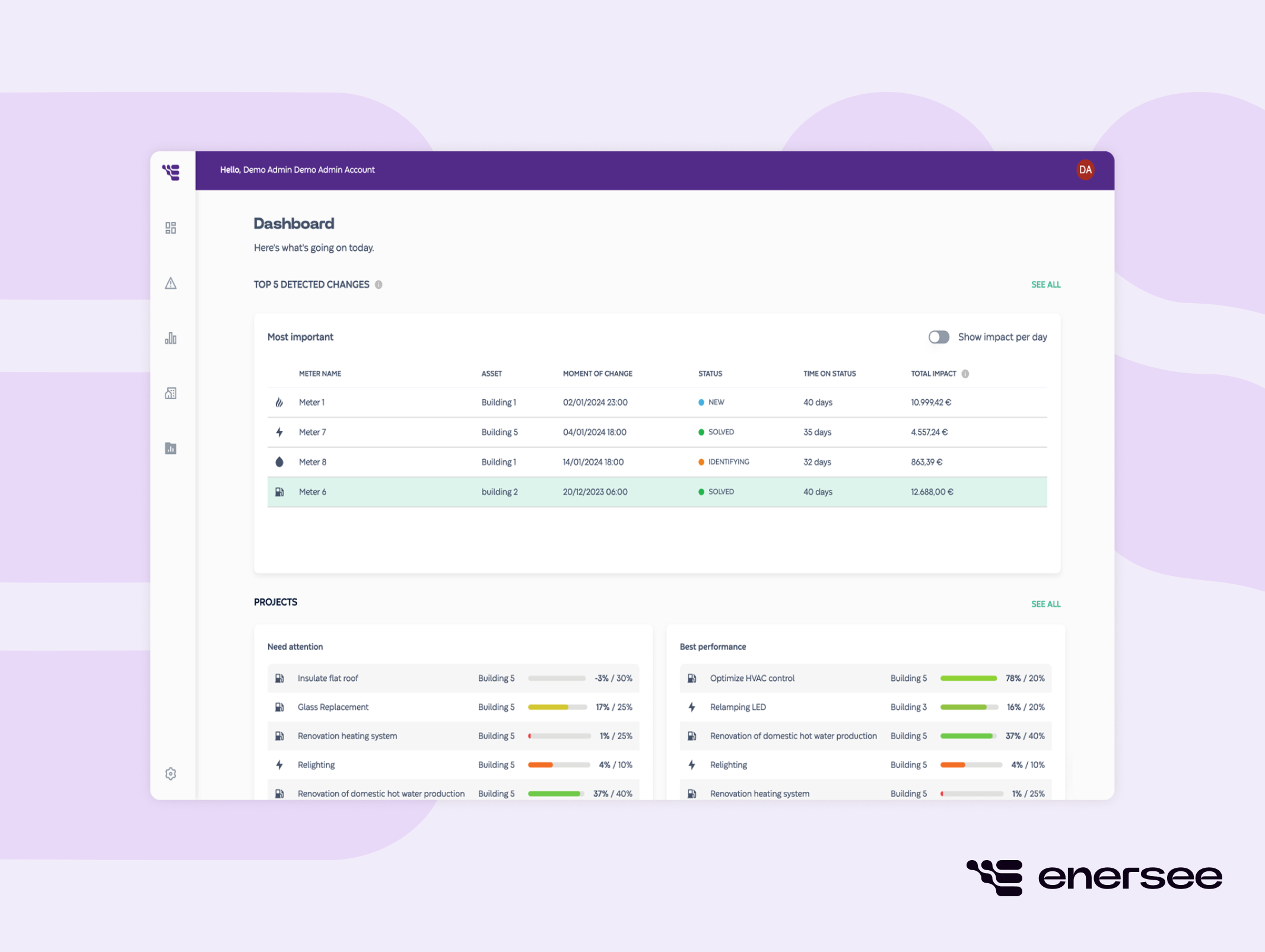
An AI-native platform designed for organizations managing large or complex building portfolios, Enersee can act as your 24/7 virtual energy assistant. It connects to utilities, BMS systems, sensors, and occupancy sources and provides invaluable insights into energy performance.
Unlike other monitoring tools that rely on manual review, Enersee models each building’s behavior and detects costly deviations immediately. Other core strengths include:
- Self-learning AI that reveals issues traditional systems overlook.
- Real-time anomaly detection with financial impact estimates.
- Automated prioritization based on cost, urgency, and compliance risk.
- Built-in support for BACS and EPC-NR, including required-measure detection.
- Modules for operations, project tracking, and long-term strategy.
The results speak for themselves. A healthcare operator achieved a 70% reduction in audit workload using Enersee. Why does such a result stand out? Energy audits in this sector are usually slow and often outdated by the time they’re completed as teams need to do manual checks across dozens or hundreds of sites.
Enersee addressed this by automating audit workflows. The platform collects real-time data across heating, cooling, ventilation, and comfort conditions. Then, it performs continuous audit logic in the background. The result? You can say goodbye to all those manual reports. Instead, you’ll receive clear, verified insights showing you where you waste energy and how to fix that.
One user says, “What I like about Enersee is how easy it is to use. It gives a clear overview, helps us spot and correct data errors quickly, and feels like an extra pair of eyes.”
If you feel your organization has outgrown simple dashboards and you need continuous intelligence, not just simple monitoring, Enersee is for you. It will be especially relevant for retail chains, logistics portfolios, healthcare groups, education networks, and public agencies that need to comply with strict regulations.
2. Smarkia
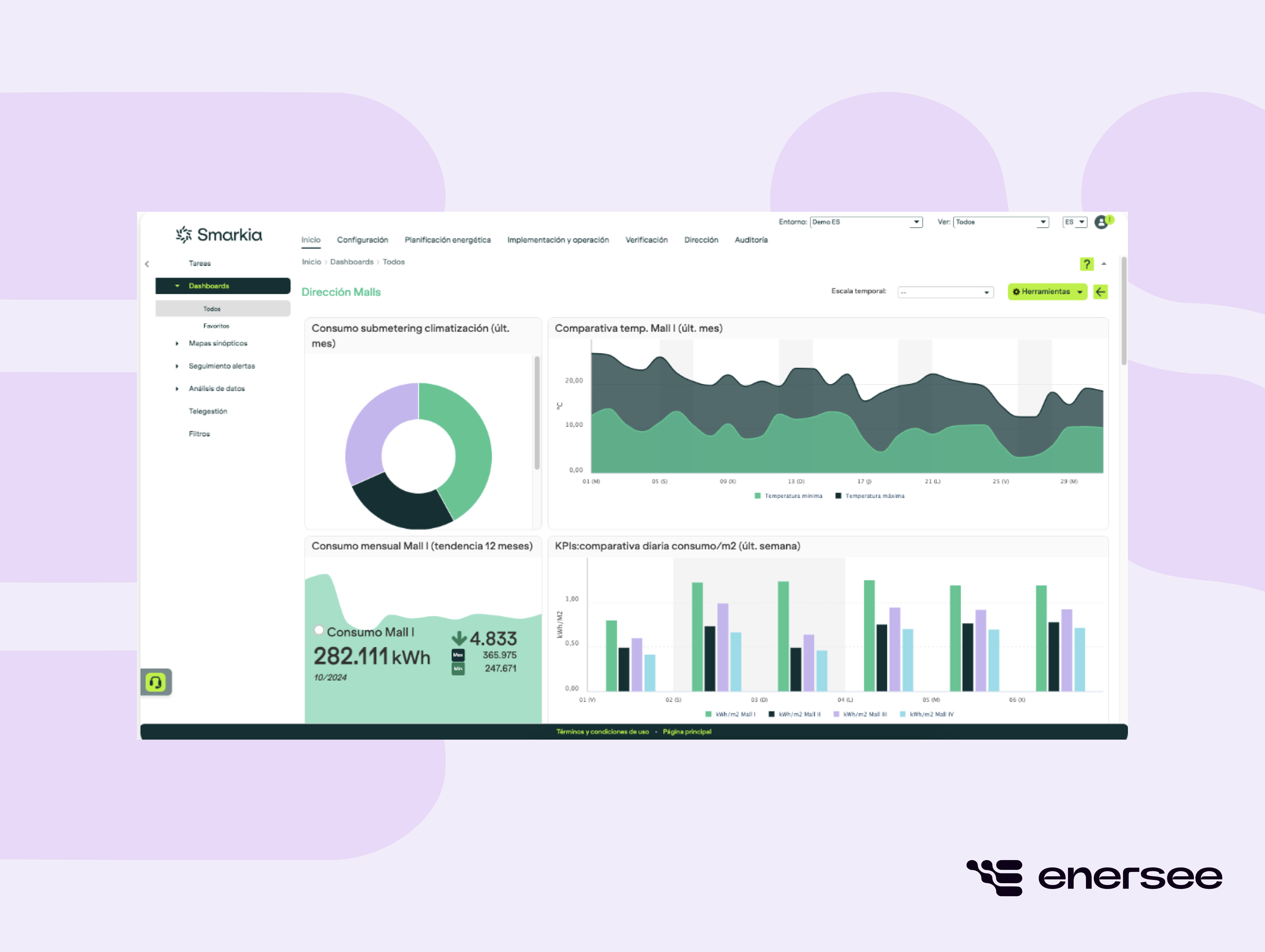
Are you looking for a cloud-based utility-focused EMS? Then you might want to look into Smarkia, a tool that consolidates utility data across sites and provides dashboards for electricity, gas, and water use.
It comes with basic forecasting and consumption alerts, and a multi-site dashboard for performance comparison. That being said, it works best for organizations that want standardized visibility but don’t need extensive visualization.
Some users also report challenges with configuration during onboarding. One person said, “In terms of environment configuration, it could be a bit more intuitive. It's not always clear what information needs to be entered in each section.”
In short, Smarkia is best for organizations that want a straightforward monitoring layer with simple reporting tools.
3. Ento.ai
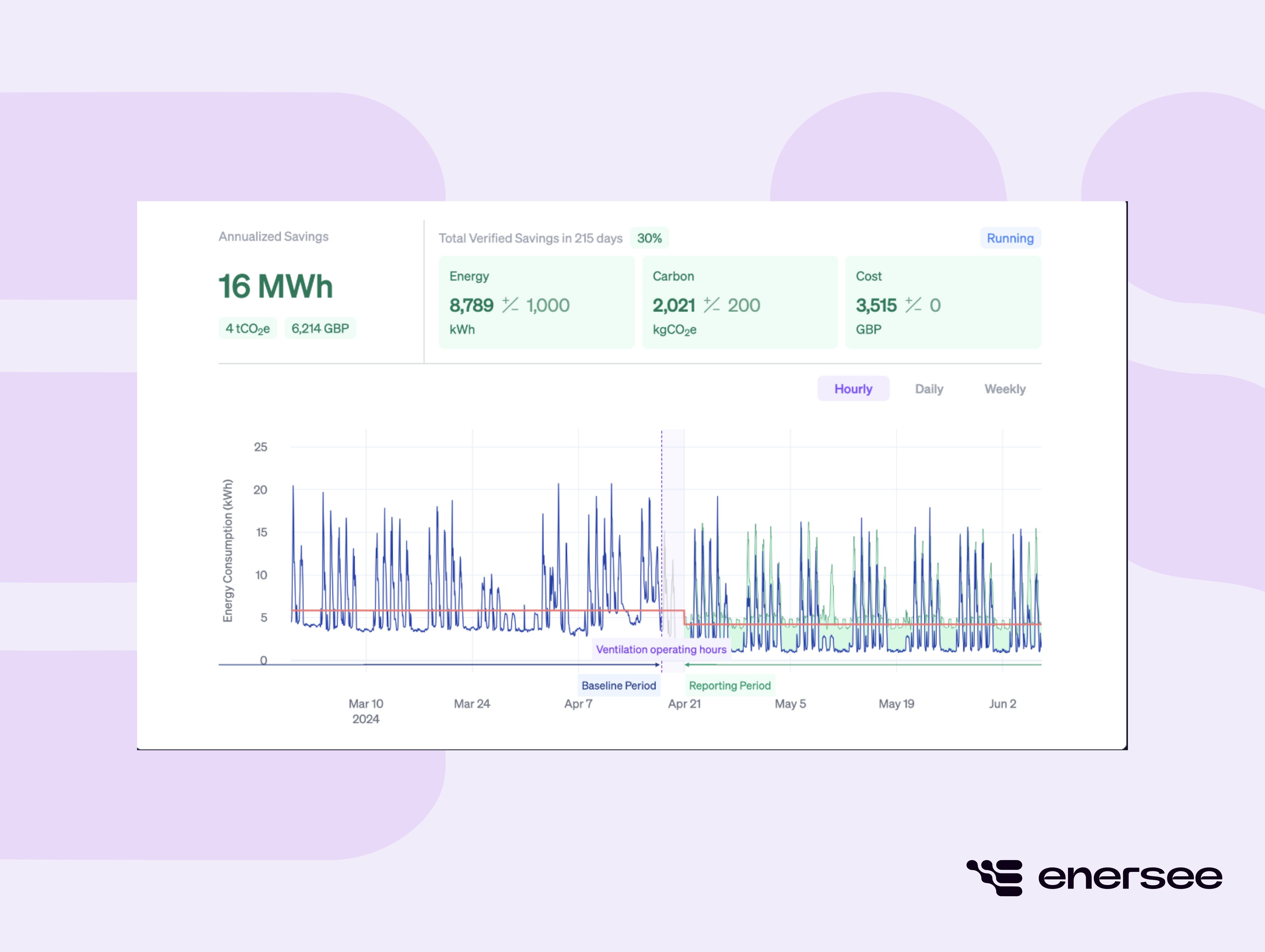
Sometimes you need to focus on measurement and verification, with little noise in between. Ento.ai does just that. It is a good option for organizations that want energy calculations that are both transparent and standardized.
What else can it do? Ento.ai comes with utility and equipment-level monitoring, as well as automated savings verification under IPMVP. Plus, it can help you benchmark against baselines, so you can quickly spot abnormalities.
There are also a few downsides. Those who manage very large portfolios and need automated anomaly ranking, might find this tool lacking. Its analytics are more M&V-oriented.
That means they can help you confirm if your building is energy efficient, but they might not be the best at detecting anomalies, ranking issues, or prioritizing actions. In other words, Ento is great for project-based tasks, but less ideal if you’re looking for continuous operational intelligence.
4. Next Sense
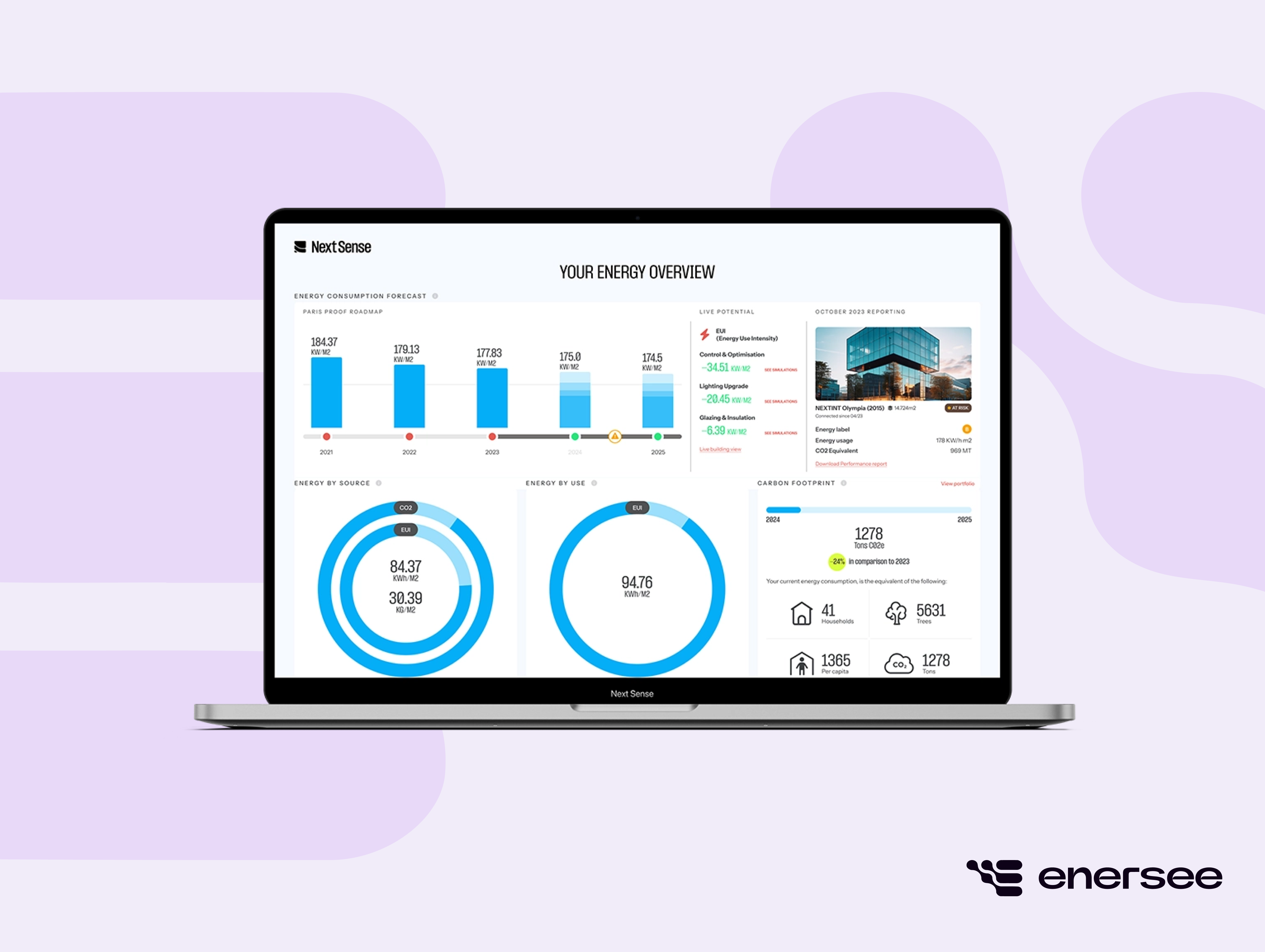
Another well-known Energis competitor is Next Sense. How can it help? It provides real-time monitoring of electricity, gas, heat, and environmental conditions within buildings. It also uses IoT sensors and connected devices that can show you consumption patterns and basic performance trends.
What else can it do?
- Tracks multi-utility consumption in real time.
- Provides dashboards for carbon and emissions monitoring.
- Offers alerts for abnormal usage and comfort deviations.
- Supports simple forecasting and baseline comparisons.
Unfortunately, the platform does focus more on monitoring and sustainability insights rather than advanced automation or predictive analytics. Some also say its reporting flexibility is not the best when it comes to complex portfolios.
The bottom line? Next Sense is a good alternative to the Energis software if you want visibility into energy and carbon performance, but don’t need an AI-driven platform.
5. Censo
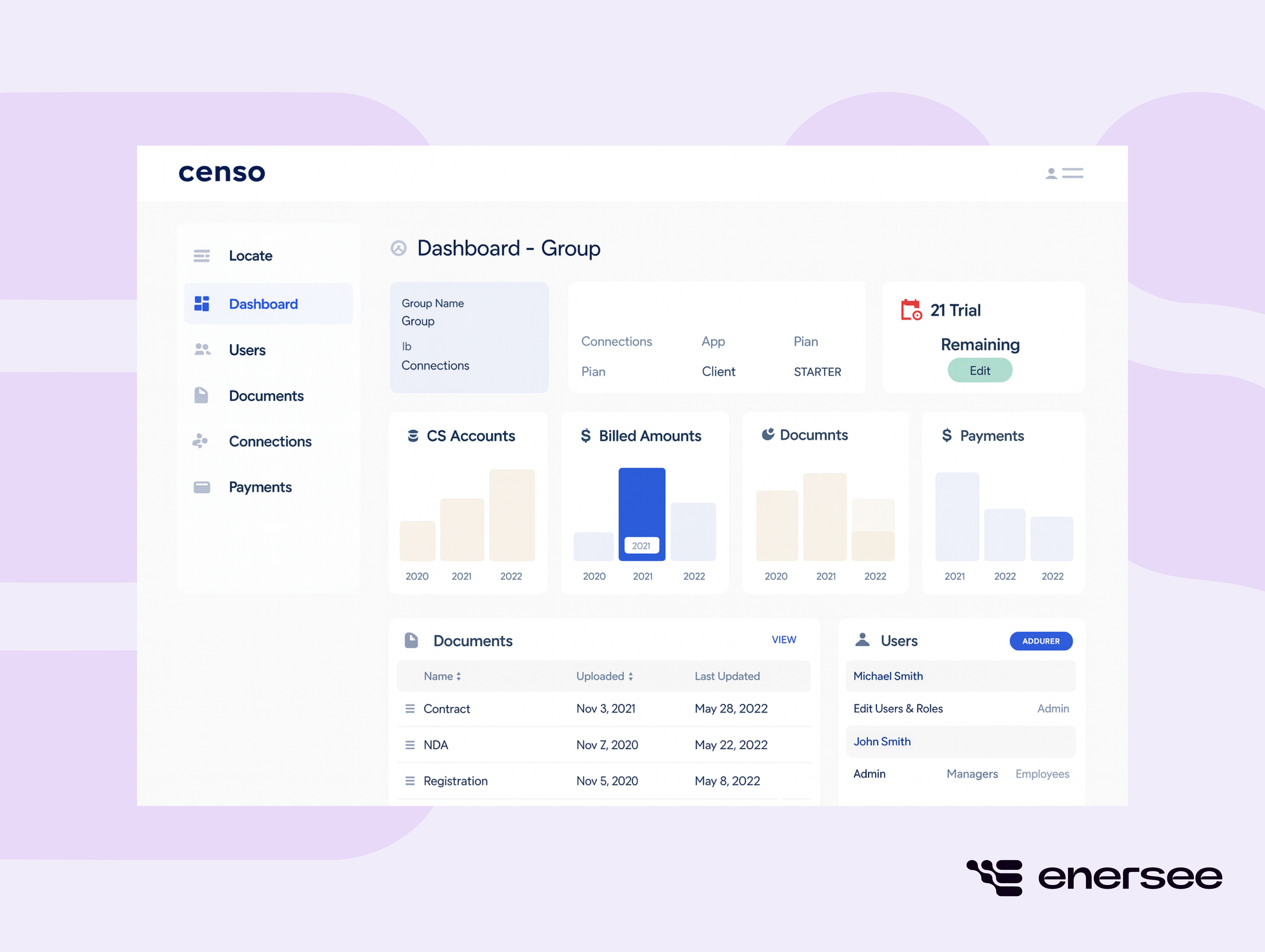
Last on our list of alternative Energis tools is Censo, a lightweight building-monitoring platform that provides visibility into energy and comfort data.
If you need clarity without heavy infrastructure, and especially if you manage a small to medium-sized portfolio, Censo could be the answer.
It comes with alerts for abnormal usage, simple dashboards that help understand building performance, and metering and environmental monitoring.
There are a few cons to keep in mind, though. For instance, analytics and automation exist, but their depth is rather limited. Plus, like a few other tools on this list, it’s not the best with multi-site portfolios or complex data flows.
If you’re looking for an Energis alternative with a similar scope, but different interface and vendor ecosystem, Censo can be a good choice.
How to choose the best Energis alternative
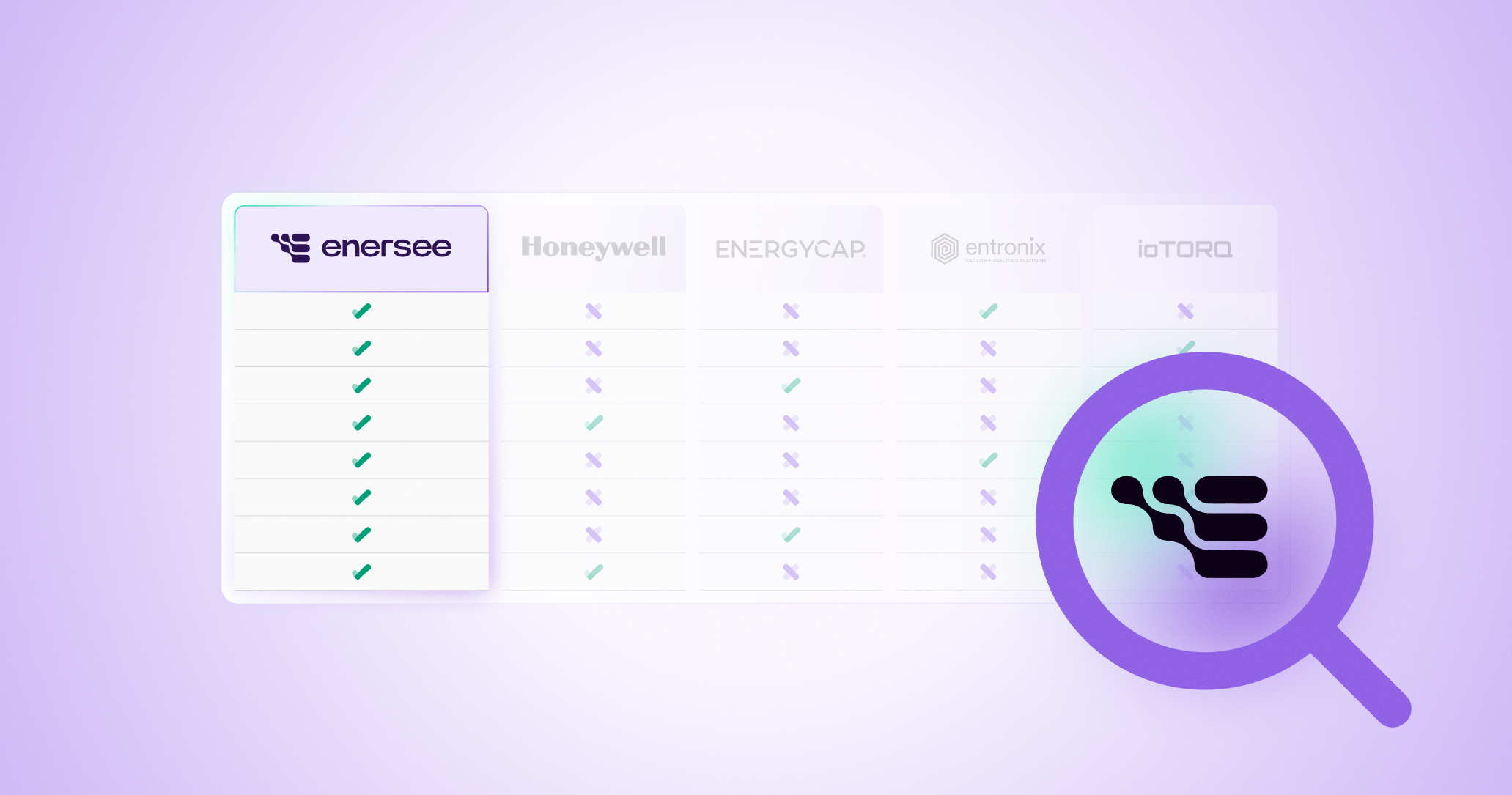
Truth be told, there are many Energis competitors to choose from. The one you choose will depend on the level of insights and automation your organization needs. Basic monitoring platforms support visibility, but larger portfolios often require real-time intelligence and automated prioritization to avoid losses.
Enersee case studies show that organizations switching to AI-native platforms can uncover significantly more issues and resolve them faster. As an example, in one instance, we detected 92.5% more anomalies than a traditional EMS and helped teams reduce resolution time from 38 days to 8 days in a large retail chain.
If your operations demand speed, automation, and scale, Enersee provides capabilities beyond monitoring alone. For smaller teams or simple visibility requirements, tools like Smarkia or Censo may offer a better fit.
FAQs
1. Why would an organization switch from Energis to another platform?
Teams usually switch when they need deeper analytics, automation, or portfolio-scale monitoring that Energis does not provide.
2. Is Energis suitable for large organizations?
It can support multi-site monitoring, but many large organizations find limitations in automation, anomaly prioritization, and compliance tracking.
3. Which Energis alternative offers the most automation?
Enersee offers the most advanced automation through AI-based anomaly detection and prioritization.
4. Can Energis alternatives integrate with existing meters or BMS?
Most alternatives support standard integrations, though capabilities vary by tool.
5. Do these alternatives support BACS or EPC-NR requirements?
Some tools provide basic support, but Enersee automates detection of required measures for both frameworks.
Written by
Anastasiia Andriiuk
and