ISO 50001 sets a clear expectation: energy management must be systematic, measurable, and continuously improving.
What it does not tell you is which tools to use to make that happen.
Many organizations start with spreadsheets, dashboards, and a mix of building management systems. That can be enough to prepare for initial certification. But maintaining ISO 50001 over time, avoiding recurring non-conformities, surviving surveillance audits, and proving continuous improvement year after year, is a different challenge.
The reality is simple: if your energy management system depends heavily on manual oversight, constant dashboard checking, and periodic reporting sprints, it will eventually break under scale.
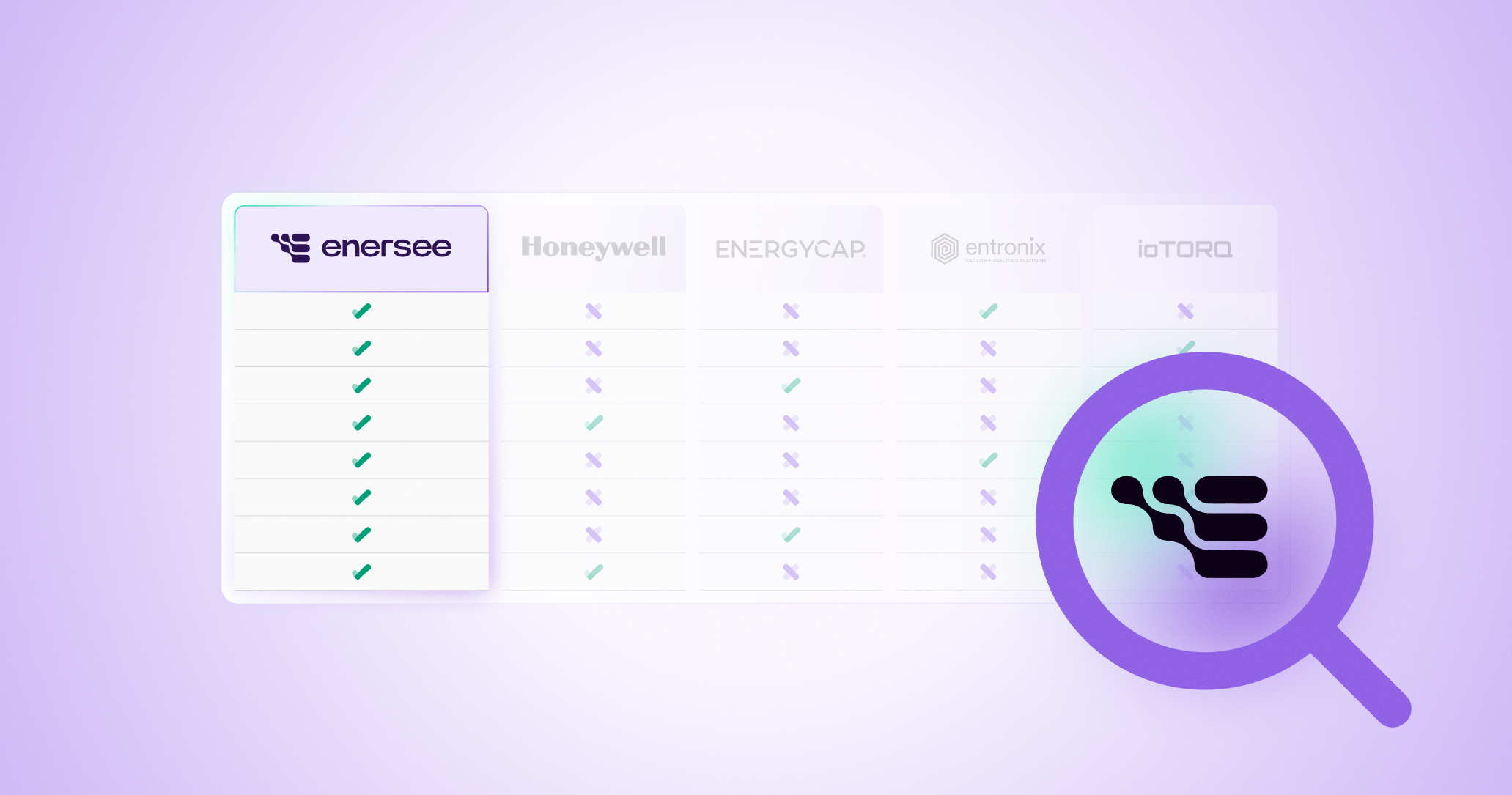
To maintain ISO 50001 compliance without non-conformities, you need structured digital support. Below, we compare leading ISO 50001 software platforms, starting with a solution designed specifically for continuous ISO control.
Why you need ISO 50001 software
The standard itself doesn’t directly require a software. All it asks you is to monitor how exactly you use energy, set a few measurable improvement targets, and work constantly to reduce consumption to a plan-do-check-act (PDCA) process.
All that, in theory, at least, doesn’t require specialized software. You can use energy monitoring software (EMS) to see how much and where you’re consuming. Those tools sometimes also offer alerts and analytics, so you can use them to improve your energy consumption.
Except in many cases, the data is going to be scattered across multiple silos. A good EMS can bring it all together, but, unless it was built with ISO 50001 in mind, or has dedicated functionalities, you’ll still have a lot of manual work to do.
For instance, you’ll still need to define energy baselines and performance indicators, investigate deviations, and prove ongoing improvements during audits. But if half of these things are done manually over spreadsheets, mistakes will happen sooner rather than later.
A good EMS that supports ISO 50001 compliance will provide you with structured support, so that you can continuously monitor data, have measurable improvements, and prove it all with ease in your audits.
Common ISO 50001 compliance challenges in logistics real estate
Warehouse operators often manage facilities that have different sizes, occupancy, operating schedules, and technical infrastructure. Some buildings could come with modern building management systems, while others could rely on older metering equipment or manual reporting processes.
Maintaining consistent energy baselines, reporting processes, and audit evidence across those facilities quickly becomes a governance challenge.
Documentation quickly becomes another obstacle. ISO 50001 requires organizations to demonstrate continuous improvement, track corrective actions, maintain performance records, and provide evidence during audits.
When that information is spread across spreadsheets, emails, and separate systems, preparing for audits becomes time-consuming and increases the risk of missing important information.
The lack of a centralized system also makes it difficult to compare energy performance across warehouses or identify which facilities you should prioritize for improvement.
When your logistics portfolio grows, manually collecting, consolidating, and analysing data becomes increasingly impractical. Instead of supporting continuous improvement, fragmented processes force teams to spend their time preparing reports rather than acting on them.
The right software solves these challenges by centralizing documentation, automating data collection, and creating consistent processes across every facility. Compliance becomes part of day-to-day operations instead of a periodic audit exercise, allowing organizations to focus on long-term energy performance rather than scrambling to prepare for every surveillance audit.
Best ISO 50001 Software Solutions in 2026
1. Enersee
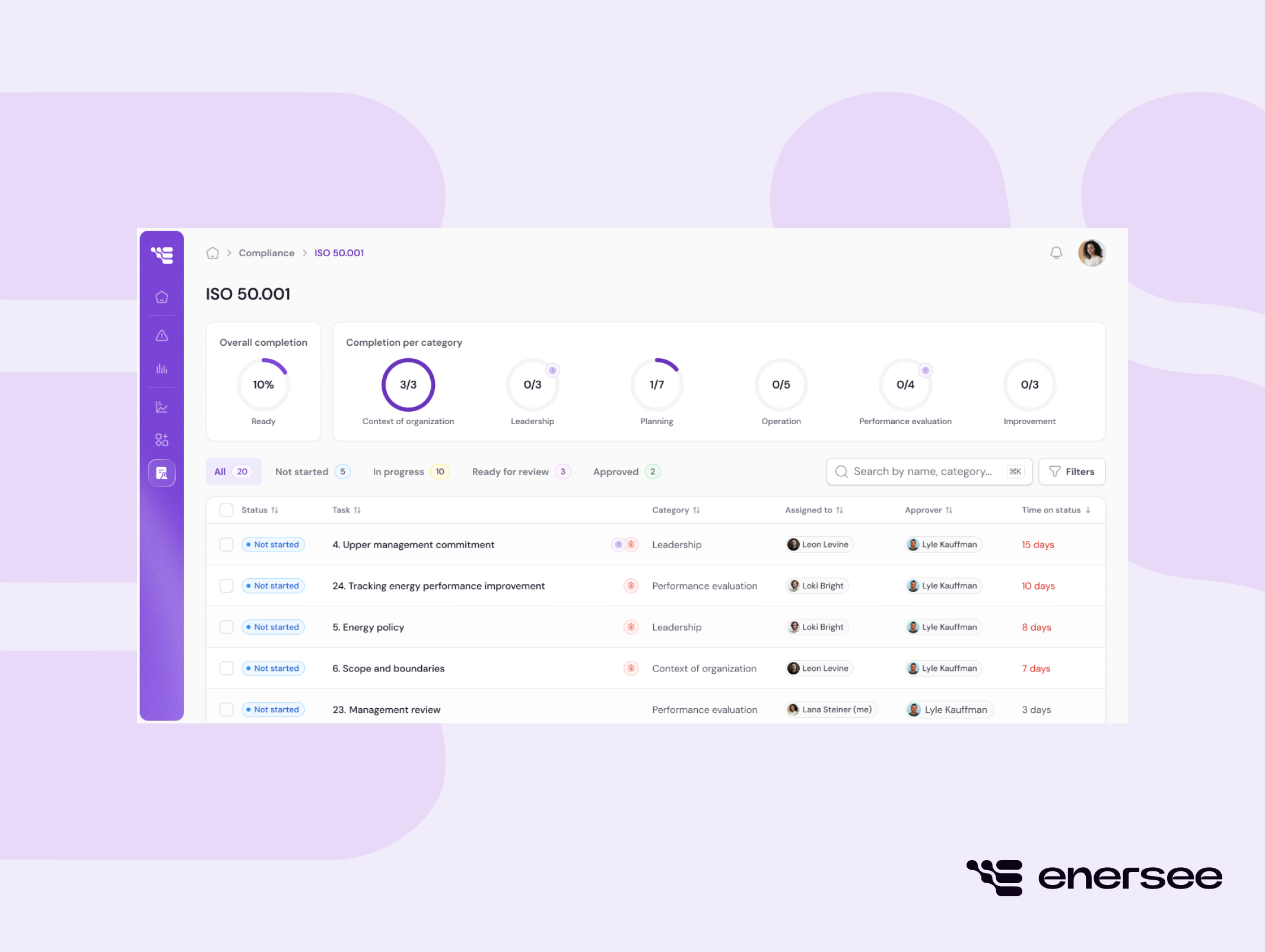
Enersee is not a generic energy monitoring tool, but a 24/7 Virtual Energy Manager built around the ISO 50001 logic. As a result, the platform closely mirrors the Plan-Do-Check-Act (PDCA) cycle at its core.
- Plan. Enersee supports automated energy baselines, EnPI tracking, and identification of significant energy uses. It combines consumption data with contextual variables like weather and building metadata and enables dynamic baselines rather than static Excel models.
- Do. Continuous monitoring and AI-driven anomaly detection help you find deviations early. Instead of fixed threshold alarms, the system models building behavior and flags relevant, contextual deviations, reducing false positives.
- Check. Built-in measurement and verification (M&V) capabilities allow organizations to validate energy-saving projects against expected performance. This helps show real, quantified improvement, which is a key ISO 50001 requirement.
- Act. Recurring pattern analysis and portfolio-wide benchmarking provide feedback for refining energy reviews and long-term improvement plans.
Many separate monitoring, projects, and strategy into different tools. It’s an approach that can easily lead to non-compliance. Which is exactly why Enersee does things a little differently, integrating them into one workflow aligned with ISO 50001 requirements.
What does that look like in practice? We can see a strong example from VDAB, the public employment agency in Flanders, Belgium. They manage approximately 400,000 m² across 140 sites and needed full ISO 50001 compliance across a diverse building portfolio.
Before using Enersee, VDAB relied on static threshold alarms and monthly reporting. But alerts often lacked context and created more problems instead of solving them. For a small central team responsible for hundreds of thousands of square meters, this approach was unsustainable.
With Enersee, they shifted to a 15-minute real-time telemetry and contextual anomaly detection. Outside-hours energy consumption, a critical ISO 50001 control point, is now automatically monitored.
The results were measurable:
- 53% reduction in primary energy consumption.
- 30% more energy savings than initially expected.
- 162% ROI in 2025 from energy-efficiency projects.
Equally important was the operational shift. Continuous, documented monitoring became embedded in daily workflows rather than treated as a periodic reporting exercise. It’s a difference that matters a lot under ISO 50001, as surveillance audits require proof of ongoing control and continuous improvement.
The results may even seem too good to be true, but the key is quite simple. Enersee’s structure directly addresses common sources of ISO 50001 non-conformities, such as:
- Monitoring gaps due to manual oversight.
- Unverified savings claims.
- Outdated baselines.
- False alarms that erode trust in the system.
- Limited portfolio-wide visibility.
The platform comes with expert logic and anomaly detection embedded into its operations, which reduces the need for constant manual oversight. In turn, that means a smaller risk for errors and more time for you and your team to focus on real improvements.
For organizations that manage dozens or hundreds of sites, this makes the difference between maintaining certification easily and scrambling before every single audit.
2. ioTORQ EMIS
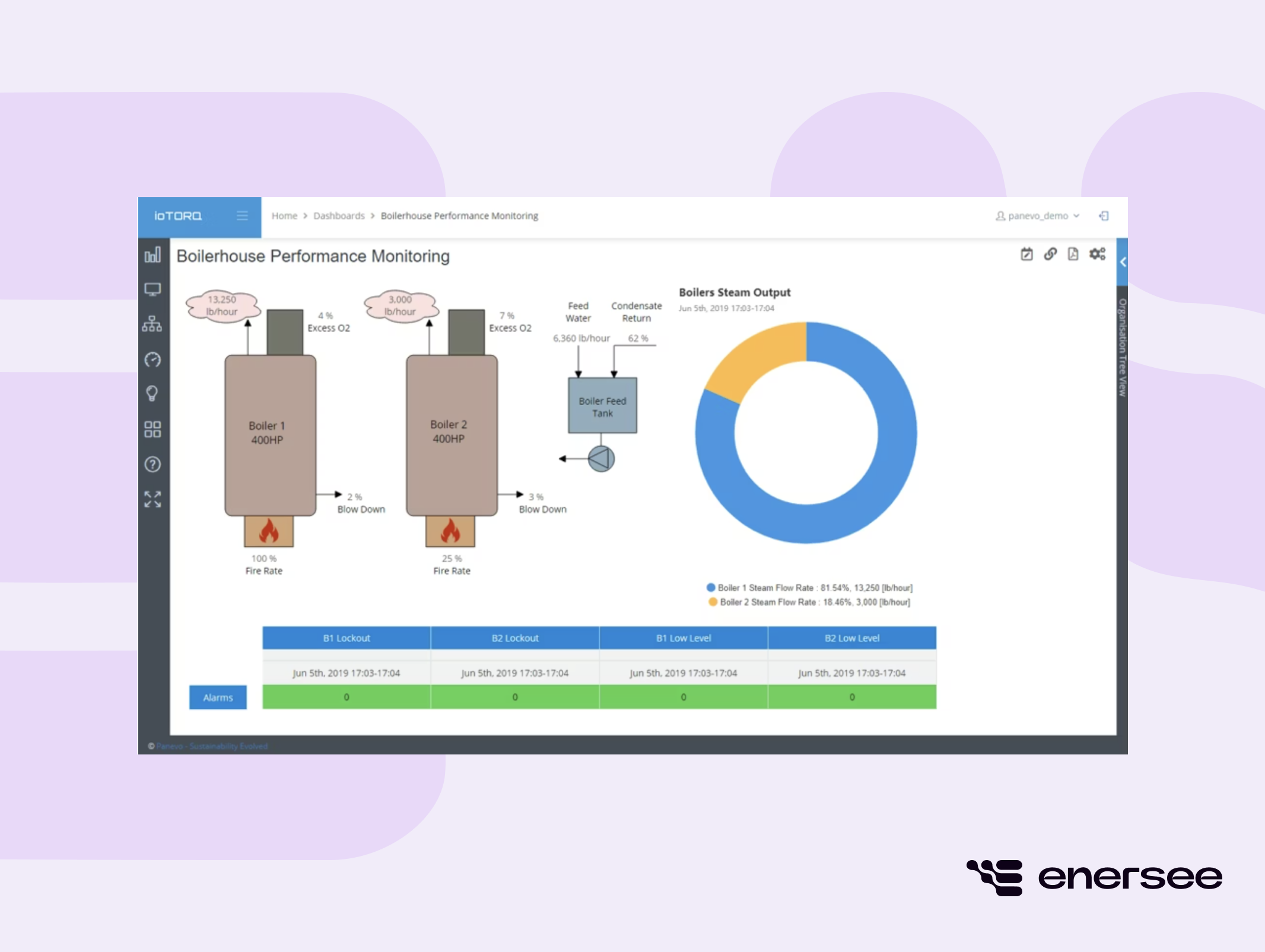
IoTORQ EMIS positions its solution as an Energy Management Information System (EMIS) designed to centralize and analyse energy data.
The platform focuses on data integration across meters, building systems, and utility inputs. Organizations can use it to consolidate energy information and generate reports aligned with ISO 50001 requirements.
IoTORQ EMIS supports energy baseline creation and performance monitoring and can be configured to support ISO-related workflows. However, organizations may need to design and structure their internal PDCA processes within the system, depending on their maturity level.
One user describes it as, “Easy to use, functionalities with operations, modular, flexible, compatible with other business units needs.” On the downside, “Integration into business can be a little challenging, but the customer service is there to resolve potential issues, so the benefits more than outweigh the challenges.”
For companies looking for a flexible EMIS with ISO alignment potential, ioTORQ EMIS can serve as a foundation, particularly when supported by strong internal energy management expertise.
3. EnergyCAP
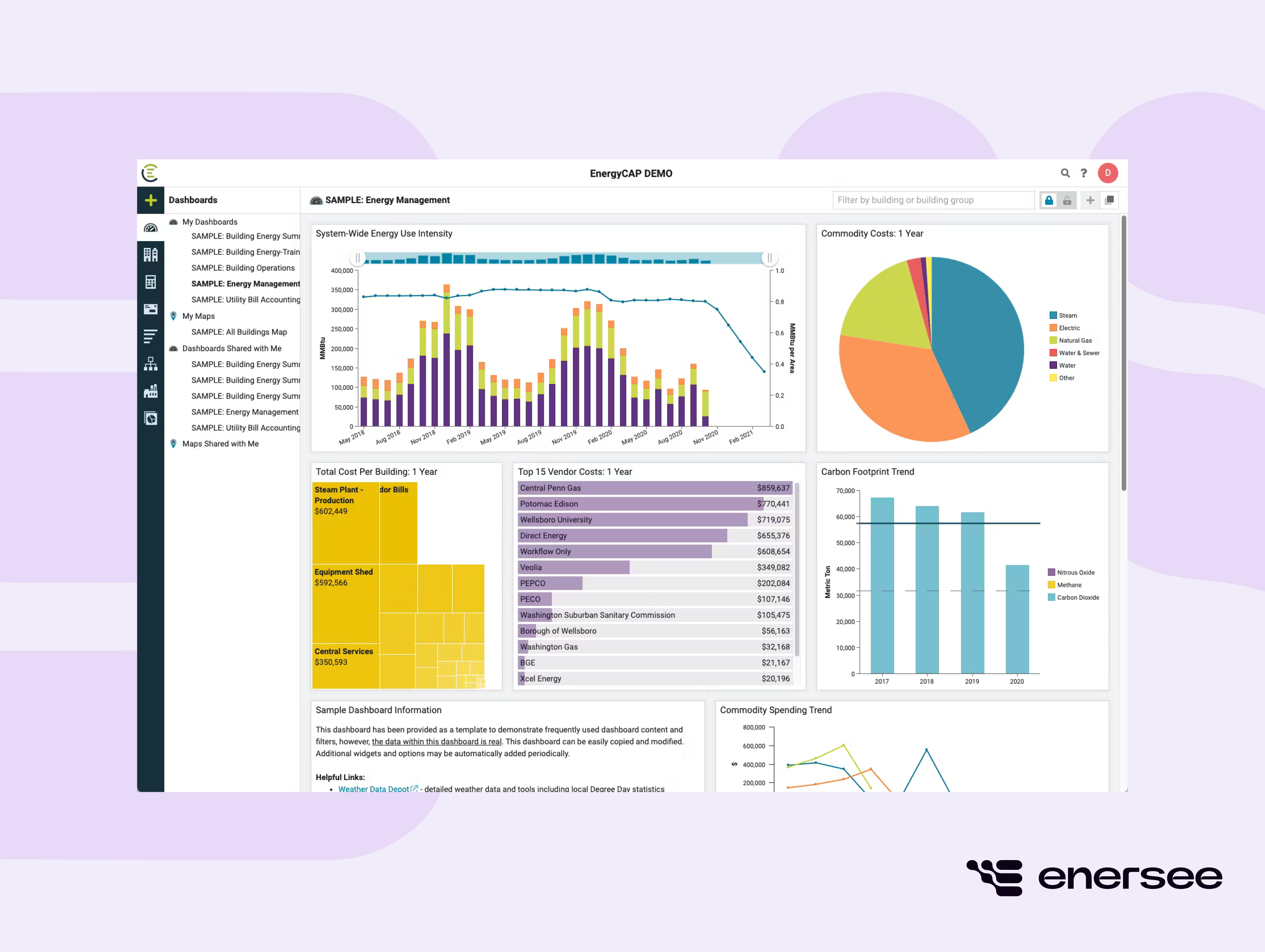
You've probably heard of EnergyCAP as a tool for utility bill management, cost tracking, and budgeting.
The platform excels in consolidating utility data and providing financial transparency across portfolios. For organizations where cost control and reporting are primary drivers, this can be a strong advantage.
A Capterra user talks about EnergyCAP saying, “It has been a tremendous asset in tracking and analyzing cost and usage. It has also provided easy access to necessary data when applying for energy grants and rebates.” However, they do point out there are “some difficulties in getting data to show in the format needed. Mostly because of user input.”
For ISO 50001 specifically, EnergyCAP supports elements related to tracking and documentation. However, organizations may need additional workflows or integrations to fully operationalize real-time PDCA execution, contextual anomaly detection, and structured M&V processes.
EnergyCAP can be good for teams prioritizing financial reporting within broader energy management strategies.
4. MRI Energy
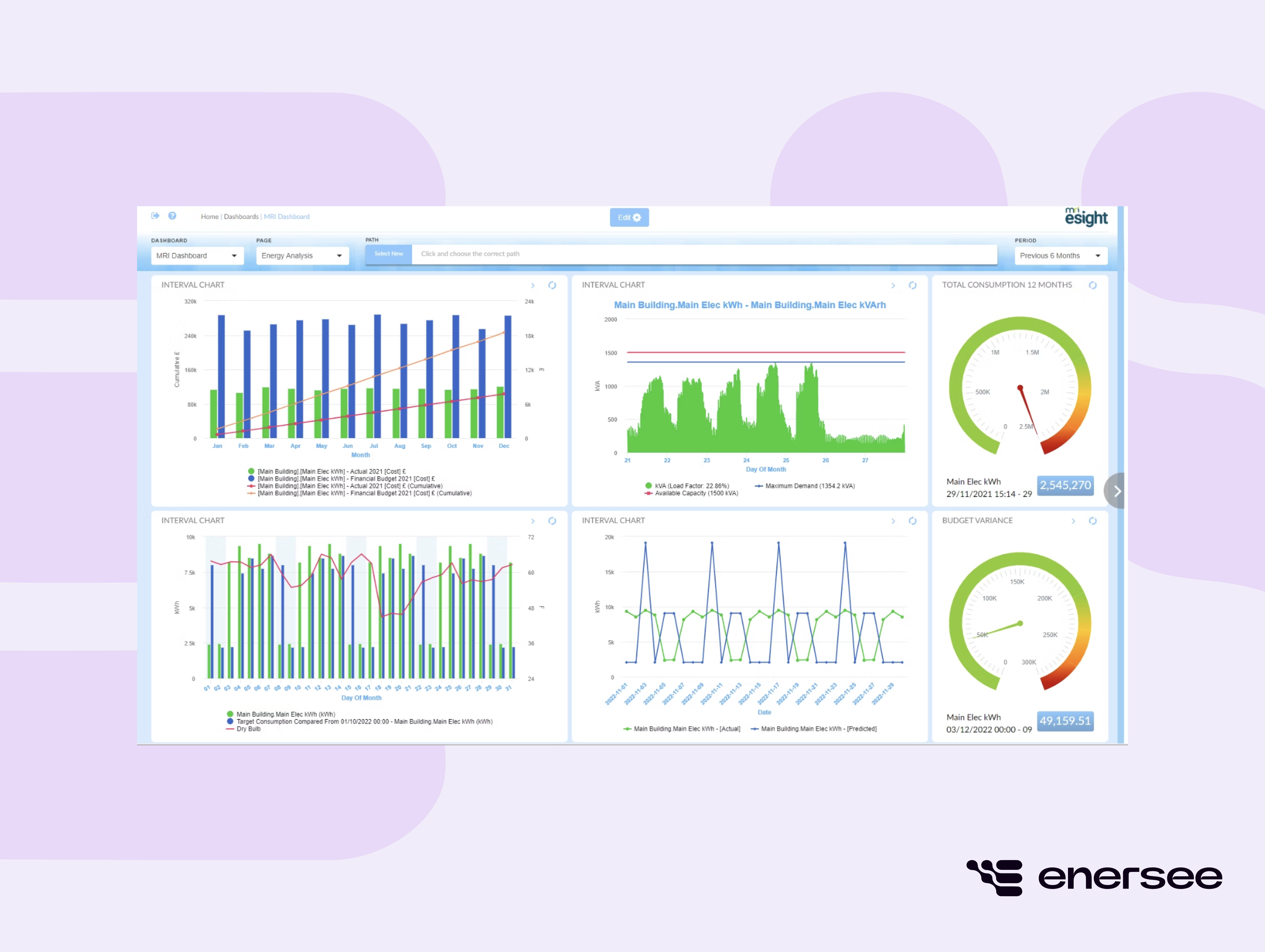
MRI Energy is positioned strongly within the real estate sector, focusing on portfolio-level energy tracking and tenant-related analytics.
The platform supports energy data aggregation, reporting, and cross-site visibility. For property managers and real estate operators, MRI Energy offers valuable tools for benchmarking and sustainability reporting.
While it can support aspects of ISO 50001, structured compliance workflows and continuous PDCA execution may depend on how you configure the system and integrate the tool into internal processes.
Talking about MRI Energy, a Capterra user explains, “Features like interactive dashboards, dynamic report generation, alarm configuration and data quality analysis are highly useful.”
On the downside, they add, “Customised calculations tools and option to configure these calculations within the system to generate the reports or custom data sheets can be improved further. Although the customer support is always there to help you through and configure things for you when approached.”
MRI Energy is often best suited for organizations where energy management is closely tied to property operations and tenant reporting requirements.
5. GridPoint
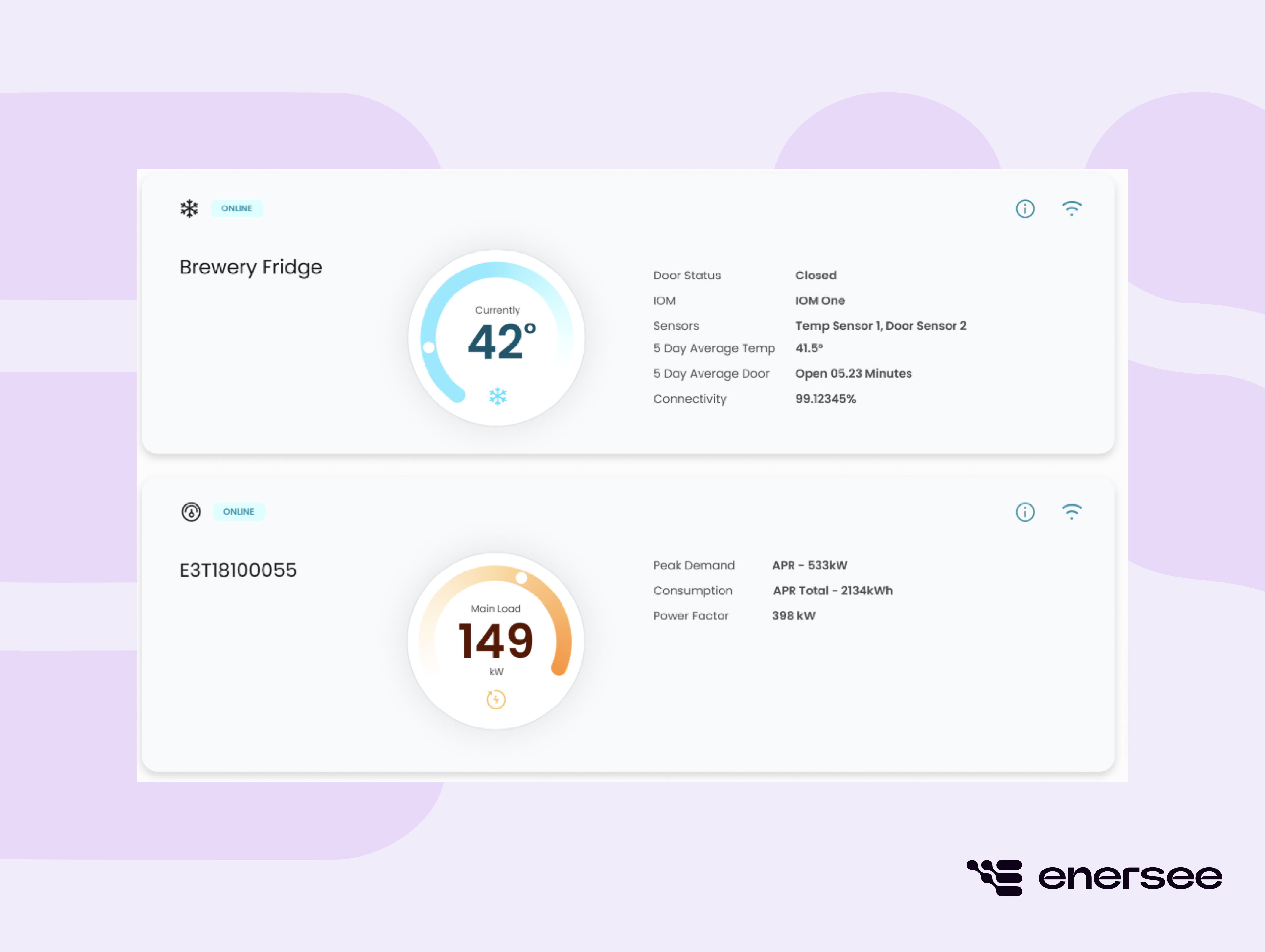
GridPoint combines hardware, IoT integration, and analytics to optimize building-level energy performance.
Its strength lies in operational efficiency, particularly HVAC optimization, load management, and real-time equipment monitoring.
For organizations focused on equipment-level control and operational savings, GridPoint can deliver measurable efficiency improvements.
What do users think about it? “The best thing about GridPoint is GridServices. GridPoint enables your buildings to become grid interactive. One can get granular building performance data to build accurate data set in industry.”
GridPoint supports monitoring and control, formalized PDCA alignment, structured baseline management and audit-ready documentation. However, since its primary function is not ISO 50001 compliance, you may need additional layers or complementary systems to achieve full compliance.
How to choose ISO 50001 software for logistics portfolios
The right software will support your certification journey, but it shouldn't stop there. It should also make compliance easier to maintain, reducing administrative effort and giving teams better visibility into energy performance.
When evaluating different solutions, look for capabilities such as:
- Evidence that is always audit-ready. Policies, corrective actions, and performance records should be stored together so teams aren't reconstructing audit evidence from spreadsheets and email threads.
- Automated reporting. The platform should simplify reporting for ISO 50001 while also supporting broader ESG initiatives and regulatory requirements, reducing the amount of manual work required.
- Corrective action management. Teams should be able to assign, monitor, and document improvement actions across multiple facilities without relying on disconnected spreadsheets or email chains.
- Consistent performance across every warehouse. The platform should make it easy to compare facilities using the same KPIs rather than relying on site-specific reports.
- Integration with existing systems. The software should connect with meters, building management systems, IoT devices, and utility data to avoid duplicate data entry and improve reporting accuracy.
- Scalability. When you acquire new facilities or expand into new markets, compliance processes should remain consistent without requiring significant increases in staffing or administrative work.
Certification bodies look for consistent control, effective corrective actions, and demonstrable improvement. The right software should reduce the operational burden of maintaining that continuity.
Final Thoughts
Achieving ISO 50001 certification is one milestone. Maintaining it year after year is the real test.
Surveillance audits focus on evidence of ongoing control, updated baselines, verified improvements, and active management engagement. Gaps in monitoring or inconsistent processes are common sources of non-conformities.
The right ISO 50001 software does more than storing data. It becomes the operational backbone of your energy management system, reducing manual effort, increasing visibility, and embedding continuous improvement into daily workflows.
For organizations managing complex portfolios, structured digital support is no longer optional. It is the foundation for compliant, scalable, and future-proof energy management.
Written by
Anastasiia Andriiuk
and